Clear Sky Science · en
Rhizospheric glycosyltransferase repertoires as a resource for enabling sustainable bioprocessing and green biocatalyst discovery
Hidden Helpers Beneath Desert Plants
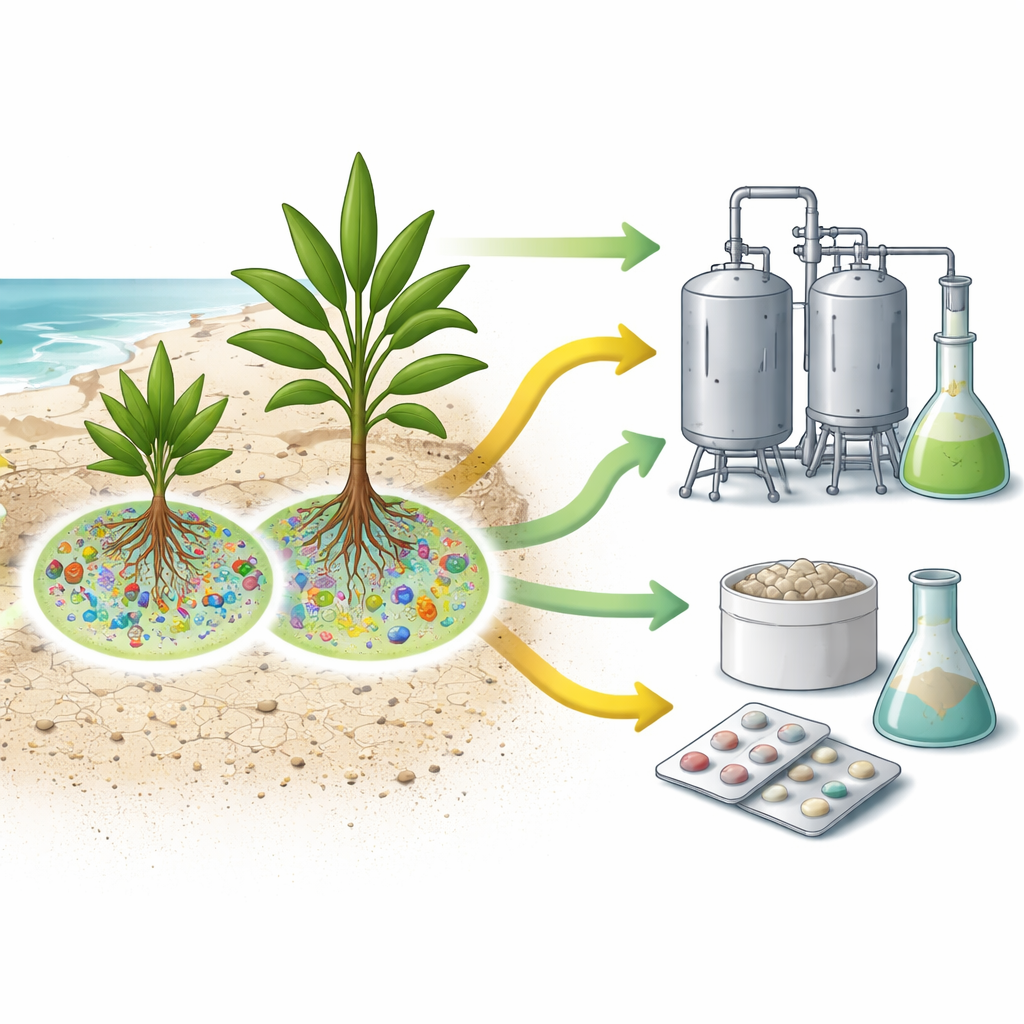
In some of the hottest, driest soils on Earth, the roots of wild plants quietly host microscopic partners that may help build tomorrow’s green materials and medicines. This study explores the “living halo” of microbes that surround the roots of two desert-adapted plants in western Saudi Arabia and shows that these underground communities are packed with genes for powerful sugar‑building enzymes. Although the work is based on DNA sequencing rather than lab tests, it points to the rhizosphere—the thin soil zone clinging to roots—as a promising source of hardy biocatalysts for sustainable industry.
Life in the Root’s Neighborhood
The researchers focused on the rhizospheres of two wild species, Moringa oleifera, valued worldwide for its nutrition and medicinal uses, and Abutilon fruticosum, important for land restoration in arid regions. Using high‑throughput metagenomic sequencing, they compared the DNA of microbes living right next to the roots with those in nearby bulk soil. Even though these soils sit only meters apart, the community living on the roots looked and behaved very differently from the community in the surrounding ground, underscoring how strongly plants can shape the microscopic life around them.
Underground Factories for Building Blocks
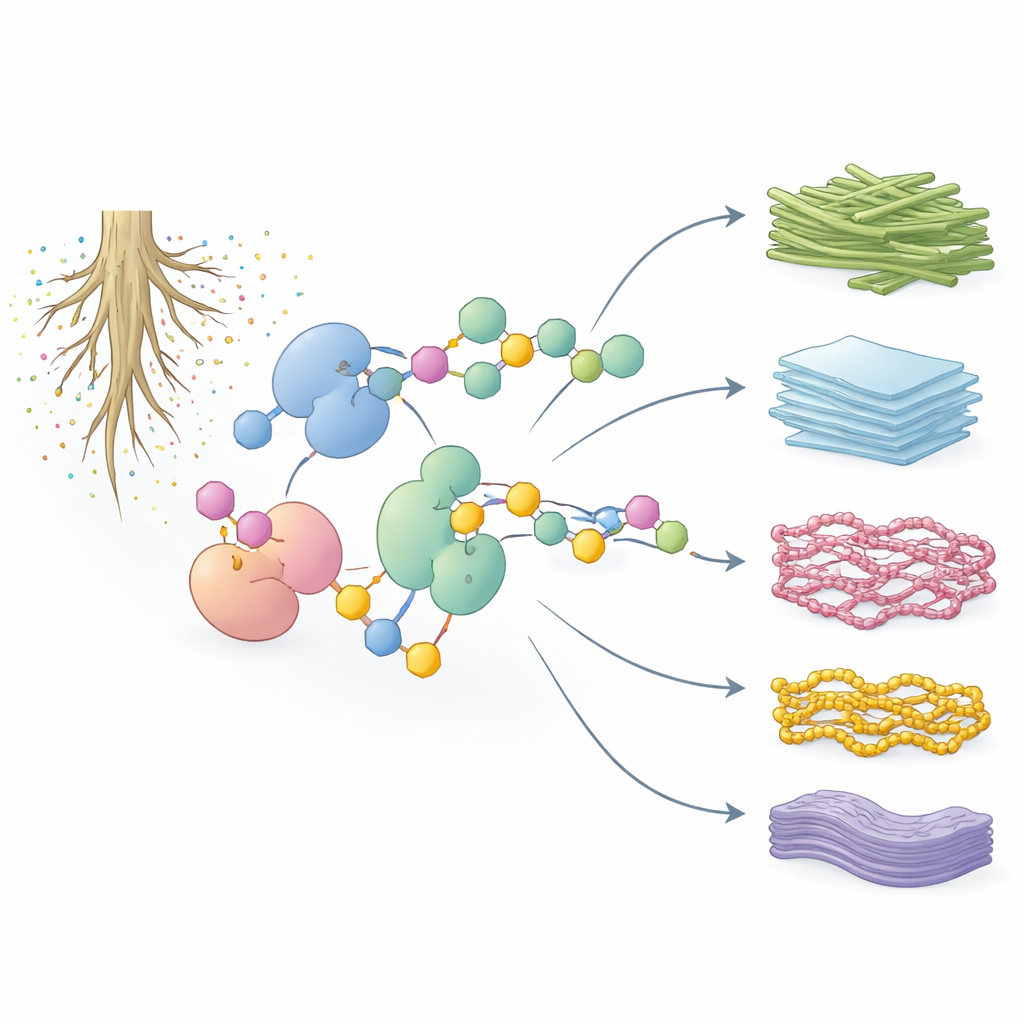
A key finding was that root‑associated microbes were enriched in carbohydrate‑active enzymes—proteins that build, reshape, or break down complex sugars. Among these, the study zoomed in on glycosyltransferases, enzymes that act like molecular assembly lines to snap sugar units together into long chains. The rhizospheres of both plants contained more of every major class of these enzymes than the bulk soils did. Specific glycosyltransferase families—GT2 and GT84 around Moringa, and GT31, GT39, and GT66 around Abutilon—stood out as particularly abundant, hinting that each plant encourages its own specialized set of microbial “sugar engineers.”
Desert Microbes as Green Technologists
By matching gene families to known enzyme functions, the authors inferred that these microbial communities can build several industrially important polysaccharides, including cellulose, chitin, β‑glucans, mannans, and chondroitin‑like chains. These molecules already underpin products ranging from paper, textiles, and food thickeners to wound dressings, tissue scaffolds, and drug delivery systems. Because the source microbes thrive in hot, dry, nutrient‑poor soils, their enzymes are likely tuned—at least in theory—to withstand high temperatures and low water conditions. That makes them appealing candidates for future bioreactors, where robust, reusable catalysts are essential for eco‑friendly manufacturing of biofuels, biomaterials, and therapeutics.
Who Does the Work in the Soil?
The gene catalogs revealed that three major bacterial groups—Proteobacteria, Acidobacteria, and Actinobacteria—dominate the supply of these sugar‑related enzymes. At a finer level, genera such as Luteitalea, Streptomyces, Blastococcus, Microvirga, and Rhizobium appear as key contributors. Past studies suggest that these microbes help free up nutrients, break down tough plant matter, and support plant growth, so their rich enzyme toolkits likely benefit both plant health and soil carbon cycling. Here, they also emerge as potential sources of new, rugged biocatalysts that could be mined, engineered, and combined using synthetic biology to tailor materials with specific textures, strengths, or biological activities.
From DNA Maps to Real‑World Uses
Importantly, the study is based on computational analysis of DNA sequences rather than direct measurements of enzyme behavior. The authors stress that their claims about heat tolerance, drought resilience, and industrial performance are predictions that must be tested in the lab. Still, by systematically charting which sugar‑building genes are enriched around desert plant roots, they provide a roadmap for future work: isolating these enzymes, improving them through protein engineering, and weaving them into safe, well‑regulated processes for producing greener fuels, smarter biomaterials, and next‑generation therapeutics. In this way, the hidden chemistry of desert rhizospheres could help power a more sustainable bio‑based economy.
Citation: Jalal, R.S., Alshehrei, F.M. Rhizospheric glycosyltransferase repertoires as a resource for enabling sustainable bioprocessing and green biocatalyst discovery. Sci Rep 16, 12676 (2026). https://doi.org/10.1038/s41598-026-42974-2
Keywords: rhizosphere microbiome, glycosyltransferases, desert soil enzymes, sustainable bioprocessing, biomaterials