Clear Sky Science · en
RASGRP4 is a key factor in the KRAS activation mediated by SOS in tumor Y1 adrenocortical cell lines
Why this matters for cancer
Cancer often behaves like a jammed light switch that stays on even when no one is touching it. This study looks at one such switch inside tumor cells and reveals that a “hidden helper” protein is crucial to keeping it stuck in the on position. By uncovering this helper, the work points to a fresh target for future cancer treatments that aim to turn these switches back off.
A stubborn molecular switch
Many tumors rely on a protein called KRAS, which acts like an internal on–off switch for cell growth. In its off state, KRAS holds a small energy molecule called GDP; in its on state, it holds GTP and drives powerful growth signals. In a mouse adrenal tumor cell line known as Y1, KRAS is present in extra copies and is unusually active even without outside triggers. Previous research showed that a well-known activator protein, SOS, helps flip KRAS into the on position, but the sheer amount of active KRAS in these cells suggested that something else must be helping keep the signal high.
Computer model that wouldn’t behave
The researchers first built a detailed mathematical model of the KRAS switch, describing how it is turned on and off over time. They fed into this model known reaction steps and measured reaction speeds from earlier work, and then tested many combinations of KRAS and SOS levels to mimic the Y1 tumor cells. The model produced only two unrealistic outcomes: either almost no KRAS was active, or virtually all of it was stuck on. Neither matched the steady, moderately high activity actually measured in the real cells. This mismatch suggested that the model was missing a key reaction. When the team added a second, generic activator into the equations, the system suddenly behaved like the real cells, reaching a stable high level of active KRAS without flipping into an all-or-nothing state. 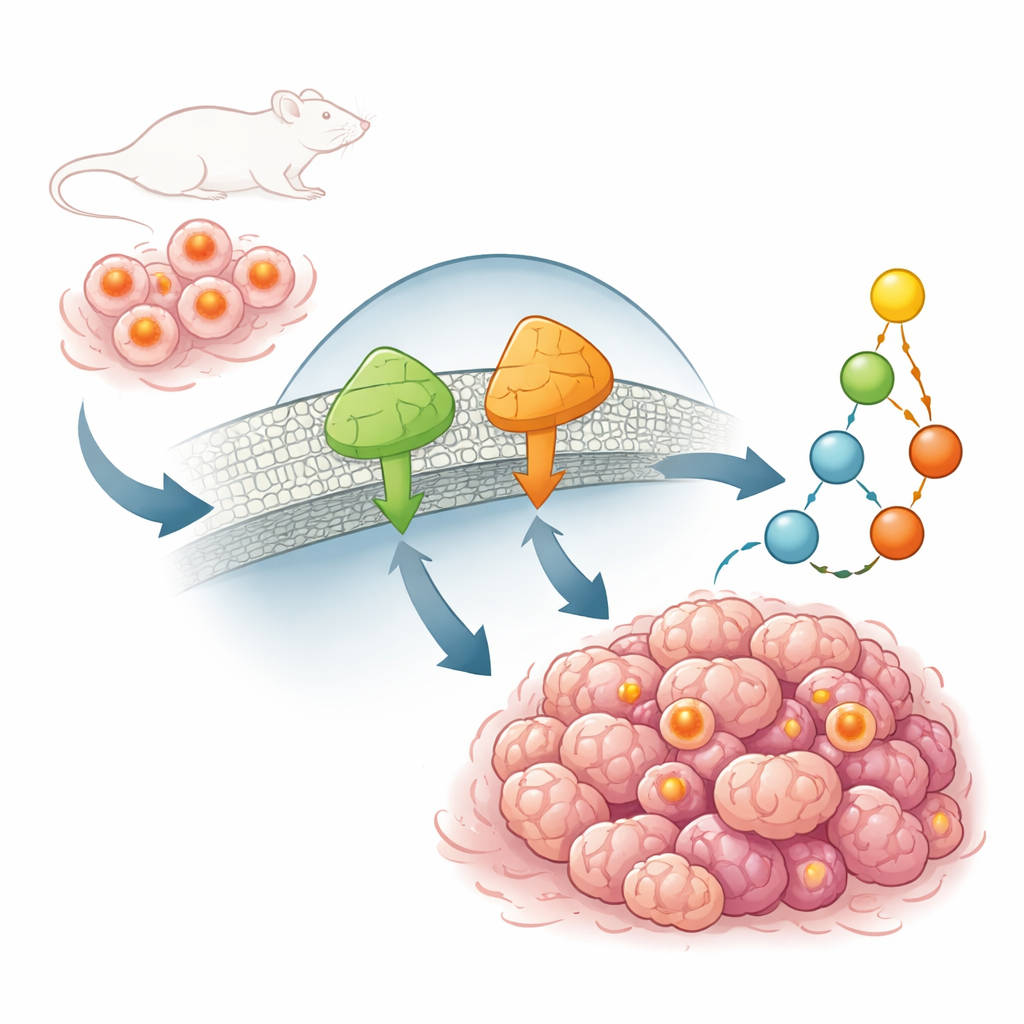
Tracking down the missing helper
Guided by the model, the authors searched for a real-life counterpart to the “mystery activator.” They measured the activity of several candidate proteins—members of families called SOS, GRF, and GRP—that are known to push RAS switches into the on state. In the original Y1 tumor cells, one protein in particular, RASGRP4, stood out as being much more abundant than the others. Strikingly, in a related Y1 cell variant that had been forced to adapt to constant exposure to a growth factor and no longer behaved like the original tumor cells, RASGRP4 was essentially absent. This pattern strongly suggested that RASGRP4 was the missing helper needed, alongside SOS, to keep KRAS activity high.
What happens when the helper is removed
To test cause and effect, the team used CRISPR gene editing to create Y1 cells lacking RASGRP4 and compared them to normal Y1 cells and cells lacking KRAS itself. In lab dishes, cells without RASGRP4 showed much lower RAS activity and were less harmed by a growth factor that normally stresses and kills Y1 tumor cells, mirroring the behavior of cells with reduced KRAS. The most striking test came in mice: when normal Y1 cells were injected, most animals quickly developed large tumors. In contrast, cells without KRAS formed smaller tumors more slowly, and cells without RASGRP4 formed even fewer and smaller tumors, with many mice remaining nearly tumor-free over the entire observation period. 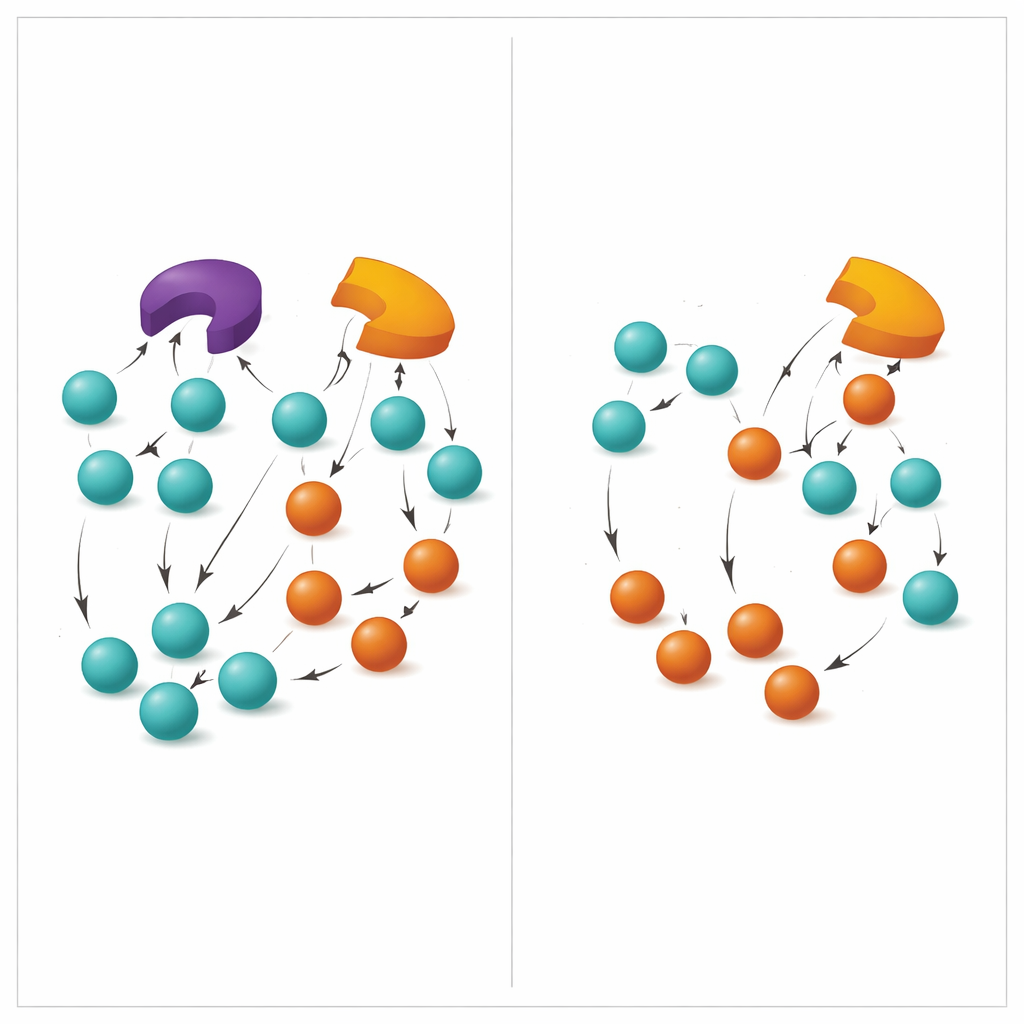
A new angle on blocking tumor growth
For a general reader, the key message is that this cancer model depends not just on an overactive growth switch (KRAS) and its famous activator (SOS), but also on a second, previously underappreciated helper, RASGRP4. Without RASGRP4, the switch is much harder to keep in the on position, and tumors struggle to grow. This work shows how combining computer models with biological experiments can reveal hidden players in complex signaling networks. It also highlights RASGRP4—and similar helper proteins—as promising targets for future drugs aimed at calming runaway growth signals in cancers that rely on KRAS.
Citation: Montoni, F., Wailemann, R.A.M., Torres, T.E.P. et al. RASGRP4 is a key factor in the KRAS activation mediated by SOS in tumor Y1 adrenocortical cell lines. Sci Rep 16, 12328 (2026). https://doi.org/10.1038/s41598-026-42968-0
Keywords: KRAS signaling, RASGRP4, cancer cell signaling, oncogene activation, computational tumor modeling