Clear Sky Science · en
Multi-objective optimization of a regional biogas supply chain using organic waste
Turning Waste into Local Energy
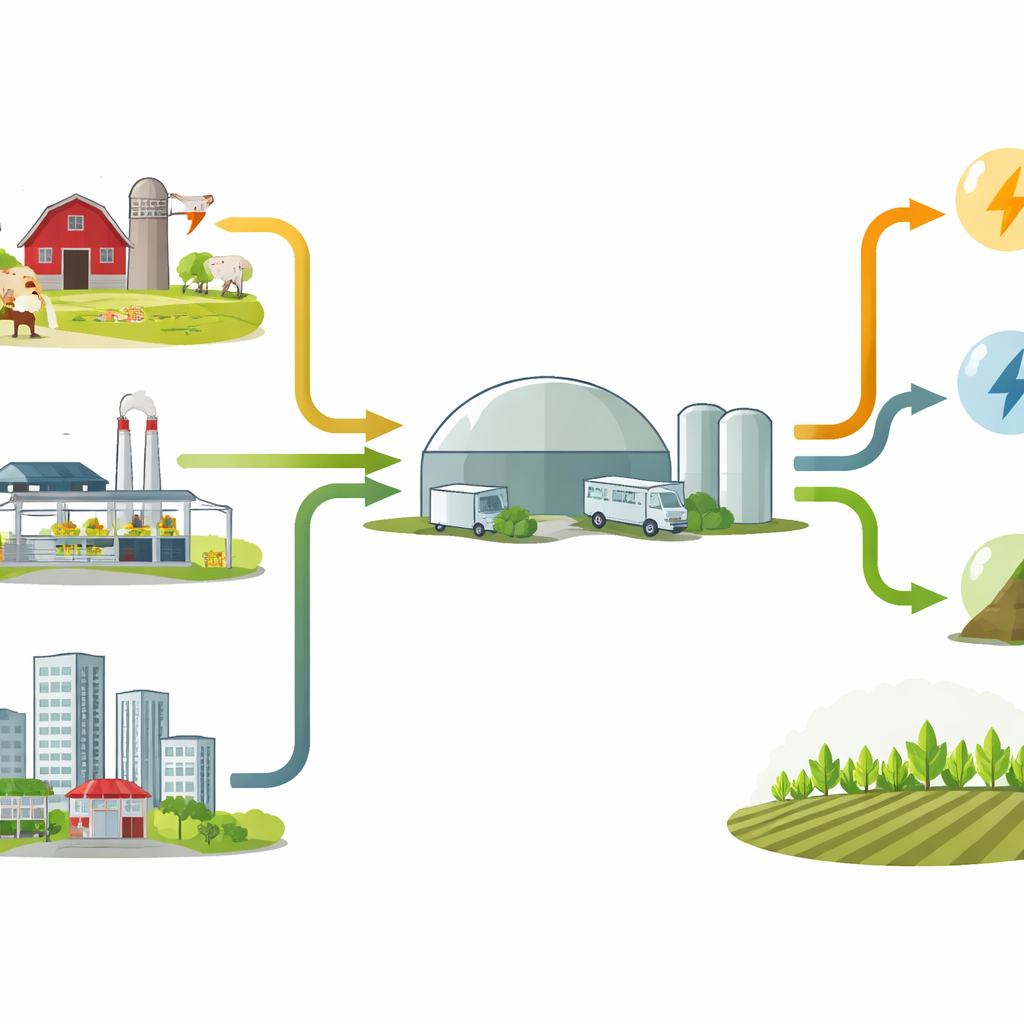
Across farming regions, mountains of manure, crop leftovers, and food scraps are often treated as a costly nuisance. Yet these same organic wastes can be transformed into clean energy and useful fertilizer. This paper explores how to design a regional system that does exactly that: it turns mixed organic waste into biogas while balancing money, climate impact, water use, public health, and the reliability of supply. The authors show how smart planning can reveal sweet spots where communities get strong environmental and economic benefits without overspending.
Why Biogas Matters for Everyday Life
Biogas is a fuel produced when microbes break down organic waste in the absence of oxygen. It can replace fossil natural gas for heat, electricity, and even vehicle fuel, while also cutting methane and carbon dioxide emissions that drive climate change. At the same time, the leftover material from the process can be used as fertilizer, returning nutrients to the soil instead of sending waste to landfills or lagoons. For regions rich in agriculture, such as the Republic of Tatarstan in Russia, this offers a way to manage waste, supply local energy, and support rural economies in one integrated system.
Balancing Many Goals at Once
Designing a biogas network is not as simple as building a single plant and filling it with whatever waste is nearby. Decision-makers must juggle questions like: Where should the plant be located? From which farms and factories should it collect waste? How big should it be? And how much should they prioritize cost savings, emission cuts, water and energy use, or local health benefits? To tackle these questions, the authors build a planning model that looks at eight different goals at the same time: total cost, greenhouse gas emissions, energy income, water use, energy use, fertilizer value, sanitation benefits, and the stability of supply if one source has problems. Each possible design of the system is tested against all eight goals, revealing trade-offs instead of a single “best” answer.
A Real-World Test Bed in an Agricultural Region
The model is tested on a working biogas plant near the town of Aktyuba in Tatarstan. This plant processes a mixture of cattle manure, crop residues, and food-industry waste from several suppliers within about 20 kilometers. Using detailed maps of farms, roads, and protected areas, the authors simulate many alternative layouts: different combinations of suppliers, plant sizes, and routing choices. A popular search method inspired by evolution, called a genetic algorithm, is then used to sift through these options and keep only those that cannot be improved on one goal without making another worse. The resulting set of designs forms a “Pareto front” that shows how cost, climate impact, and income move together.
Finding the Sweet Spot for Investment
When the team plots total cost against emissions, they see a curved frontier with a clear “knee” or elbow. Up to roughly a moderate investment level, spending more money brings large cuts in greenhouse gases, because the plant can be sized and fed efficiently. Beyond that knee, every extra unit of spending buys only a small additional reduction in emissions, making further investment harder to justify without subsidies or carbon credits. A similar pattern appears when looking at income from energy sales: increasing the amount of waste processed boosts revenue quickly at first, but as the plant nears its maximum capacity, the financial gains flatten out while technical challenges grow.
Resilient and Clean Supply from Many Small Streams
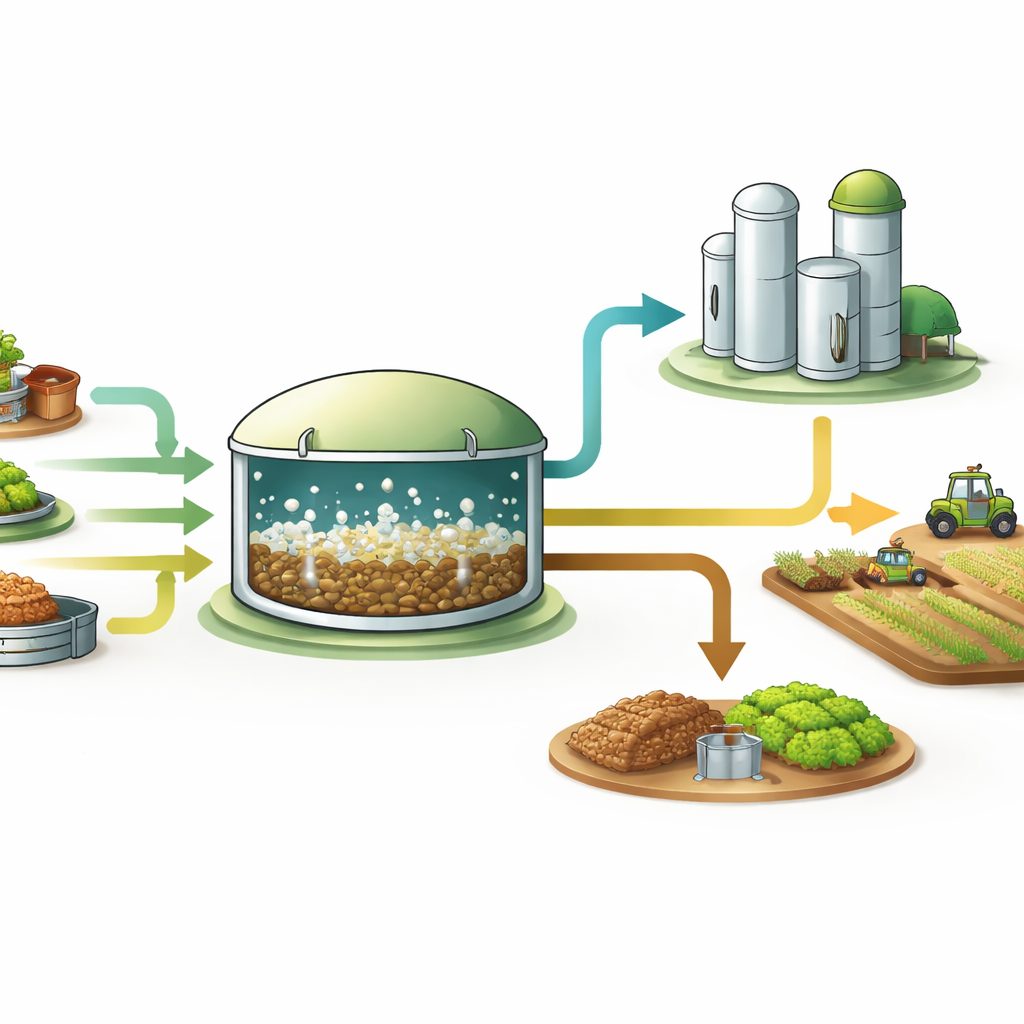
The study also examines how sensitive the system is to changes in key factors, such as feedstock prices, gas yield, and transport emissions. It finds that the price of waste and the amount of gas produced per ton have the strongest influence on performance, shaping where the cost–benefit knee lies. Another important insight is that drawing waste more evenly from several suppliers improves the system’s resilience: if one farm has a bad year, the plant can still operate smoothly. Surprisingly, this more balanced sourcing can also cut emissions further without increasing capital cost, as it avoids very long truck routes and overreliance on a single type of waste.
What This Means for Communities
For communities considering biogas, the message is that “bigger and greener” is not always better without limit. This work shows how to map the landscape of options and highlight a zone where cost, climate benefits, health gains, and reliability are all reasonably strong. In that zone, moderate investments in regional biogas plants that draw from multiple nearby farms can deliver significant emission reductions, steady energy income, and cleaner handling of manure and food waste. The framework offers a practical guide for planners and investors who want to turn organic waste into a dependable, climate-friendly energy resource while avoiding both underbuilt and overbuilt systems.
Citation: Malashin, I.P., Martysyuk, D., Nelyub, V. et al. Multi-objective optimization of a regional biogas supply chain using organic waste. Sci Rep 16, 12593 (2026). https://doi.org/10.1038/s41598-026-42963-5
Keywords: biogas, organic waste, renewable energy, supply chain, greenhouse gas emissions