Clear Sky Science · en
Exploratory randomized trial of Weissella cibaria CMU and oral microbiome changes in peri implant mucositis
Why Your Dental Implants Depend on Tiny Tenants
Dental implants have transformed modern dentistry, helping people chew comfortably and smile confidently. But like natural teeth, implants can develop gum problems. This study asks a simple question with big implications: can a daily probiotic powder gently nudge the community of mouth bacteria into a healthier balance around implants, and in doing so help calm early inflammation before it turns into serious disease?
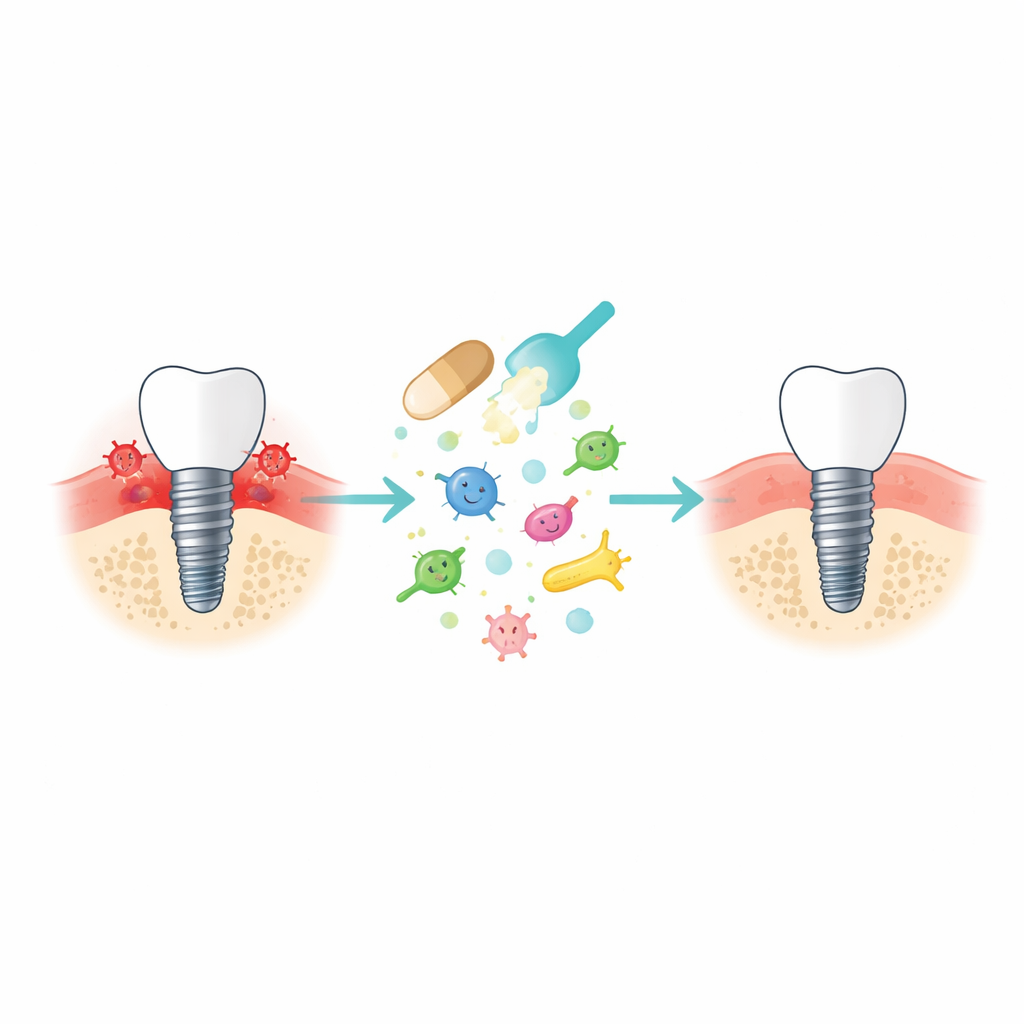
Early Trouble Around Implants
When the gums around an implant become red, swollen, and prone to bleeding, dentists call it peri-implant mucositis. At this stage, the underlying bone is usually intact, so the condition is considered reversible. The main culprit is not a single villain germ but a shift in the whole neighborhood of bacteria that live under the gumline. If this imbalance is not corrected, the inflammation can progress to peri-implantitis, a more destructive state that can threaten the stability of the implant itself. Standard care relies on mechanical cleaning and, sometimes, antibiotics, but these measures do not always restore a balanced microbial ecosystem.
A Probiotic Powder Put to the Test
The researchers focused on a probiotic strain called Weissella cibaria CMU, sold as a powder (OraCMU) and originally isolated from fermented foods. Previous laboratory work suggested that this bacterium can inhibit harmful species, tone down inflammation, and reduce odor and biofilm formation on titanium surfaces. In this randomized clinical trial, 40 adults with peri-implant mucositis received standard professional cleaning and unified brushing instructions. They were then randomly assigned to take either the probiotic powder or a look‑alike placebo twice daily for four weeks, by spreading it around the mouth after brushing. Neither the patients nor the examiner knew who received which product.
What Changed in the Mouth
Before and after the four‑week period, the team measured classic gum health indicators such as bleeding on probing, probing depth, plaque levels, and gum appearance. They also collected plaque from the deepest pocket around each implant and used DNA sequencing to map the bacterial community. Overall, there were no statistically clear differences between the probiotic and placebo groups in bleeding or general gum scores, likely because everyone had just received thorough cleaning and most cases were mild. However, the probiotic group showed subtle but consistent shifts in the types of bacteria present. Certain groups associated with healthier conditions, such as Veillonella and Rothia, became more common only in the probiotic users, while some organisms tied to disease, including Filifactor and specific harmful species like Fusobacterium nucleatum and Treponema denticola, tended to decrease.
A Closer Look at Bacterial Balance
Rather than dramatically wiping out microbes, the probiotic appeared to gently reshape the ecosystem. The researchers observed a modest rise in a broad ratio that, when interpreted with finer details, pointed toward a more stable, less aggressive community. Bacteria that feed on lactic acid and participate in nitrate metabolism—activities linked to pH control and dampening inflammation—were enriched after probiotic use. At the same time, late‑arriving “bridge” species that help organize complex, highly inflammatory plaque communities showed a weaker upward trend or even declined. This pattern suggests that the probiotic may slow or redirect the natural march toward a mature, more hostile biofilm, favoring an earlier, more balanced stage instead.
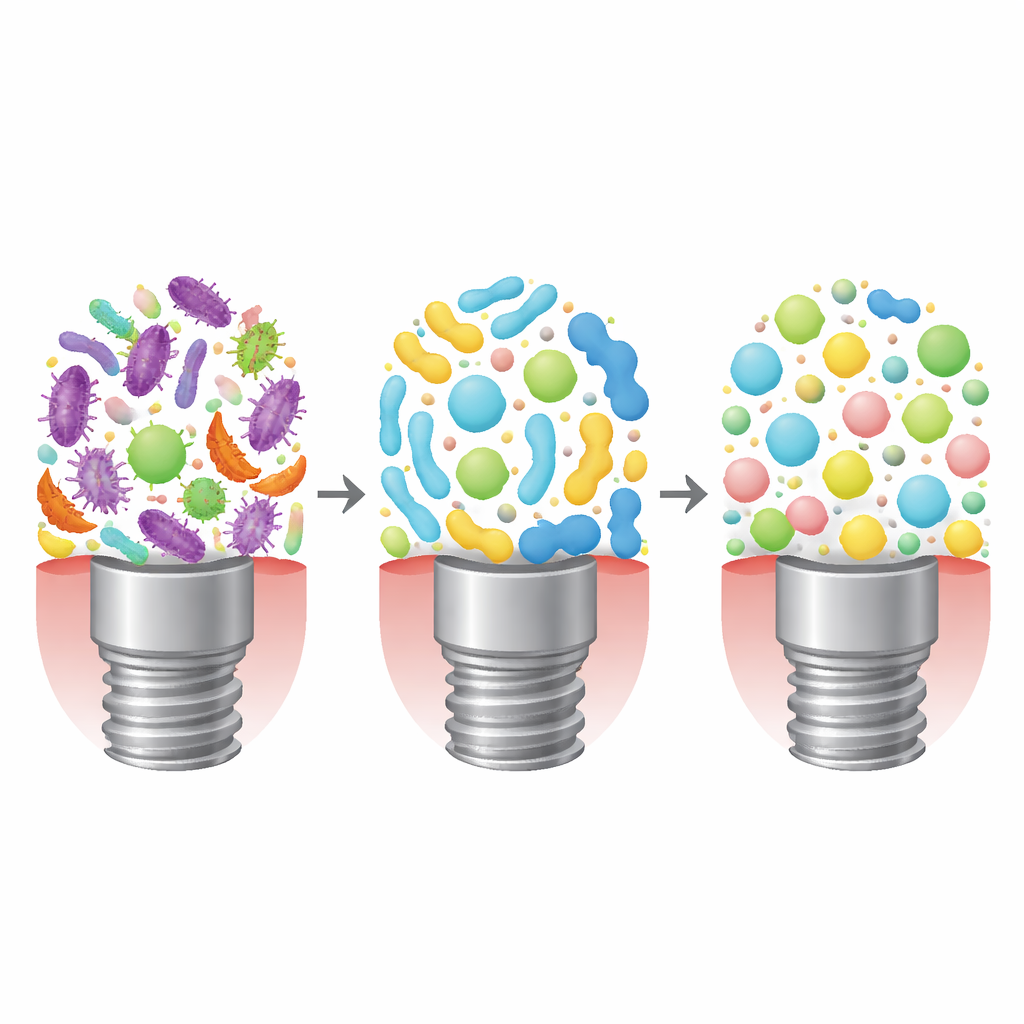
Small Clinical Shifts, Early Ecological Signals
Clinically, the most notable change was a modest reduction in pocket depth among patients with moderate disease who took the probiotic, but this finding came from exploratory analysis and should be interpreted carefully. The overall diversity of bacteria within each person’s sample did not change much, and broad measures of community structure did not separate probiotic users from placebo in a striking way. Still, when the researchers drilled down to specific groups and species and considered how they usually behave in plaque development, the pattern looked favorable for the probiotic group: fewer strongly inflammatory players, more helpful partners, and hints of a more resilient biofilm structure.
What This Means for People With Implants
This trial does not claim that a four‑week course of probiotic powder will cure diseased implants or replace professional cleaning. The sample was small, the follow‑up short, and most participants had only mild problems. Yet the results support a promising idea: rather than relying solely on scraping plaque away or using antibiotics, we may be able to guide the implant’s microbial community toward health using friendly bacteria. Weissella cibaria CMU seems to encourage a calmer, more cooperative mix of microbes around implants, potentially laying the groundwork for better long‑term gum health. Larger and longer studies will be needed to show whether these early microbial shifts can prevent progression to more serious disease and help implants last longer.
Citation: Kim, H., Oh, S., Hong, JS. et al. Exploratory randomized trial of Weissella cibaria CMU and oral microbiome changes in peri implant mucositis. Sci Rep 16, 12166 (2026). https://doi.org/10.1038/s41598-026-42961-7
Keywords: peri-implant mucositis, oral probiotics, dental implants, oral microbiome, Weissella cibaria