Clear Sky Science · en
Evaluation of immunoreactive epitopes in the sera and cerebrospinal fluid of patients with post-treatment Lyme disease syndrome
Lingering Symptoms After a Tick Bite
Most people who get Lyme disease and take antibiotics recover fully. Yet a sizeable minority continue to struggle with fatigue, foggy thinking, pain, and poor sleep for months or even years. This cluster of ongoing problems is called post-treatment Lyme disease syndrome, or PTLDS. Patients and doctors alike want to know: is there a hidden, lingering infection, an abnormal immune response, or something else at work? This study takes a close look at the antibodies in blood and spinal fluid to see whether people with PTLDS carry a distinctive immune fingerprint that might explain their symptoms or guide better diagnosis.
Looking for Clues in the Body’s Defenses
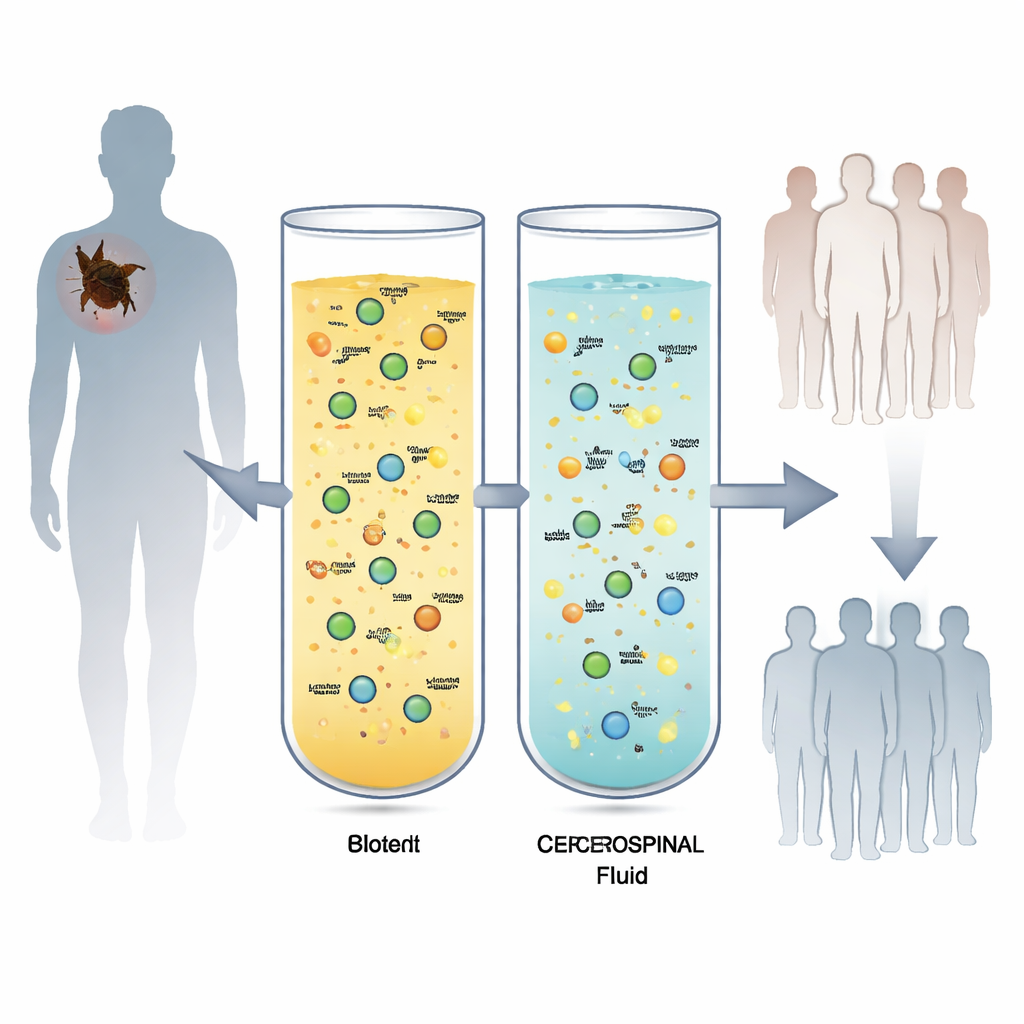
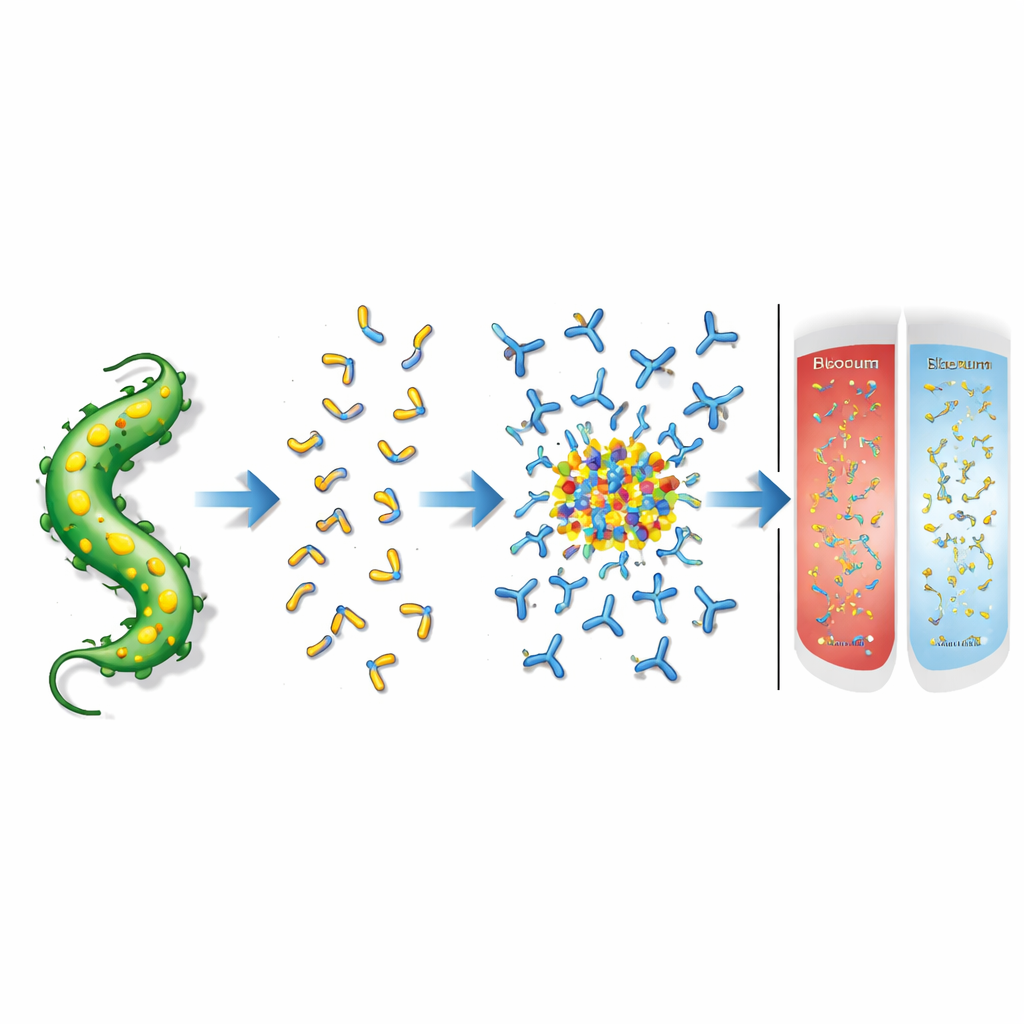
The researchers focused on antibodies, the Y‑shaped proteins our immune system makes to recognize germs. They used an extremely detailed laboratory tool, a glass slide covered with more than ninety thousand tiny fragments of proteins from Borrelia burgdorferi, the bacterium that causes Lyme disease. When blood or spinal fluid from a patient is washed over this slide, antibodies stick to the fragments they recognize, lighting up the bacterial pieces the immune system is still responding to. By comparing these patterns in people with PTLDS, recovered Lyme patients, and healthy volunteers, the team hoped to spot antibody targets that were unique to PTLDS.
Comparing Blood and Spinal Fluid
Because many PTLDS patients complain of memory and concentration problems, the team measured antibodies not only in blood serum but also in cerebrospinal fluid, which bathes the brain and spinal cord. They analyzed paired samples from the same individuals to see whether the nervous system showed signs of a special, hidden infection. Overall, antibody reactions were much stronger and broader in the blood than in the spinal fluid. The scientists did find a handful of protein fragments that showed slightly higher signals in the spinal fluid for some patients, but they did not see any bacterial regions that were consistently or uniquely targeted in the nervous system. This suggests that the outer surface of the Lyme bacterium looks similar to the immune system whether it is in the body at large or in the brain.
Similar Immune Targets in Sick and Recovered Patients
When the team compared PTLDS patients to people who had recovered from Lyme disease, they found that both groups tended to make antibodies against the same main bacterial proteins. One surface protein, called VlsE, stood out as the most strongly recognized in every group. Some specific fragments of VlsE produced higher signals in PTLDS patients than in recovered patients, and a subset of PTLDS patients showed particularly strong and long‑lasting responses to many parts of this protein. Another set of proteins, decorin binding proteins A and B, also drew stronger responses in a subset of PTLDS patients who had originally presented with a single rash. Still, these differences were not sharp enough or consistent enough across all patients to serve as a reliable diagnostic test.
Tracking Bacterial Strain Signatures
The study also used antibody patterns to infer which genetic types of the Lyme bacterium had infected each person. The researchers did this by looking at responses to a highly variable outer protein called OspC, which comes in many distinct versions. In the PTLDS group, antibodies most often matched OspC types known as A and K. These strain types have been linked in other work to more severe or widely spread disease, but they are also common in ticks and early skin infections in general. The finding hints that certain bacterial strains might be associated with more persistent symptoms, but it could also simply mirror which strains are most widespread in the environment.
What This Means for Patients
For people living with PTLDS, the core message of this study is both sobering and reassuring. On the one hand, the researchers did not find a clear antibody signature that separates PTLDS patients from those who recover, nor did they see signs of a distinct, ongoing infection in the spinal fluid. That means we still lack a simple blood or spinal tap test to confirm PTLDS or pinpoint its cause. On the other hand, the results suggest that major bacterial targets look the same in both groups, and that the immune system’s lingering responses may reflect a complex mix of factors rather than a single, missed infection. Understanding these nuances is an important step toward developing better tools to diagnose, prevent, and eventually treat long‑lasting symptoms after Lyme disease.
Citation: Marques, A.R., Sanchez-Vicente, S., Nagapurkar, A. et al. Evaluation of immunoreactive epitopes in the sera and cerebrospinal fluid of patients with post-treatment Lyme disease syndrome. Sci Rep 16, 13368 (2026). https://doi.org/10.1038/s41598-026-42941-x
Keywords: post-treatment Lyme disease syndrome, Lyme disease antibodies, immune response, cerebrospinal fluid, tick-borne infection