Clear Sky Science · en
Intestinal morphology and host‑ and system‑associated microbiome dynamics during short‑term fasting and refeeding of Atlantic salmon in recirculating aquaculture systems
Why this matters for fish and food
As salmon farming moves indoors into high-tech recirculating aquaculture systems, producers often stop feeding fish for a few days before handling or transport. This simple management step helps keep the water clean and the fish calmer, but until now we have known little about how brief fasting alters the invisible world of microbes living in the water and inside the fish—and what that might mean for animal health and food production. This study follows Atlantic salmon and their tank ecosystems through a five‑day fast and refeeding period to reveal how quickly these microscopic communities and gut tissues respond, and how resilient the fish appear to be.
Fish in a looped water world
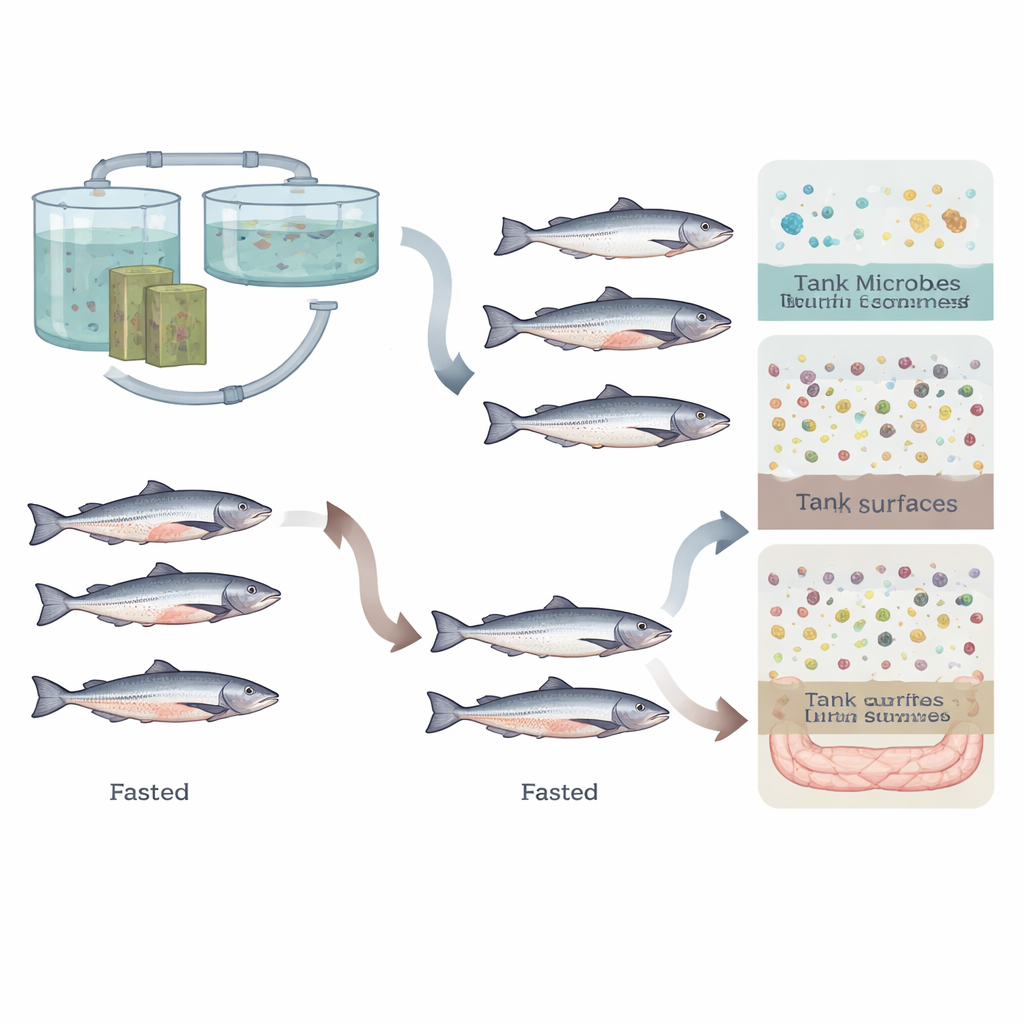
Modern recirculating aquaculture systems (RAS) reuse most of their water, cleaning it through filters and biofilms rather than constantly pumping in fresh supplies. In these systems, bacteria are not just background noise: they break down fish waste, help keep water safe, and also colonize fish skin and intestines. The researchers worked with post‑smolt Atlantic salmon—fish partway through their life cycle—kept in two nearly identical RAS units. One unit continued to receive feed, while in the other, feed was withheld for five days and then reintroduced. Over about two weeks, the team tracked water chemistry, bacterial DNA from water, filters, tank surfaces and fish tissues, and microscopic changes in skin and gut structure, alongside basic welfare indicators such as physical injuries and stress hormone levels.
Water microbes feel fasting first
The most dramatic shifts during fasting and refeeding occurred in the free‑floating bacteria in the recirculating water. While the bacterial communities on filters and tank surfaces stayed relatively stable, the microbes in the water column changed their make‑up as nutrient levels rose and fell. During fasting, carbon levels dropped and oxygen rose, signaling lower microbial activity and a reduced total bacterial load. Certain bacterial groups that prefer leaner, more stable conditions held steady on the biofilter media and biofilms, while others that thrive on richer food pulses boomed or shrank in the water as feed was removed and then restored. Interestingly, the mix of bacteria coating the fish skin closely mirrored those in the surrounding water, especially for microbes attached to small particles, suggesting that skin mucus in these systems is heavily shaped by the water environment.
Hidden changes in the salmon gut
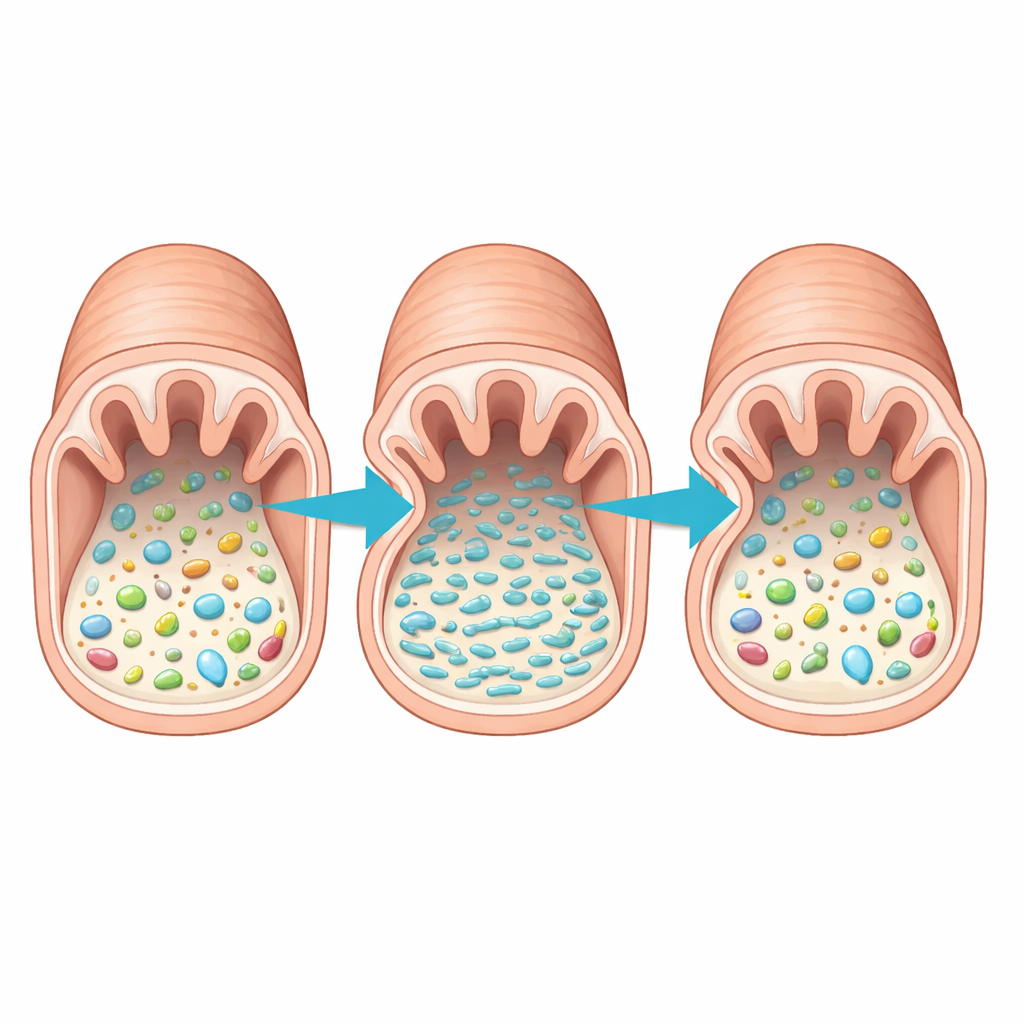
Inside the fish, the picture was more subtle but crucial. The distal intestine—the downstream region of the gut—hosted a different and less diverse bacterial community than the skin or water, dominated by a few specialist types that seem well adapted to life inside salmon. Overall diversity in these gut microbes did not change dramatically during fasting, but their composition did. Most strikingly, bacteria from the Vibrio group surged in the remaining gut contents of fasted fish, at times making up nearly all detectable bacteria there, even though these microbes were barely present in the surrounding water. At the same time, microscopic examination showed that gut structures were more disturbed after fasting: tissue scores worsened in several categories, including changes in supporting layers and signs of swelling, and the gut contents became sparse and cast‑like, showing that much of the digesta had been cleared out. These changes largely reversed after six days of refeeding.
Health and welfare on the outside
Despite the internal shifts in gut microbes and tissue structure, outward measures of fish welfare remained reassuringly stable. The researchers saw no meaningful differences between fasted and continuously fed fish in visible injuries to eyes, jaws, gills, skin or fins, and the salmon continued to grow over the study period. Levels of cortisol, a key stress hormone, did not rise during fasting or refeeding, suggesting that this short withdrawal of feed did not greatly disturb the fish at a whole‑body level. Skin tissue itself also appeared unchanged, even as the community of microbes coating the mucus shifted in tandem with the water microbes.
What it all means for salmon farming
This work shows that a short, five‑day fasting period in a recirculating aquaculture system mainly reshapes the freely floating microbial community in the water and temporarily disturbs the salmon’s gut environment, including a marked but reversible bloom of Vibrio bacteria in the gut contents and modest structural changes in the intestinal lining. Yet, within six days of refeeding, both the microbes and gut tissues largely returned toward their previous state, and standard welfare and stress indicators stayed within normal ranges. For farmers and regulators, these findings suggest that short, carefully managed fasting schedules are unlikely to harm post‑smolt Atlantic salmon in well‑run RAS facilities, while highlighting that gut microbes are highly responsive to even brief breaks in feeding. Future work that links these microbial ups and downs more directly to disease resistance and long‑term health will help refine best practices for sustainable, fish‑friendly aquaculture.
Citation: Karlsen, C., Meriac, A., Ytteborg, E. et al. Intestinal morphology and host‑ and system‑associated microbiome dynamics during short‑term fasting and refeeding of Atlantic salmon in recirculating aquaculture systems. Sci Rep 16, 12906 (2026). https://doi.org/10.1038/s41598-026-42939-5
Keywords: Atlantic salmon, recirculating aquaculture, fasting and refeeding, fish microbiome, fish welfare