Clear Sky Science · en
Circulating Maresin-1 and cartilage remodeling biomarkers in rheumatoid arthritis and osteoarthritis
Why this matters for aching joints
Many people live with sore, stiff, or swollen joints from conditions like rheumatoid arthritis and osteoarthritis. We often hear about “inflammation” as the culprit, but less about how the body normally turns inflammation off and repairs damage. This study explores a natural peacekeeping molecule in the blood, called Maresin‑1, alongside two signals of cartilage wear and tear, to understand whether problems with the body’s built‑in shutoff switch for inflammation might be part of what keeps arthritis going.
A built‑in off switch for inflammation
Inflammation is not just something to be blocked; in healthy tissue it is actively wound down by specialized molecules that help return the body to balance. Maresin‑1 is one of these molecules, made from omega‑3 fats and produced by immune cells. It helps calm overactive immune responses, guides cleanup of harmful debris, and supports tissue repair. In animal experiments, extra Maresin‑1 can lessen joint damage and boost cartilage-building proteins. The authors reasoned that if Maresin‑1 is crucial for ending joint inflammation, people with long‑standing rheumatoid arthritis or osteoarthritis might show altered levels in their blood.
Signals from worn cartilage
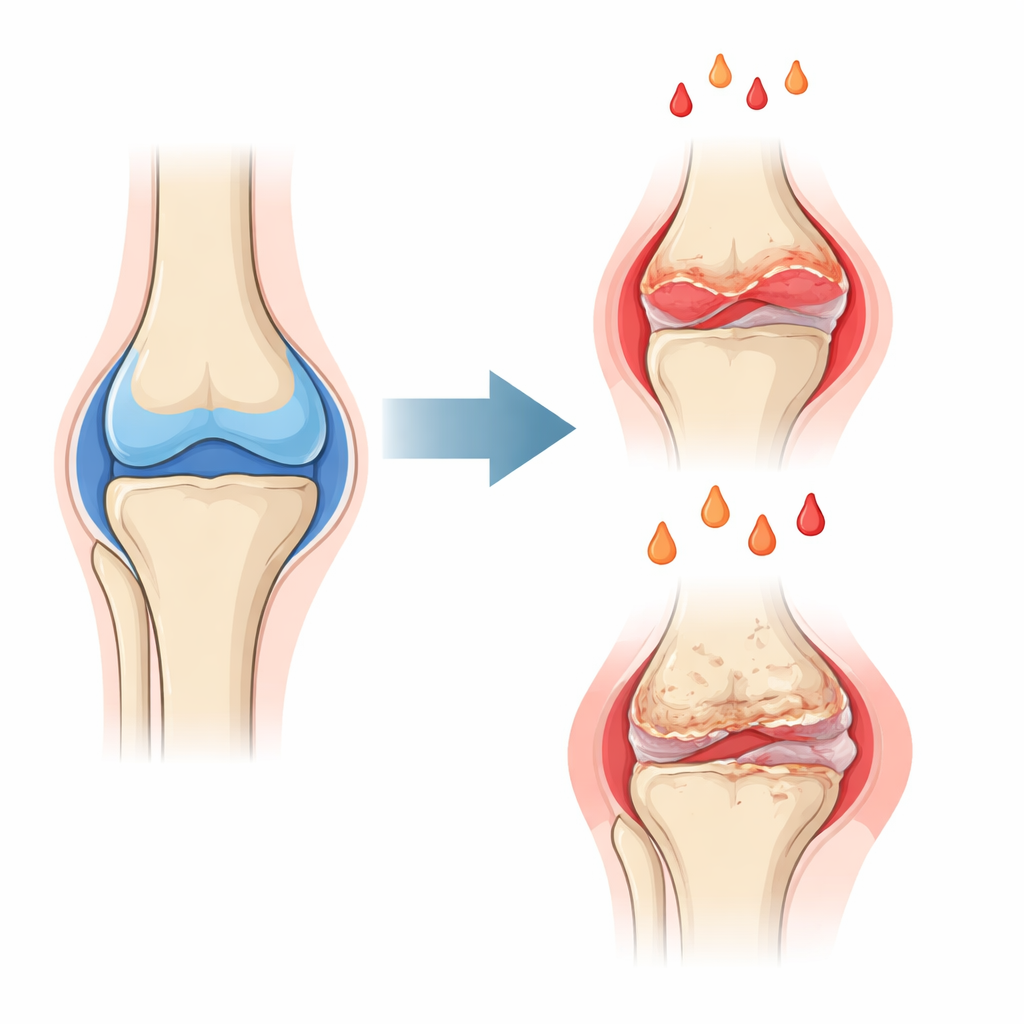
To connect the body’s resolution of inflammation with the state of joint surfaces, the team also measured two cartilage‑related molecules in the blood: COMP and WISP‑1. These proteins are linked to the cartilage matrix—the smooth, shock‑absorbing layer that coats the ends of bones. When cartilage is being remodeled or broken down, levels of these proteins can change. Earlier studies have sometimes found higher levels in people with active or early joint damage, but results have varied depending on disease stage and whether blood, joint fluid, or tissue was examined. By looking at Maresin‑1, COMP, and WISP‑1 together, the researchers hoped to see whether faults in inflammation “cleanup” go hand‑in‑hand with changes in cartilage turnover.
What the researchers measured
The study enrolled 150 adults: 50 with rheumatoid arthritis, 50 with severe knee osteoarthritis, and 50 generally healthy volunteers. All participants had blood drawn after fasting, and the researchers used sensitive laboratory tests to measure Maresin‑1, COMP, and WISP‑1. They also recorded standard inflammation markers, such as C‑reactive protein and erythrocyte sedimentation rate, as well as a widely used score of rheumatoid arthritis activity. Because the arthritis groups were older on average and had higher body weight than the control group, the team applied statistical methods to check whether age, sex, or body mass could explain any differences they observed.
Key differences in blood markers
The clearest finding was a sharp drop in Maresin‑1 among people with arthritis. Both rheumatoid arthritis and osteoarthritis groups had Maresin‑1 levels at a little over half those of healthy volunteers, and this difference remained even after accounting for age and body size. Lower Maresin‑1 was linked with higher inflammation in the blood and more active rheumatoid arthritis, suggesting that when this peacekeeping signal is low, inflammation tends to be stronger. Cartilage‑related markers told a more nuanced story: COMP was significantly lower in rheumatoid arthritis than in both osteoarthritis and controls, while osteoarthritis showed only a small, non‑significant dip. WISP‑1 levels were lower in both arthritis groups than in healthy people. Together, these shifts hint that long‑term joint disease may eventually exhaust or reshape the usual patterns of cartilage breakdown seen in earlier stages.
What this could mean for future care
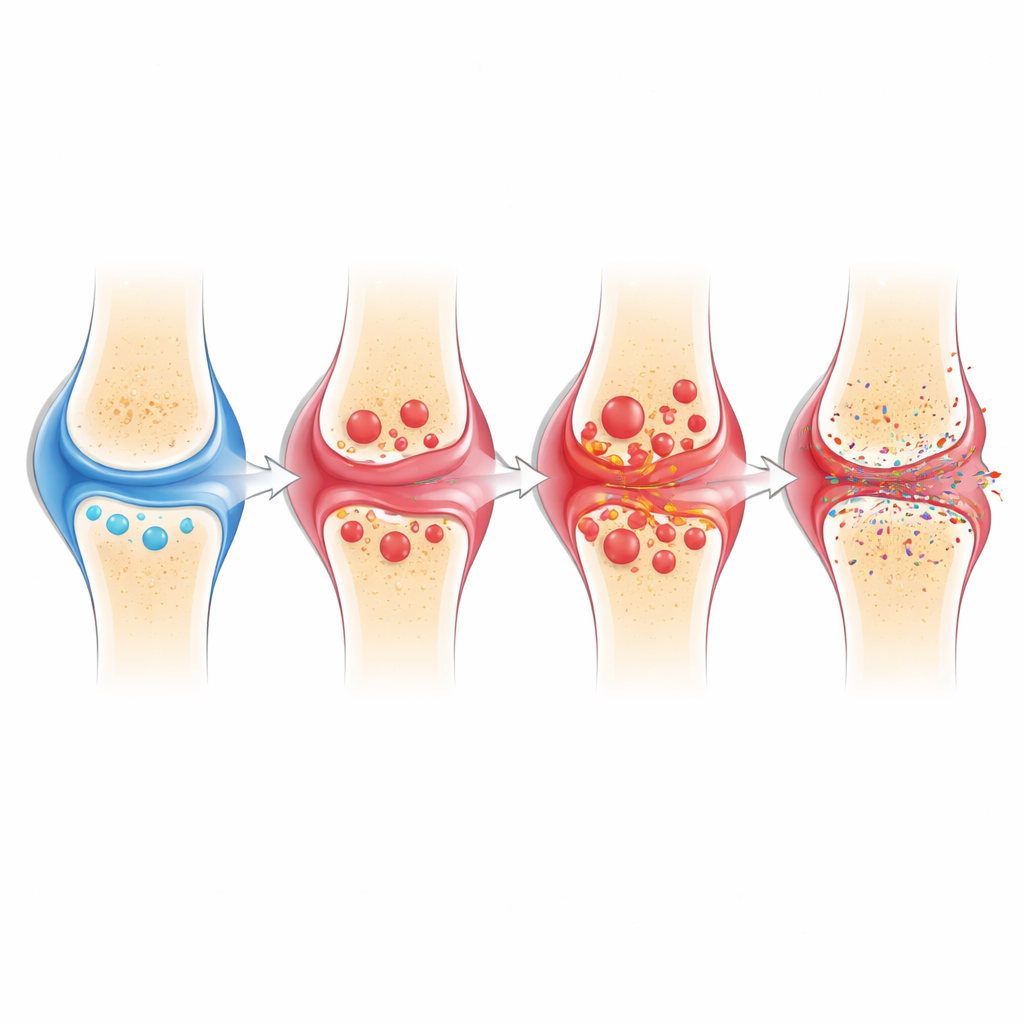
To a lay reader, the main message is that arthritis may not only be a story of too much inflammation, but also of not enough resolution. People with rheumatoid arthritis and osteoarthritis in this study had strikingly lower levels of a natural “stop signal” for inflammation, along with altered signs of cartilage remodeling in their blood. This does not prove that low Maresin‑1 causes joint damage, but it supports the idea that boosting the body’s own resolution pathways might complement standard anti‑inflammatory drugs. In the future, measuring Maresin‑1 and related markers could help track disease activity or guide treatments aimed not just at damping down inflammation, but at actively helping the body finish the healing job.
Citation: Esmez, O., Deniz, G., Ercan, Z. et al. Circulating Maresin-1 and cartilage remodeling biomarkers in rheumatoid arthritis and osteoarthritis. Sci Rep 16, 13975 (2026). https://doi.org/10.1038/s41598-026-42927-9
Keywords: rheumatoid arthritis, osteoarthritis, inflammation resolution, cartilage biomarkers, Maresin-1