Clear Sky Science · en
Identification and validation of KLRB1-related biomarkers in rheumatoid arthritis
Why joint pain needs better early warning signs
Rheumatoid arthritis is a long lasting disease in which the body’s own defenses attack the joints, often leading to pain, swelling, and lasting damage. Doctors know that catching the disease early and tailoring treatment can protect joints, but current tests do not always flag the illness in time or show how active it is. This study searched human joint tissue for new molecular clues that could help doctors spot rheumatoid arthritis earlier and understand how the immune system misfires in this disease. 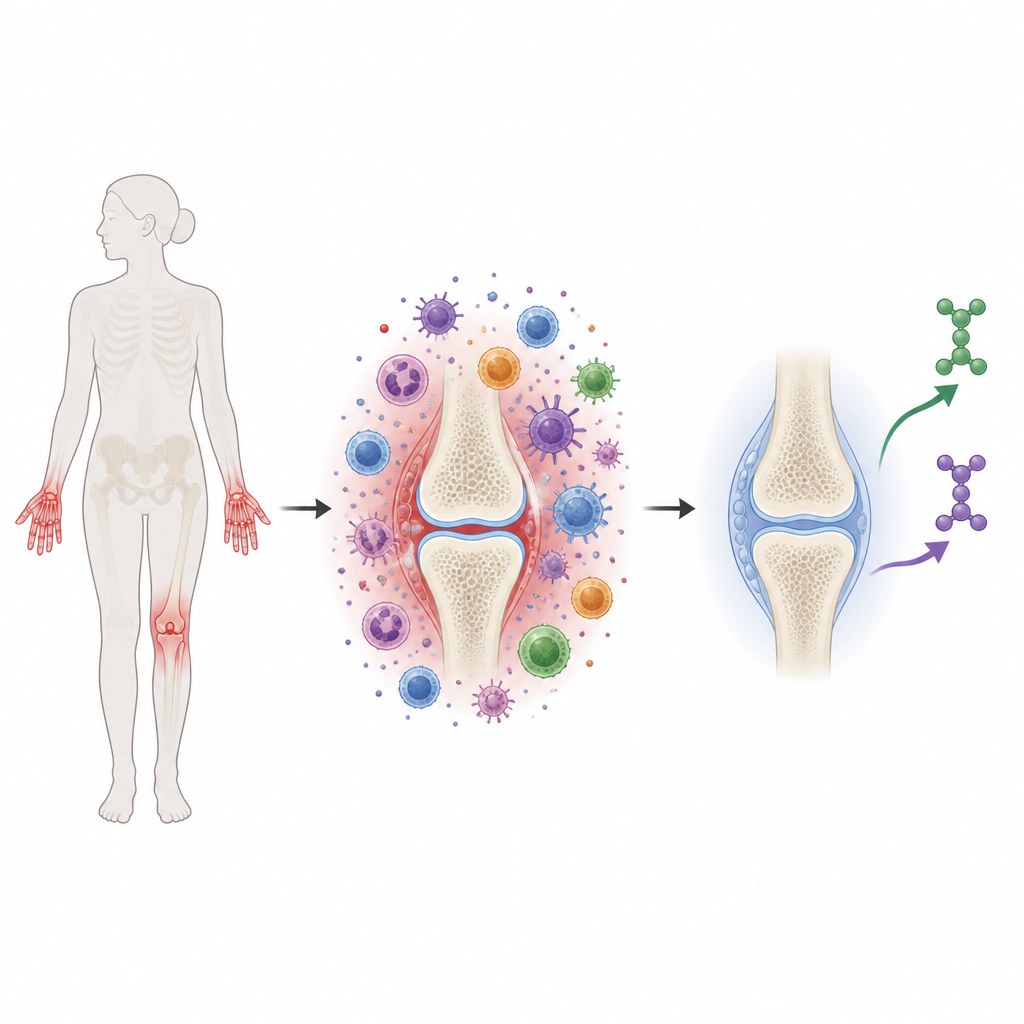
Hunting for clues in joint tissue
The researchers used public gene activity data from small samples of the joint lining taken from people with and without rheumatoid arthritis. Instead of looking at one molecule at a time, they scanned thousands of genes at once to see which were turned up or down in diseased joints. They focused on a gene called KLRB1, which helps control certain immune cells and has been linked to autoimmune conditions. By comparing joints with high and low KLRB1 activity, and by building networks of genes that tend to switch on together, they narrowed a long list of candidates down to a core set of genes that seemed tightly connected to both KLRB1 and rheumatoid arthritis.
Machine learning finds two standout markers
From this core group the team built interaction maps of the proteins made by these genes and then turned to machine learning tools to pick out the most informative ones. Two genes, called ADAMDEC1 and CXCL13, stood out across several types of analysis. They were part of the most strongly connected gene network, were repeatedly selected by different computer models, and showed a clear and consistent rise in activity in rheumatoid arthritis tissue compared with healthy joint lining in two independent datasets. When the researchers tested how well each gene could separate patients from controls, both performed very well, suggesting that their activity levels could serve as useful diagnostic markers. 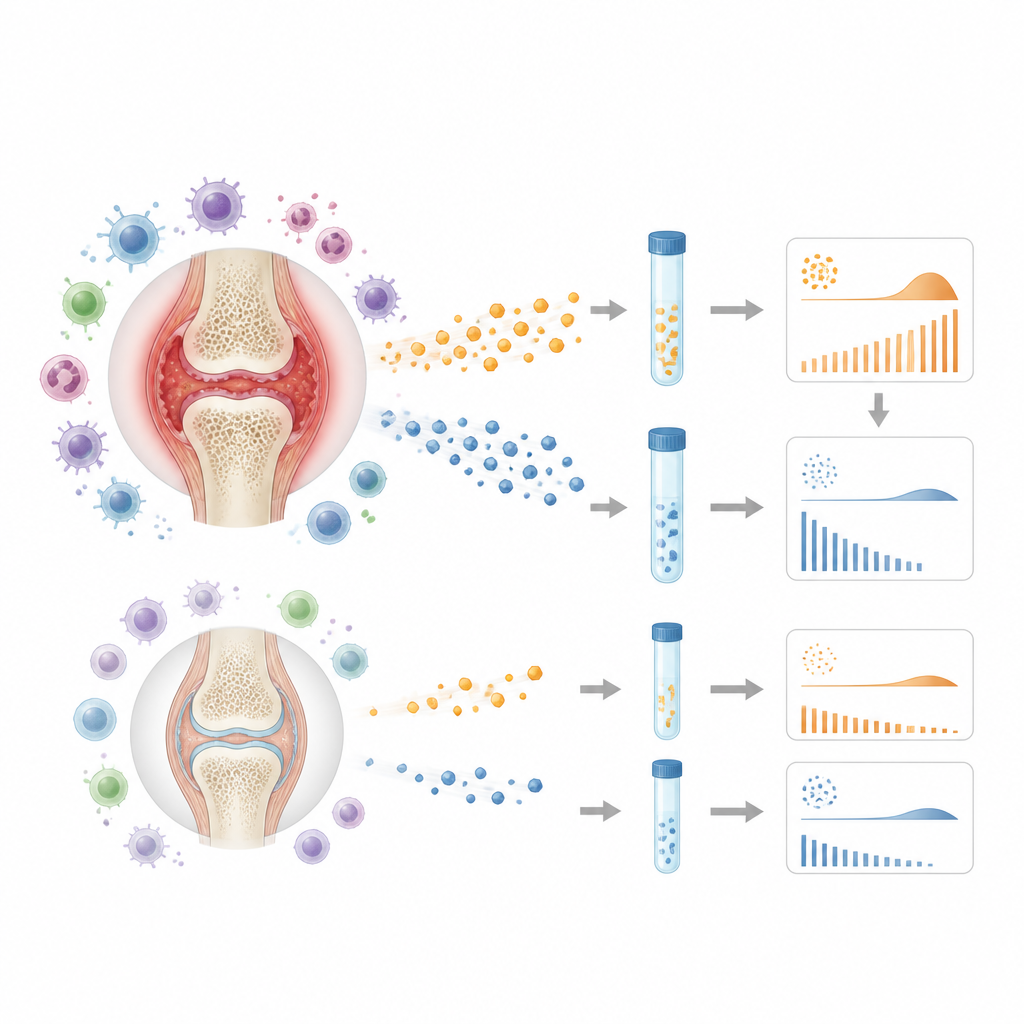
What these markers reveal about the immune battle
Looking more closely at what these genes do, the study found that they are tied to pathways that control the skeleton and inner motors of cells, systems that help immune and joint cells move, change shape, and interact. The genes also lined up with changes in key immune cell types inside the joint. Higher levels of ADAMDEC1 and CXCL13 went hand in hand with more plasma cells, which churn out antibodies, and with more active T cells, while cells such as mast cells and natural killer cells tended to be less active. The markers were also linked with shifts in several inflammatory molecules, hinting that they sit at the crossroads between chronic inflammation and tissue remodeling inside the joint.
From markers to tools for care
To explore how these findings could aid patients, the team combined ADAMDEC1 and CXCL13 into a simple prediction chart called a nomogram. In their data this chart estimated the chance of having rheumatoid arthritis with high accuracy. They also mapped how these genes might be controlled by other regulators, such as microRNAs and transcription factors, and used a drug–gene database to highlight existing medicines that might interact with them, including antibiotics that could act through the gut–joint connection. Finally, they confirmed in real patient samples that both genes were more active in diseased joints than in control tissue, matching the computer based results.
What it means for people with rheumatoid arthritis
This work suggests that ADAMDEC1 and CXCL13 are strong molecular signals of immune overactivity in the joints of people with rheumatoid arthritis. While more and larger studies are needed before these markers can be used in everyday clinics, they may eventually help doctors detect the disease earlier, judge how aggressive it is, and perhaps guide new treatments that calm harmful immune activity while sparing healthy tissue.
Citation: Song, J., Lu, J., Zhao, H. et al. Identification and validation of KLRB1-related biomarkers in rheumatoid arthritis. Sci Rep 16, 16102 (2026). https://doi.org/10.1038/s41598-026-42924-y
Keywords: rheumatoid arthritis, biomarkers, immune cells, gene expression, joint inflammation