Clear Sky Science · en
Lipidomic profiling identifies key pathways and a 5-lipid panel with high diagnostic efficacy for ischemic stroke
Why tiny fats in the blood matter for stroke
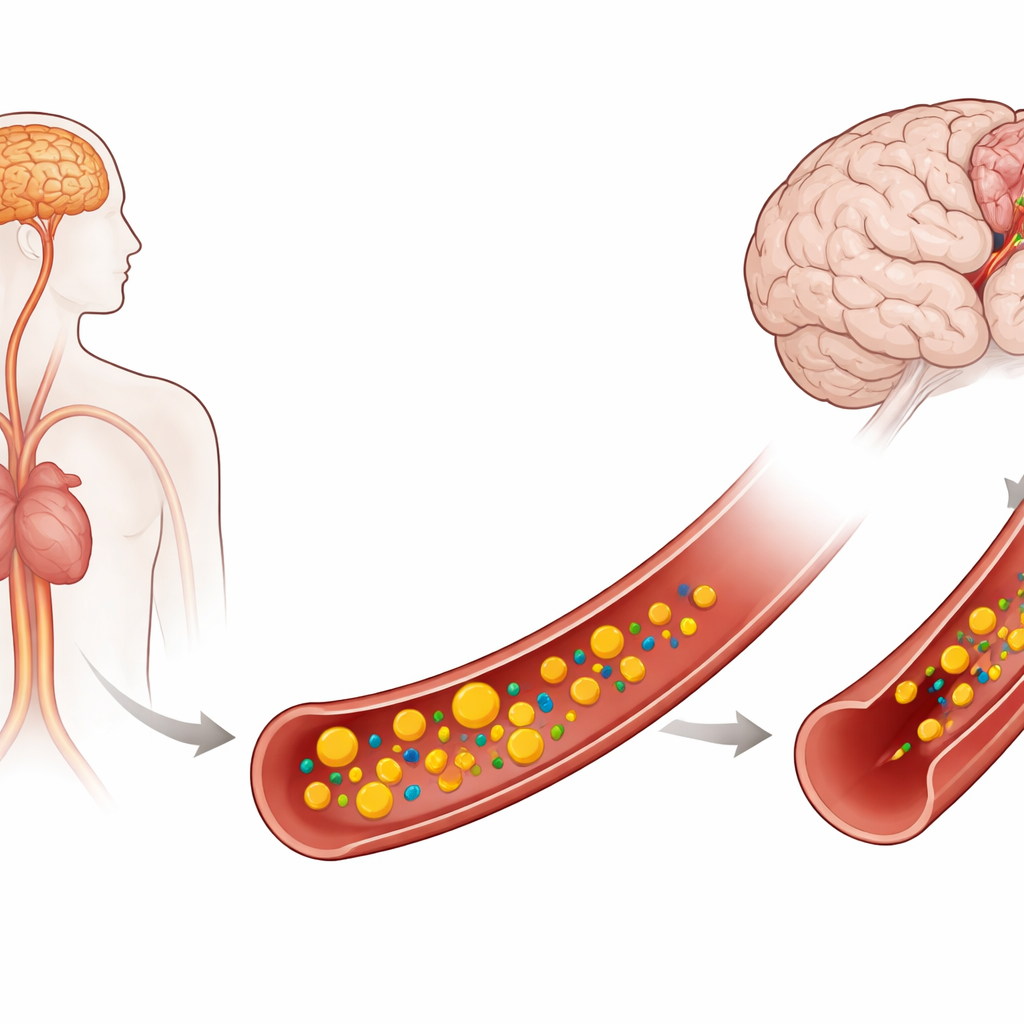
When a blood vessel feeding the brain suddenly becomes blocked, every minute counts. Doctors rely on brain scans and symptoms to decide on treatment, yet many people with early ischemic stroke show little or nothing on imaging. This study explores an emerging idea: that the pattern of tiny fat-like molecules circulating in our blood may reveal who is having a stroke, why it happens, and how severe it might become. By zooming in on these lipids, the researchers hope to pave the way for a fast blood test that could flag ischemic stroke even before brain scans turn positive.
Uncovering hidden signals in stroke genes
To see whether lipid biology is truly central to stroke, the team first turned to public gene-expression databases containing blood samples from people with ischemic stroke and healthy volunteers. Using advanced statistical tools, they asked which biological pathways were turned up or down in stroke. Out of hundreds of possibilities, five pathways stood out as consistently dialed down: those involved in processing linolenic acid and other essential fatty acids, in building and remodeling key cell-membrane lipids, and in handling a family of fats called sphingolipids. Together, these changes suggest that stroke is tightly intertwined with disrupted fat handling in the body, not just with clogged arteries in the neck or brain.
From routine cholesterol tests to deep lipid fingerprints
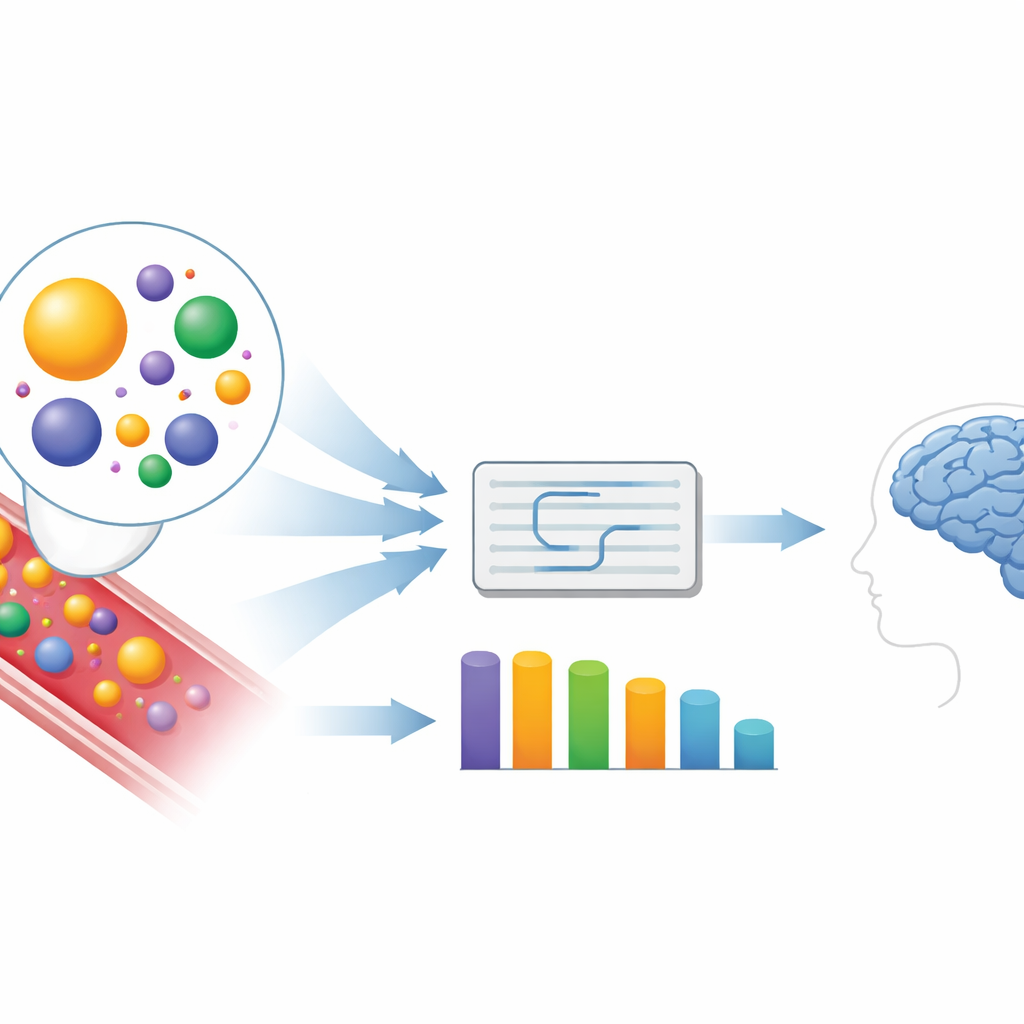
The researchers then recruited 251 patients with newly diagnosed ischemic stroke and 251 healthy people matched by age and sex. Standard blood tests confirmed a familiar pattern: stroke patients more often had high total cholesterol, triglycerides, and “bad” LDL cholesterol, and lower “good” HDL cholesterol. But these broad measures only scratch the surface of lipid biology. To dig deeper, the team used state-of-the-art liquid chromatography–mass spectrometry to catalog more than a hundred distinct lipid molecules in the participants’ blood plasma, first in a small discovery set and then in the full group. Sophisticated pattern-recognition methods showed that, taken together, these lipids cleanly separated stroke patients from healthy controls, hinting at a distinctive metabolic fingerprint of ischemic stroke.
Fifteen standout molecules and a five-lipid signature
Among the many lipids measured, 66 differed clearly between patients and controls, and 19 showed especially strong shifts. Several belonged to phospholipids that help build cell membranes, while others were intermediates in signaling cascades that can promote inflammation or cell injury. To be sure that common conditions like diabetes, high blood pressure, and obesity were not driving these differences, the team repeated the analysis in a subgroup without these illnesses. Even after this strict filtering, 15 lipids remained consistently altered in stroke. Using statistical weighting, the researchers distilled this list down further to a five-lipid panel that carried most of the diagnostic power. When these five molecules were considered together, their combined pattern correctly distinguished stroke from non-stroke cases with high overall accuracy, especially in ruling out people without stroke.
What the lipid shifts reveal about brain injury
The pattern of changes offers clues about what happens inside the brain during a stroke. Levels of certain phosphatidylethanolamine molecules, important building blocks of cell membranes, were markedly reduced, suggesting that these components are being broken down during injury. In contrast, some diacylglycerols and related fats were increased, consistent with activation of enzymes that chop up membrane lipids when nerve cells are starved of oxygen and flooded with calcium. A particular sphingolipid, a ceramide-related molecule, was also elevated, fitting with other work linking this family of fats to inflammation and poor outcomes after brain ischemia. These coordinated shifts strengthen the idea that stroke is not only a blockage problem but also a rapid chemical storm that reshapes the brain’s lipid landscape.
From discovery to a future blood test
For people at risk of stroke, the most exciting implication is the prospect of a blood test that could flag an evolving ischemic event in its earliest stages. The five-lipid panel identified here performed well in this single-center study, especially for confirming who truly had stroke, and it remained robust even after accounting for other metabolic diseases. However, the current testing method is complex and time-consuming, making it impractical in emergency rooms today. The authors argue that the real promise lies ahead: by developing faster, targeted assays and adapting them to compact point-of-care devices, this lipid signature—or an improved version of it—could eventually help clinicians spot stroke sooner, choose treatments more confidently, and perhaps even tailor care based on a patient’s unique metabolic profile.
Citation: Lu, J., Liu, Y., Guan, Z. et al. Lipidomic profiling identifies key pathways and a 5-lipid panel with high diagnostic efficacy for ischemic stroke. Sci Rep 16, 12162 (2026). https://doi.org/10.1038/s41598-026-42918-w
Keywords: ischemic stroke, lipid biomarkers, blood-based diagnostics, lipidomics, brain metabolism