Clear Sky Science · en
Identifying the coupling coordination relationship and driving forces between urbanization and the supply–demand of ecosystem service: a case study of the Gansu Province
Why cities and nature must move in step
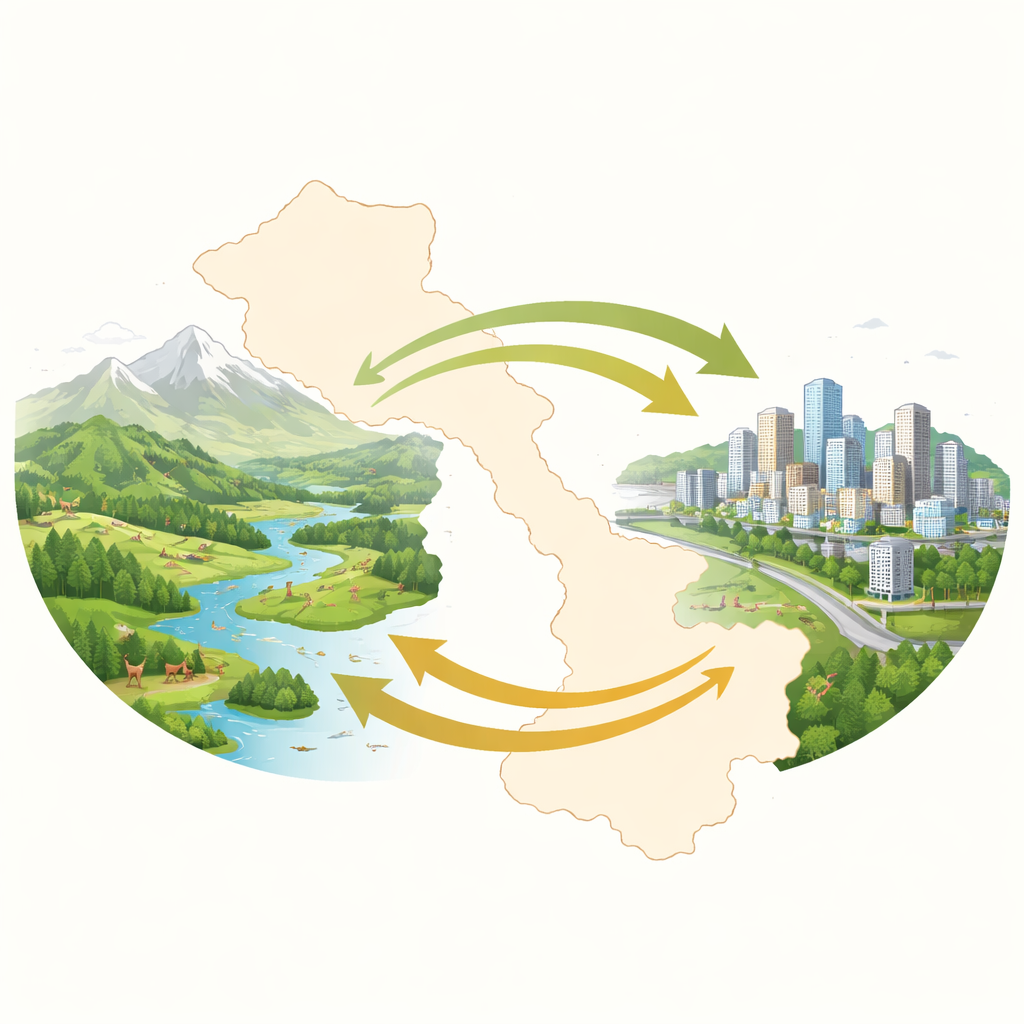
As cities grow, they demand more clean water, fertile soil, good air, and pleasant places to live. These benefits come from nature, yet urban expansion often damages the very ecosystems that provide them. This study looks at Gansu Province in northwestern China to ask a simple but urgent question: are urban growth and nature’s life-support services developing in harmony, or pulling apart?
What nature does for people
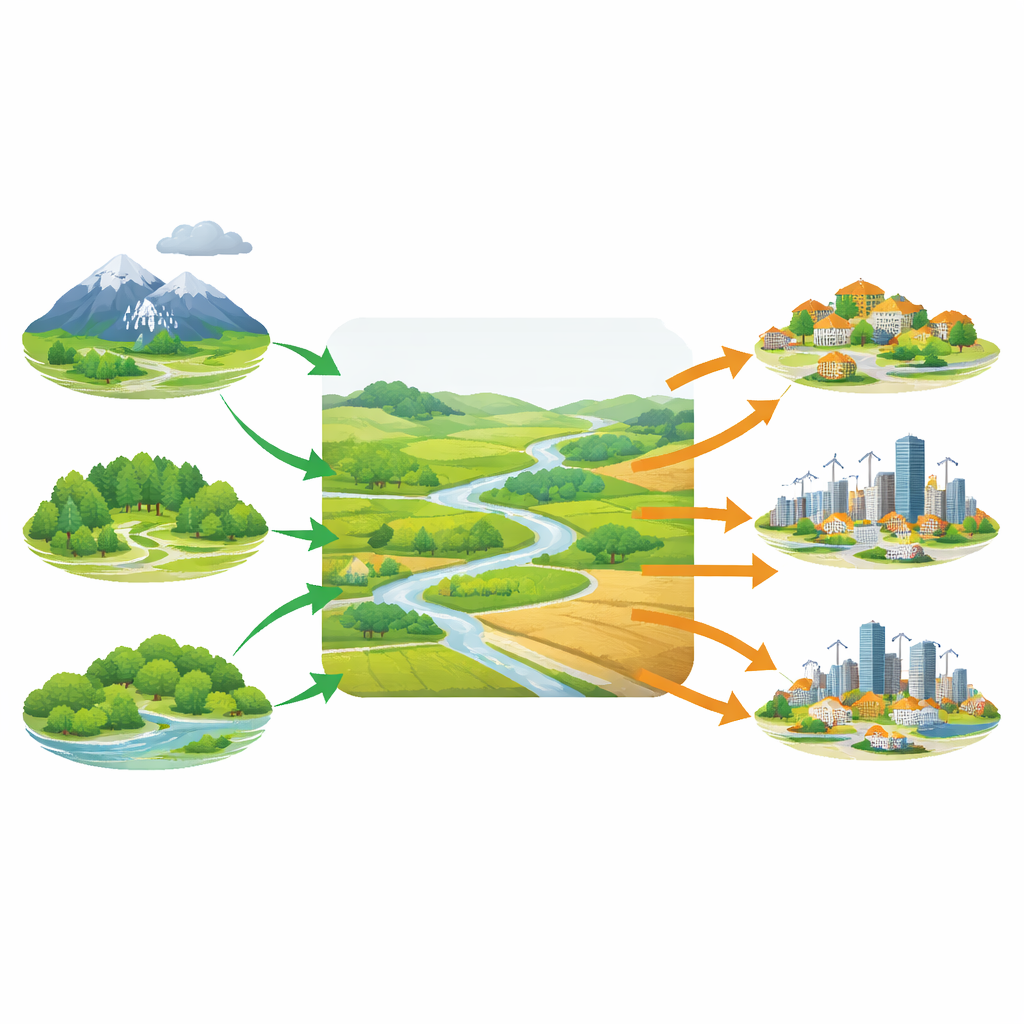
The authors focus on four key “jobs” that local ecosystems perform for people: soaking up carbon from the air, supplying water, protecting soil from erosion, and providing healthy habitats for plants and animals. Together, these are called ecosystem services. Using satellite images and environmental measurements, the study estimates both how much of each service the land can supply and how much people are using. For example, vegetation and soils can store carbon, but factories, homes, and cars release it; rivers and rainfall provide water, but farms, industry, and households consume it. By comparing supply and demand, the team can see where nature is coping and where it is under strain.
How urban growth reshapes demand
At the same time, the researchers track how urbanization has changed across Gansu from 2002 to 2022. They combine three simple signals: how many people live in each area, how bright the night lights are (a stand-in for economic activity), and how much land is built over with roads and buildings. Overall, Gansu’s cities have grown steadily, especially around Lanzhou and a string of oasis towns along the Hexi Corridor. But this growth is uneven. Some areas remain sparsely settled and rural, while others have dense populations, strong economies, and rapidly expanding construction.
Where balance is lost between cities and services
To judge how well city growth lines up with nature’s capacity, the study uses a coordination score that combines the level of urbanization with the balance of supply and demand for ecosystem services. A high score means cities and ecosystems are developing in step; a low score means strong mismatch. The results are sobering: most of Gansu’s counties fall into various states of imbalance. In many fast-growing urban zones, the need for carbon storage and soil protection is rising faster than nature can keep up, leading to widening gaps. Water services and the overall mix of services show some improvement in balance at the province scale, helped by major ecological restoration projects, but in dense city cores the pressure remains high.
What really drives harmony or conflict
The study also asks what forces most strongly shape this coordination. It compares natural features such as elevation, rainfall, and plant cover with social and economic factors like population density, income, and land use. On their own, people-centered factors matter most: where populations and spending power surge, the strain on ecosystem services tends to increase. Yet when factors are combined, nature reasserts its role. Plant cover, captured by a greenness index, becomes especially powerful when it interacts with population or land use. In other words, the same number of people can be far more or less damaging depending on how green and healthy the surrounding landscape is.
What this means for Gansu’s future
For readers, the core message is clear: simply counting economic growth or city size says little about long-term well-being if nature’s support systems are ignored. In Gansu, coordination between urbanization and ecosystem services is slowly improving but remains fragile and uneven. Carefully guiding where cities expand, preserving and restoring vegetation, protecting water sources, and tailoring policies to local natural conditions can all help cities and ecosystems develop together rather than at each other’s expense. The study offers a detailed roadmap for one province, but its lesson is universal: sustainable urban futures depend on keeping the partnership between people and nature in balance.
Citation: Dang, G., Hu, J. & Li, G. Identifying the coupling coordination relationship and driving forces between urbanization and the supply–demand of ecosystem service: a case study of the Gansu Province. Sci Rep 16, 12828 (2026). https://doi.org/10.1038/s41598-026-42914-0
Keywords: urbanization, ecosystem services, Gansu Province, sustainable development, land use