Clear Sky Science · en
Network inequality through preferential attachment, triadic closure, and homophily
Why Some People Become Far More Connected Than Others
From friendship circles to scientific collaborations, our social and professional lives are woven into networks. Yet these webs of connection are rarely fair: a few people become extremely well connected, while others remain on the sidelines. This article explores why such inequalities arise, how different social tendencies interact to shape who becomes visible and influential, and what this means for persistent gender gaps in fields like physics and computer science. 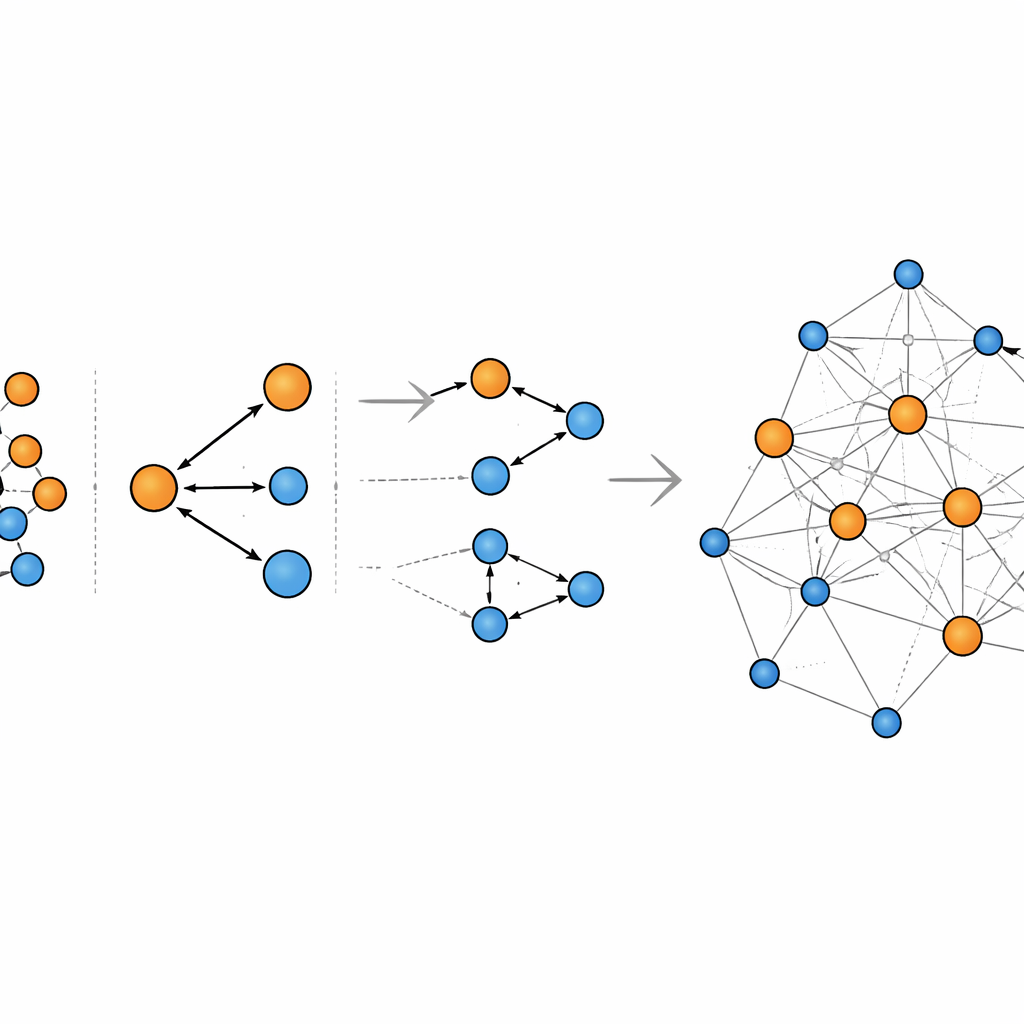
Three Simple Rules That Shape Complex Networks
The authors focus on three basic ways people tend to form connections. First is “rich-get-richer” linking: we are more likely to connect to those who are already highly connected, such as famous scientists or visible colleagues. Second is similarity-based linking: we prefer to interact with people who resemble us in some important way, for example in gender, discipline, or background. Third is triangle-building: we often befriend friends-of-friends, closing gaps in our social circles. Each of these tendencies has been studied separately, but their combined effect on inequality—especially when a clear minority and majority group exist—has been less understood.
A New Model for Growing Unequal Networks
To examine how these rules interact, the researchers introduce a network growth model called PATCH. The model builds a network one newcomer at a time. Each new node is randomly assigned to a majority or minority group, then chooses a few existing nodes to connect with. Some connections are made by scanning the whole network, others by looking only at friends-of-friends. In each case, the choice can be driven by similarity, by popularity, by both, or by neither. By systematically turning these dials—how strong similarity preference is, how often triangles are closed, and whether popularity matters—the authors generate large numbers of artificial networks and measure how segregated they are and how unevenly connections are distributed.
How Separation and Visibility Gaps Emerge
The simulations reveal distinct roles for each mechanism. Similarity preference is the main engine of segregation: when individuals favor their own group, ties cluster within groups and cross-group connections become rare. Popularity bias, by contrast, is the strongest driver of inequality in how many connections each person has; it creates highly connected hubs. Triangle-building plays a subtler role. When triangle choices are not themselves biased by similarity or popularity, this local rule tends to soften extremes: it reduces segregation and narrows the gap in visibility between groups, even though it can increase overall inequality in how many connections exist across the whole population. When triangle formation is also guided by similarity and popularity, however, it can reinforce existing patterns, making a few central figures within the advantaged group even more dominant. 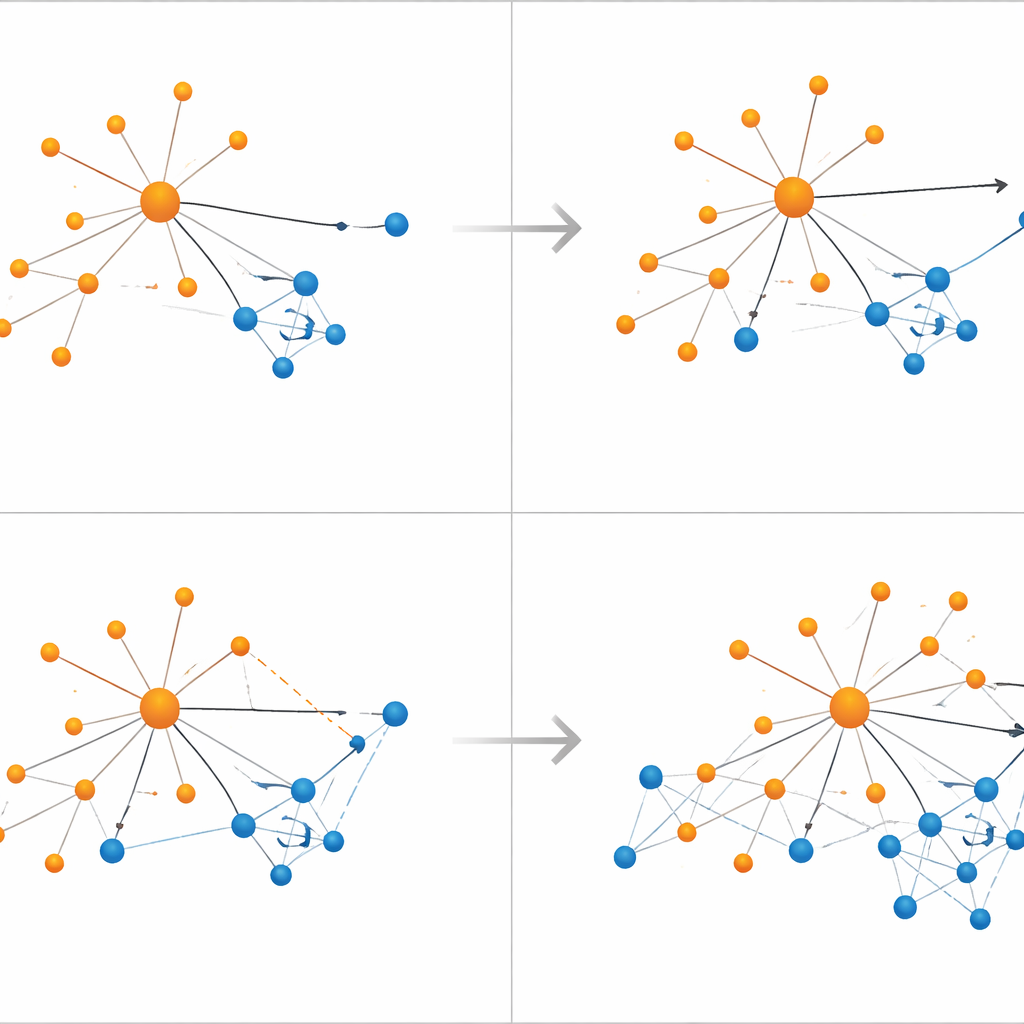
Connecting the Model to Real Scientific Communities
The authors then turn to fifty years of data from physics and computer science: coauthorship networks showing who works with whom, and citation networks showing which papers refer to which others. In these settings, women form a persistent minority and have historically received fewer collaborations and citations. By comparing the real data with PATCH-generated networks, the researchers infer which combinations of rules best explain the observed patterns. They find that, across decades and datasets, the version of PATCH that fits best is one where both global choices and triangle-based choices are guided by popularity and a moderate tendency to work with same-gender peers. In these simulated worlds, just as in the data, women remain less visible on average, while a small number of highly connected individuals—mostly from the majority group—capture a disproportionate share of attention.
What This Means for Reducing Inequality
The study shows that improving one dimension of inequality can worsen another. For example, encouraging more cross-group ties might lessen segregation but can still leave a minority group with fewer overall connections. Similarly, boosting triangle-building through recommendation systems—such as “people you may know” or “papers related to this one”—can reduce gaps between groups but also deepen imbalances within the advantaged group by further elevating a few stars. PATCH highlights that network inequalities arise from the combined action of simple, natural tendencies rather than from any single cause. For people interested in building fairer scientific and social systems, the message is clear: meaningful change requires adjusting several mechanisms at once—limiting runaway popularity, softening similarity-based choices, and carefully designing tools that suggest new connections—so that visibility and opportunity are shared more evenly.
Citation: Bachmann, J., Martin-Gutierrez, S., Espín-Noboa, L. et al. Network inequality through preferential attachment, triadic closure, and homophily. Sci Rep 16, 13461 (2026). https://doi.org/10.1038/s41598-026-42911-3
Keywords: social networks, inequality, homophily, triadic closure, gender disparities