Clear Sky Science · en
Effect of optimized germination on nutritional functional and phytochemical characteristics of green gram
Why tiny sprouts matter for everyday meals
For many people, especially vegetarians, small green legumes like green gram (mung beans) are an affordable protein source. This study explores a simple kitchen‑friendly process—letting these beans sprout for a carefully chosen number of hours—to see how it changes their nutrition, flavor, and health‑related properties. The researchers wanted to know: can an everyday practice like germination turn ordinary green gram into a more nutritious, better‑tasting ingredient for foods ranging from salads to baby porridges?
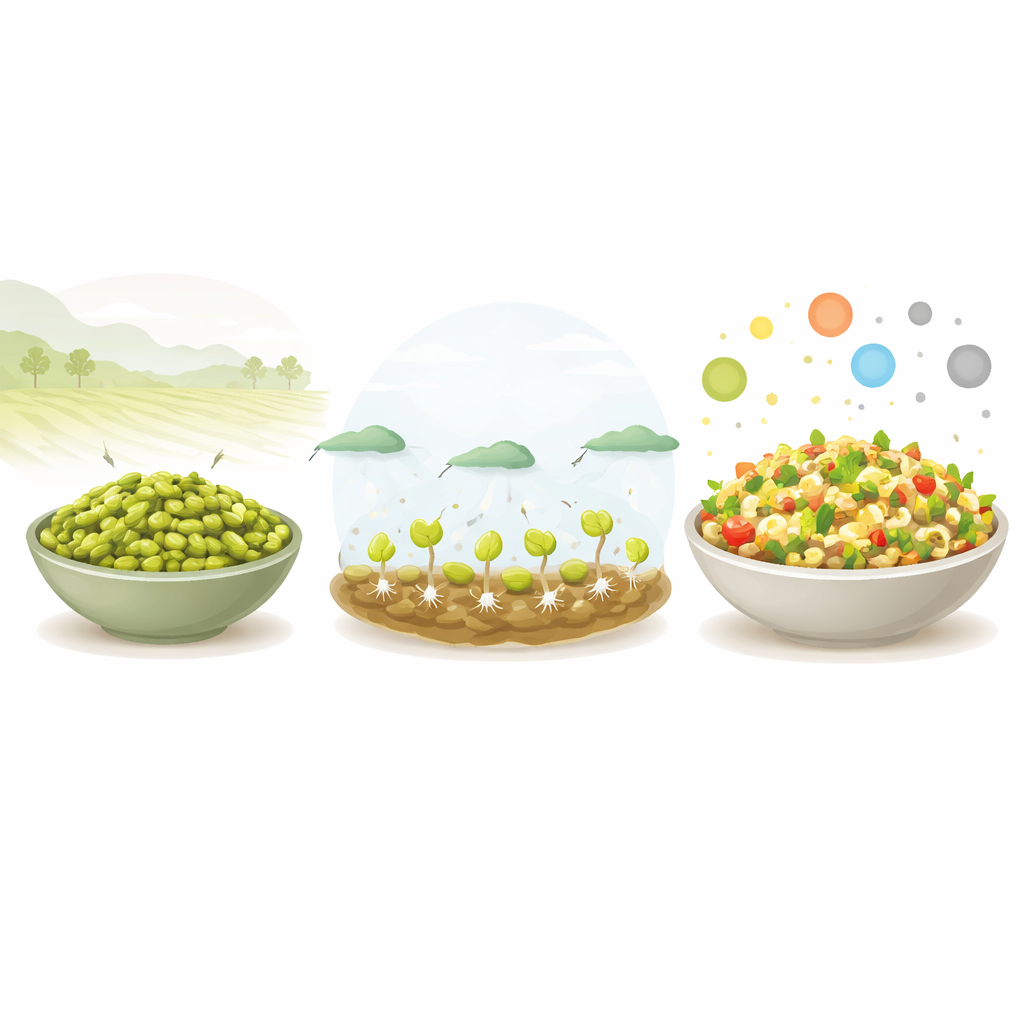
From dry beans to living sprouts
The team worked with ten high‑yield varieties of green gram commonly grown in India. They soaked the beans in warm water and then allowed them to germinate in a controlled incubator for 8, 12, 16, or 20 hours. At each stage, they measured changes in size, weight, and sprout length, and they also invited a panel of 20 tasters to rate the color, appearance, flavor, texture, and overall liking of the sprouts on a standard nine‑point scale. This combination of precise lab measurements and human taste tests helped them identify the most promising germination time for real‑world eating.
Taste first: finding the sweet spot in time
The sensory panel showed that shorter germination times of 8–12 hours offered the best balance between freshness and flavor across nearly all varieties. At these times, overall liking scores ranged from “like slightly” to “like extremely.” When germination was extended to 16 or 20 hours, appearance changed and a noticeable bitterness developed, causing scores to drop. Based on these results, the researchers chose the best‑liked sprouts—mainly those germinated for 8 hours—for deeper analysis of nutrition, plant compounds, and cooking‑related properties.
More good nutrients, fewer unwanted compounds
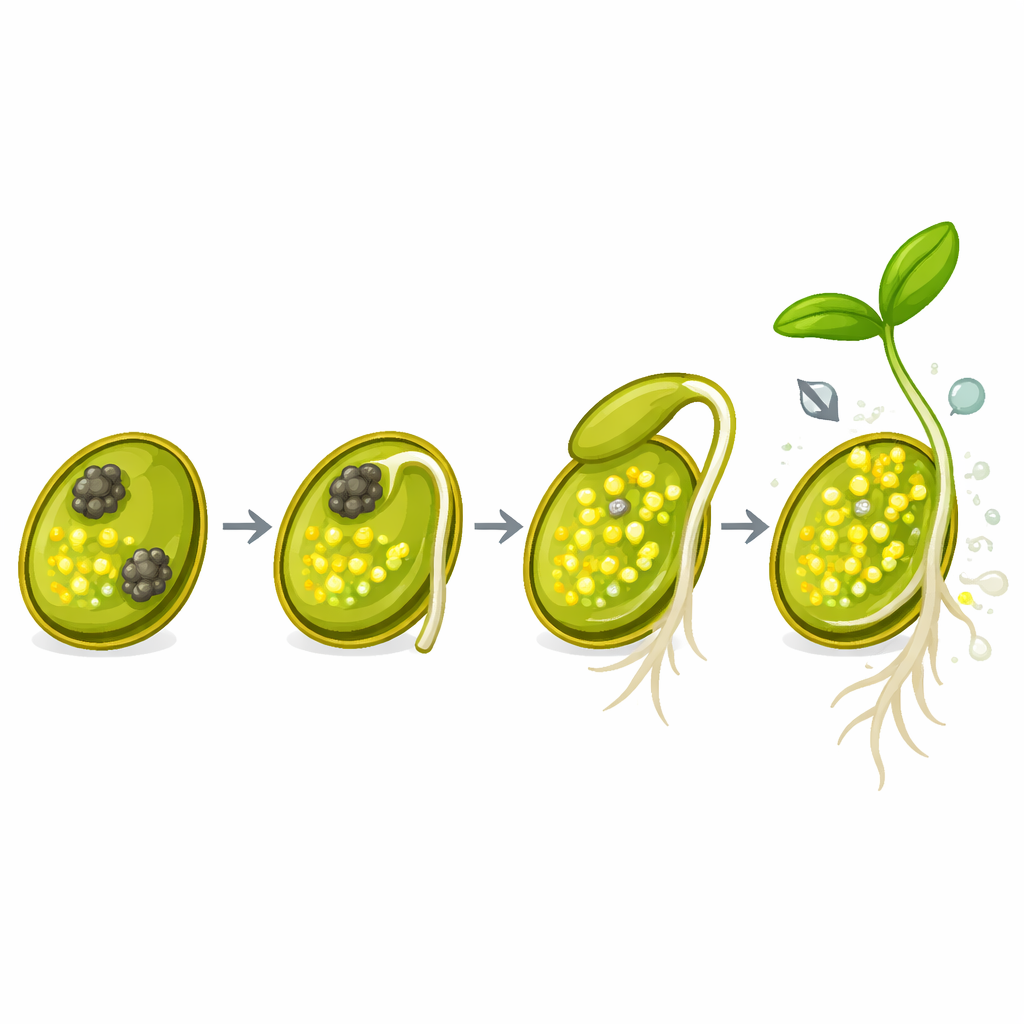
Compared with the raw beans, optimally germinated green gram showed clear nutritional upgrades. Protein content rose, crude fiber increased, and ash content (a rough indicator of total minerals) went up slightly. Vitamin C, which was essentially absent in the dry grains, appeared during sprouting and climbed to levels comparable to fresh fruits and vegetables. At the same time, two unwanted plant substances that can interfere with mineral absorption—tannins and phytic acid—dropped sharply, often to a fraction of their original amounts. Germinated samples also contained more natural plant chemicals such as phenolics and flavonoids, which are linked to antioxidant activity and potential protection against cell damage.
How sprouts behave in the kitchen
Beyond nutrient counts, the study looked at how flours made from raw and germinated beans behaved in water and oil, which influences how they perform in recipes. After germination, green gram flours held more water and absorbed more oil, properties that can improve the texture and juiciness of foods like patties, porridges, and baked goods. Foaming and emulsifying abilities—important for products that need stable bubbles or smooth blends of oil and water—also improved with sprouting. These changes are thought to arise as proteins and starches are partially broken down and rearranged inside the seed, creating structures that interact better with liquids and fats.
Sprouted beans as everyday functional food
In simple terms, the study shows that carefully timed germination turns green gram into a more powerful food: richer in helpful nutrients and antioxidants, lower in troublesome compounds, and easier to use in a wide range of dishes. Keeping sprouting within roughly 8–12 hours preserves appealing flavor and avoids bitterness, while still delivering most of the nutritional gains. This makes green gram sprouts a practical ingredient for salads, snacks, weaning foods for infants, and nutrient‑dense convenience mixes, offering an easy way for households and food producers to boost the health value of plant‑based diets without complex technology.
Citation: Subramani, T., Ruckmangathan, S., Ganapathyswamy, H. et al. Effect of optimized germination on nutritional functional and phytochemical characteristics of green gram. Sci Rep 16, 13821 (2026). https://doi.org/10.1038/s41598-026-42908-y
Keywords: green gram sprouts, germination time, legume nutrition, antinutrients, functional foods