Clear Sky Science · en
Pharmacogenetics of RAS-affecting AGT and ACE variants and the efficacy of Valsartan/HCTZ therapy
Why Your Genes Might Shape Your Blood Pressure Pills
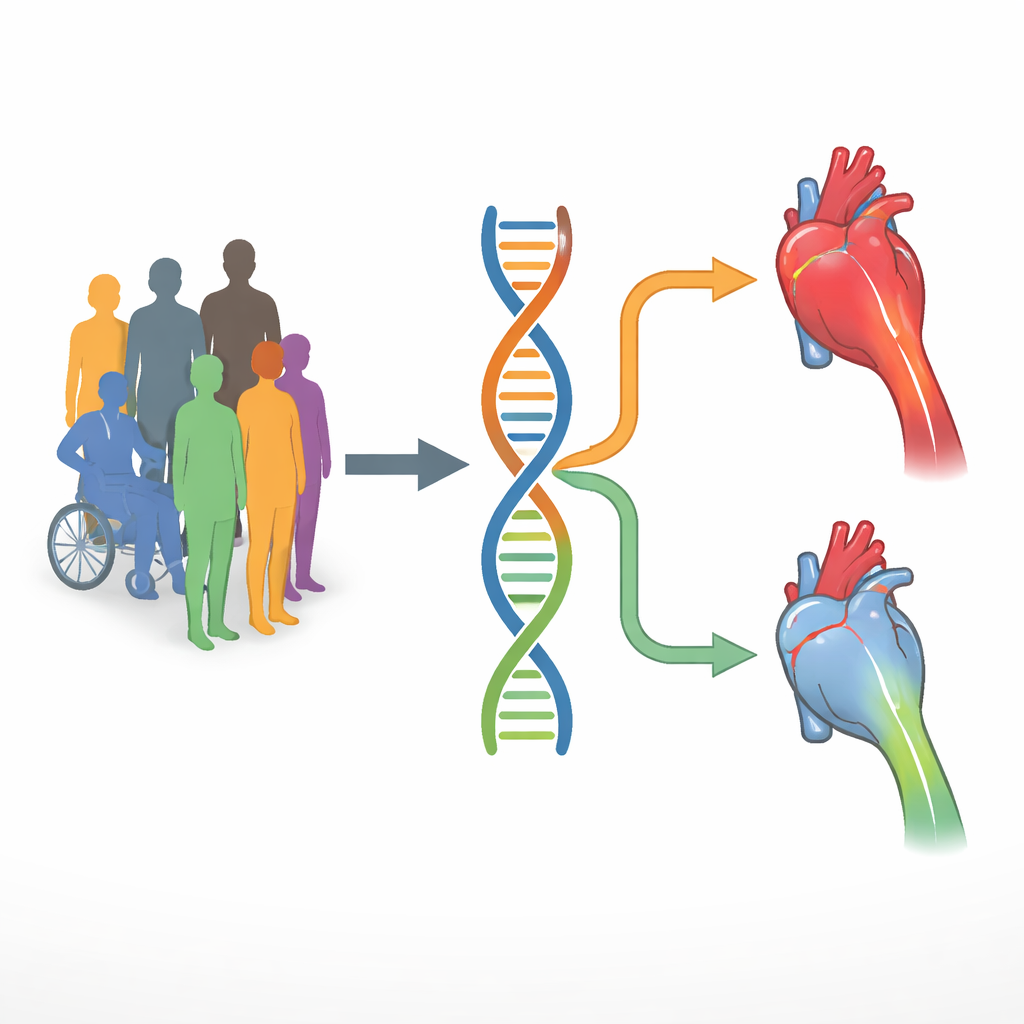
Many people with high blood pressure discover that a drug that works wonders for a friend barely nudges their own readings. This study asks a simple but powerful question: could differences in our genes explain why the same blood pressure pill helps some people more than others? Focusing on patients in Pakistan, the researchers examined how small changes in two hormone‑related genes affected the success of a widely used two‑in‑one medicine, valsartan combined with a water pill called hydrochlorothiazide (HCTZ).
A Common Illness With Uneven Treatment Results
High blood pressure is a leading cause of heart attack, stroke, and kidney disease worldwide, and it affects roughly a third of adults in Pakistan. Doctors often prescribe drugs that act on a hormone system called the renin–angiotensin system, which helps control blood vessel tightness and salt balance. Valsartan blocks one of this system’s key signals, while HCTZ helps the body shed extra salt and water. Although this combination usually lowers blood pressure, many patients still do not reach their target numbers. That uneven response hints that biology beyond age, weight, or lifestyle might be at work.
Testing Blood Pressure Pills in Real Patients
The team followed 354 adults with essential hypertension in Peshawar clinics. All were treated with daily valsartan/HCTZ at one of two standard dose levels and had their blood pressure measured before starting and again after four weeks. On average, their top (systolic) number fell by about 23 millimeters of mercury, and their bottom (diastolic) number by about 15. People with a healthy body weight and those following low‑salt, blood‑pressure‑friendly diets tended to show larger drops than patients with severe obesity or unrestricted diets. However, these clinical and lifestyle factors did not fully explain why some individuals improved much more than others, pointing the investigators toward genetics.
Key Gene Variants That Tip the Balance
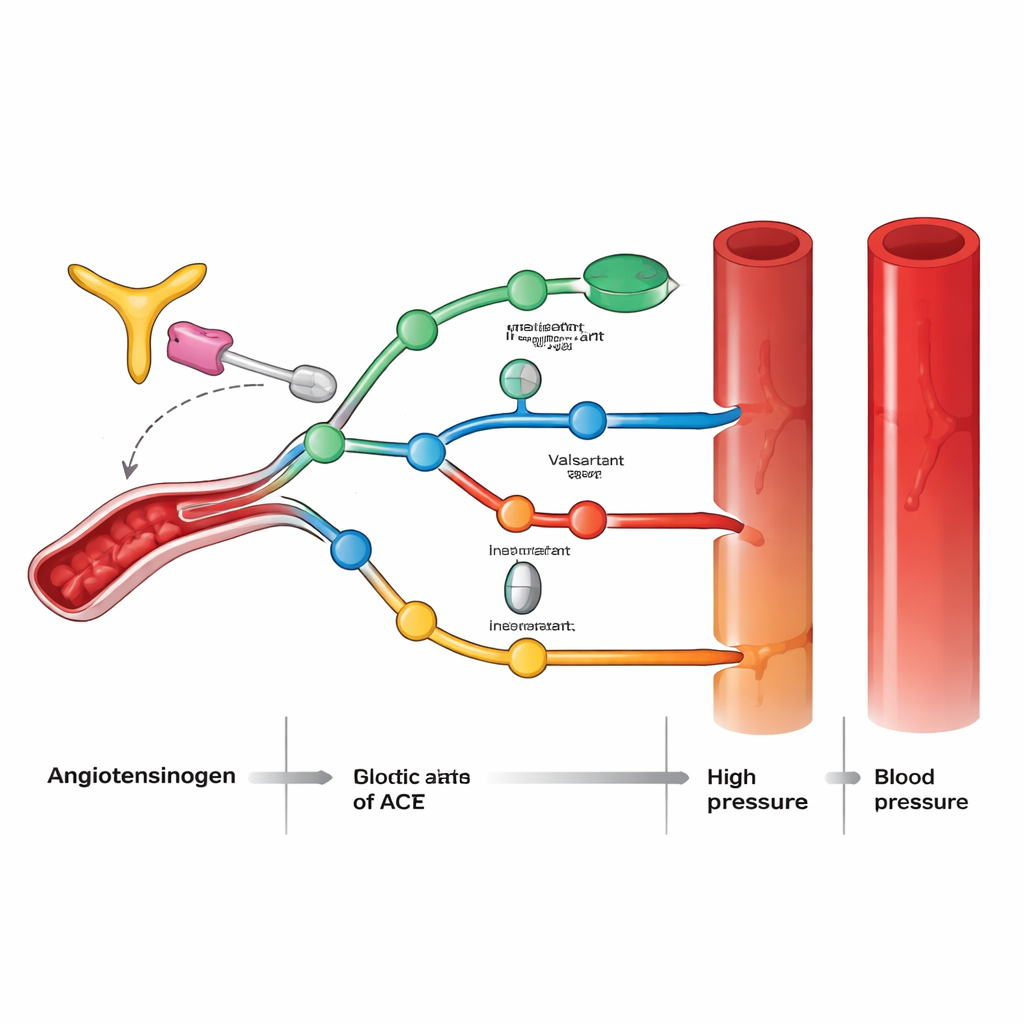
The researchers focused on small DNA differences in two genes that sit at the start of the hormone pathway they were targeting. One gene, AGT, makes angiotensinogen, the raw material for a blood‑pressure‑raising hormone. The other gene, ACE, makes an enzyme that converts that raw material into its active form. Among several AGT variants tested, one change near the start of the gene, called rs5050, stood out. Patients carrying the C version of this variant had blood pressure drops roughly twice as large as those with two copies of the A version, even after taking age, sex, weight, dose, and other factors into account. A long‑studied ACE variant, known as the insertion/deletion (I/D) change, also mattered: people with two I copies had stronger improvements in the bottom blood pressure number than those with two D copies.
When Gene Combinations and Dose Interact
The story became even more revealing when the team looked at gene combinations and drug dose together. Patients who carried the “responsive” AGT variant (AC) along with ACE types associated with lower enzyme activity (II or ID) had the largest blood pressure reductions. Those with the “less responsive” pairing (AGT AA plus ACE DD) had the smallest changes, despite taking the same medicine. In some people with favorable variants, the lower drug dose was already enough to squeeze most of the benefit from the treatment, while others with less favorable genetics needed the higher dose to approach the same effect. This pattern suggests that genes can influence not only how well a drug works, but how much of it is needed.
What This Means for Future Care
To someone living with high blood pressure, this research offers a hopeful message: if a standard pill does not work well, it may not be a personal failure but a matter of biology. The study shows that specific versions of AGT and ACE can strongly shape how much blood pressure falls on valsartan/HCTZ, especially when these variants are considered together. In the long run, a simple genetic test could help doctors in Pakistan and elsewhere choose the right drug combination and dose for each patient from the start, improving control and reducing the trial‑and‑error that now characterizes hypertension treatment.
Citation: Baig, A., Shah, S.M.M., Alfaiz, A.S. et al. Pharmacogenetics of RAS-affecting AGT and ACE variants and the efficacy of Valsartan/HCTZ therapy. Sci Rep 16, 12504 (2026). https://doi.org/10.1038/s41598-026-42902-4
Keywords: hypertension, pharmacogenetics, valsartan, ACE gene, angiotensinogen