Clear Sky Science · en
Exercise and Phellodendron amurense extract differentially impinge on oxidative stress response pathways in a mouse model of prostate cancer
Why This Study Matters
Prostate cancer is one of the most common cancers in men, and many patients and families want to know whether everyday choices—like being active or taking natural supplements—can really slow it down. This study uses a well-established mouse model of prostate cancer to compare two non-drug strategies: regular aerobic exercise and a plant-based extract from the bark of the Phellodendron amurense tree, sometimes called Nexrutine. The researchers looked deep inside tumors at changes in gene activity to see how each approach might help the body cope with damaging molecules known as oxidative stress, which are closely tied to cancer growth.
Two Different Paths to Taming Tumors
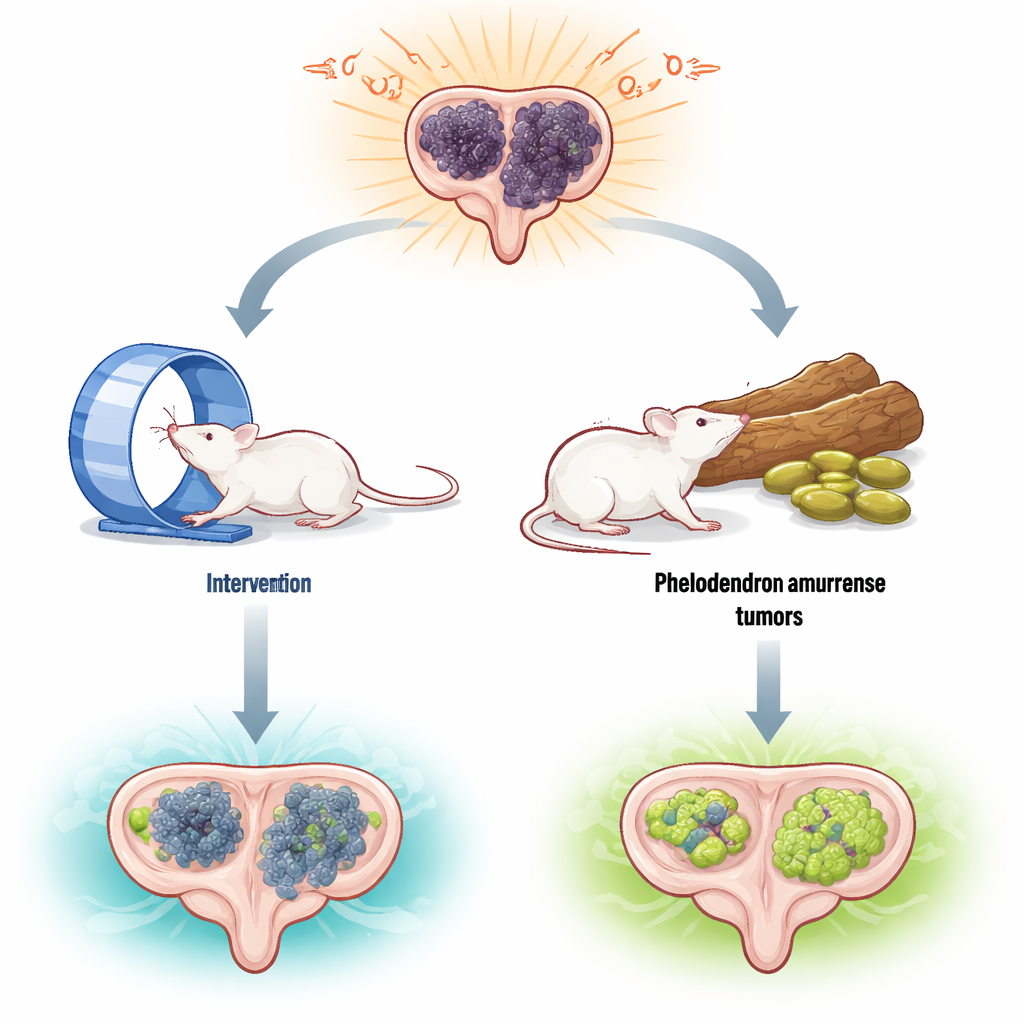
The team worked with TRAMP mice, a strain that reliably develops prostate tumors that progress from early changes to aggressive cancer. Young male mice were randomly assigned to three groups for 12 weeks: a control group with standard diet and no exercise wheel, an exercise group with constant access to a running wheel, and a group given food containing Phellodendron amurense extract. At the end of the study, the scientists removed the prostates, weighed the tumors, examined their microscopic appearance, and analyzed which genes were turned on or off. Although body weight and overall tumor weight were not dramatically different between groups, the quality of the tumors—how abnormal and aggressive the cells looked—told a more hopeful story for both interventions.
Changes in Tumor Behavior, Not Just Size
Under the microscope, half of the control mice showed tumors that were moderately or poorly differentiated—hallmarks of more advanced, dangerous cancer. In contrast, almost all of the exercising mice developed better-differentiated tumors, and one even showed only pre-cancerous lesions. Mice fed the plant extract also tended to have less aggressive tumors, with several showing well-differentiated cancers and some retaining pre-cancerous changes. Interestingly, tumors in the extract-fed group were sometimes larger and surrounded by more fatty tissue, suggesting that tumor size alone is not a simple measure of risk; what mattered here was that the cellular architecture looked more orderly and less advanced in many of the treated animals.
How Exercise Rewires Fat and Stress in Tumors
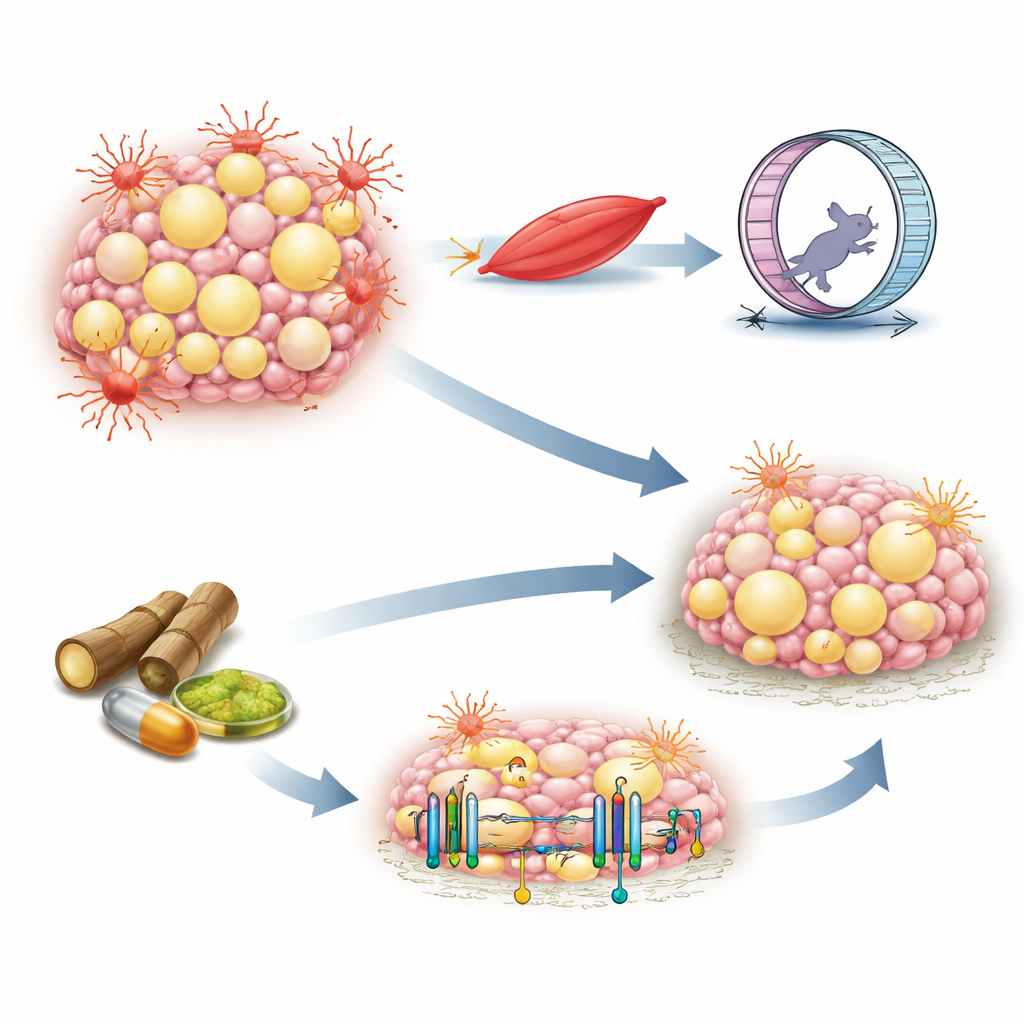
To understand what was happening beneath the surface, the researchers measured the activity of thousands of genes in the tumors. In the exercise group, 32 genes changed significantly compared with controls, many involved in how cells handle fats and energy. Several genes that normally help break down stored fats were dialed down, while a gene that helps build fat-like molecules was turned up. This pattern suggests that exercise was reshaping the way tumor cells store and burn fat. Because breaking down fat in cancer cells can generate bursts of harmful reactive molecules, altering this balance may lower the oxidative stress inside tumors, nudging them toward a less aggressive state.
How a Tree Bark Extract Alters Cell Gateways
The Phellodendron amurense extract produced a broader ripple across the tumor genome, changing 176 genes. Many of these were linked to how substances move into and out of cells—through channels and transporters in the cell membrane—and to the movement of charged particles like potassium and calcium. The extract reduced genes connected to cholesterol handling, cell movement, and enzymes that chew up the tissue surrounding tumors, all of which are linked to invasion and spread. It also lowered genes that help cancer cells survive in conditions of high oxidative stress. Together, these shifts hint that the extract may make tumors less capable of exploiting stress to grow and metastasize.
What This Could Mean for Patients
For people living with or at risk for prostate cancer, the study reinforces that lifestyle choices can influence tumor biology, not just general health. In this mouse model, regular voluntary exercise consistently steered tumors toward a less aggressive form by reshaping fat use and stress responses inside the cancer cells. The tree bark extract also pushed tumors in a protective direction, but through different molecular routes that affect cell membranes, ion balance, and tissue remodeling. While more work in humans is needed—and the plant extract should not be seen as a substitute for proven treatments—these findings suggest that both movement and certain natural compounds may help weaken cancer’s defenses against oxidative stress, potentially slowing the march toward more advanced disease.
Citation: Patel, D.I., Rivas, P., Chen, Y. et al. Exercise and Phellodendron amurense extract differentially impinge on oxidative stress response pathways in a mouse model of prostate cancer. Sci Rep 16, 12137 (2026). https://doi.org/10.1038/s41598-026-42892-3
Keywords: prostate cancer, exercise, oxidative stress, natural compounds, tumor biology