Clear Sky Science · en
Association between lactate-to-albumin ratio and 30-day all-cause mortality in patients with acute pancreatitis-associated acute kidney injury
Why this matters for everyday health
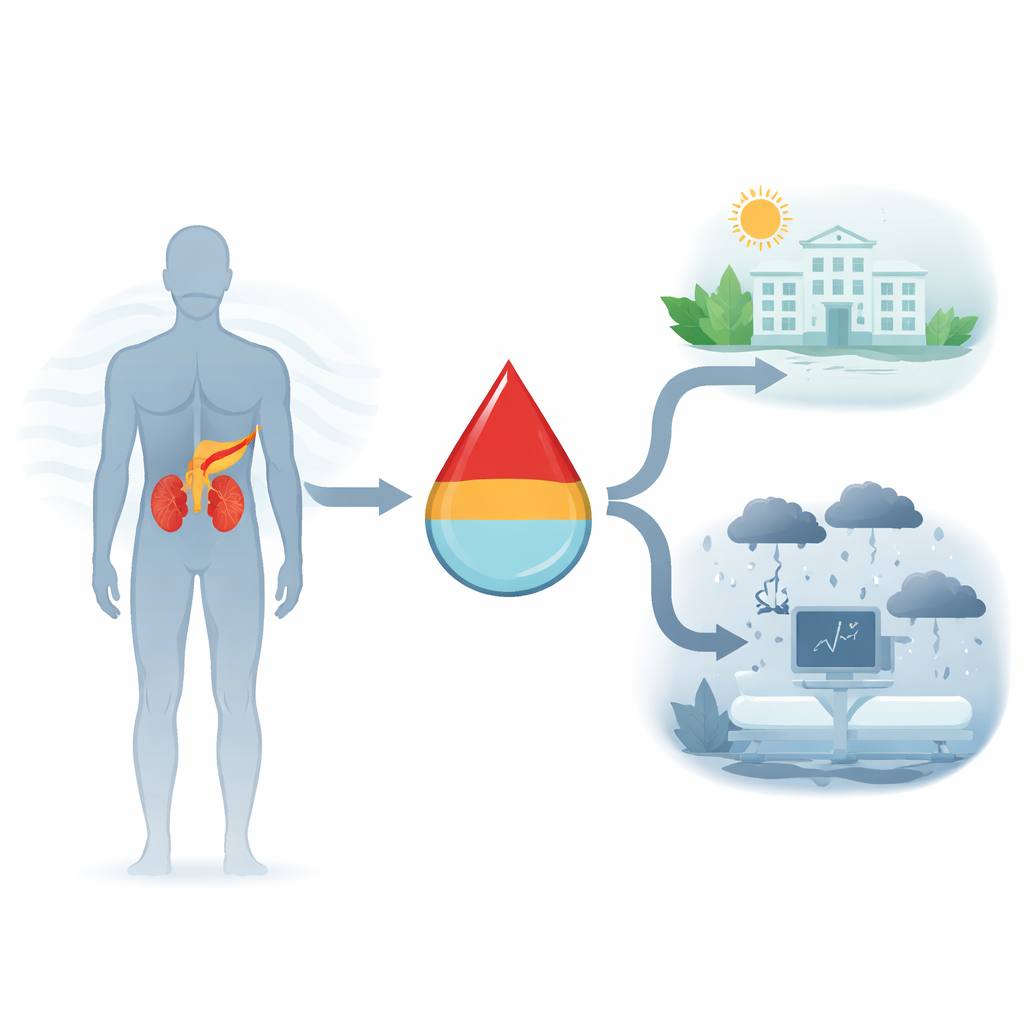
Sudden inflammation of the pancreas can turn from a painful episode into a life‑threatening crisis, especially when the kidneys are also damaged. Doctors in intensive care units must quickly decide which patients are in the greatest danger, yet many existing scoring systems are complex and time‑consuming. This study asks a simple question with big practical implications: can a basic ratio from two routine blood tests help flag which patients with severe pancreatitis and kidney injury are most at risk of dying within a month?
A common emergency with serious risks
Acute pancreatitis, a sudden inflammation of the pancreas, is becoming more common worldwide. Most people recover, but about one in five develop a severe form that can damage multiple organs. When the kidneys fail in this setting—called acute pancreatitis–associated acute kidney injury—the chance of death can reach roughly half of affected patients. Because this damage can unfold quickly, intensive care teams need early warning signs to decide who requires the closest monitoring and most aggressive treatment.
A simple ratio from routine blood tests
The researchers focused on the lactate‑to‑albumin ratio, or LAR. Lactate builds up in the blood when tissues do not get enough oxygen or blood flow, and high levels often signal severe illness. Albumin is a protein made by the liver that reflects both nutrition and the body’s response to inflammation; low levels are linked to worse outcomes in many diseases. By dividing lactate by albumin, LAR blends information about poor circulation and systemic inflammation into a single number that can be calculated from standard blood tests already drawn in the ICU.
How the study was carried out
This was a retrospective study, meaning the team analyzed existing hospital records rather than enrolling new patients. They examined 877 adults with acute pancreatitis and acute kidney injury treated in intensive care and recorded their first lactate and albumin levels within 24 hours of ICU admission. Patients were divided into four groups according to their LAR values, from lowest to highest. The researchers then tracked who died in the hospital and within 30 days, while also recording age, other illnesses, organ failure scores, and treatments like antibiotics, blood‑pressure‑supporting drugs, and mechanical ventilation. To test whether the findings would hold up elsewhere, they repeated the analysis in two other patient groups from a large U.S. ICU database and from a hospital in China.
What the numbers revealed
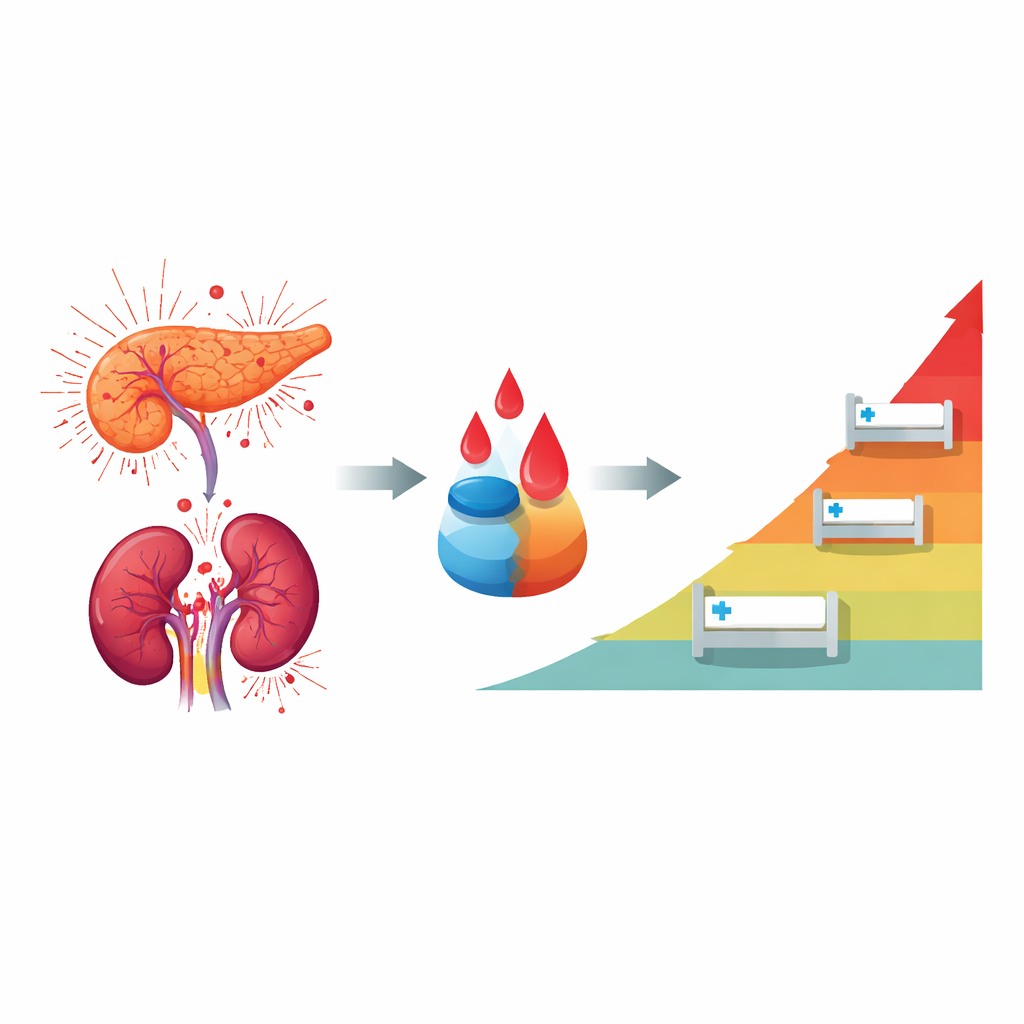
Patients with higher LAR values had more severe illness scores and were more likely to receive intensive treatments, and they also died more often within 30 days. After accounting for age, other diseases such as liver cirrhosis and cancer, and measures of overall organ failure, LAR still independently predicted the risk of death. Statistically, each increase in LAR was linked to a higher chance of dying within 30 days. When the team compared LAR with lactate alone, albumin alone, and a standard organ‑failure score, LAR performed better than either single blood test and about as well as the complex score. Survival‑curve analyses showed that patients in the high‑LAR group died at significantly higher rates than those with lower values. A more detailed analysis suggested a curved, rather than straight‑line, relationship: once LAR passed a certain threshold, the risk of death climbed more steeply.
Strengths, limits, and future directions
Because lactate and albumin are checked routinely around the world, LAR could become an easy add‑on to help identify high‑risk patients with severe pancreatitis and kidney injury, especially in busy or resource‑limited ICUs. However, LAR is not perfect: its ability to distinguish survivors from non‑survivors was only moderate, meaning it should support, not replace, broader scoring systems and clinical judgment. The study also relied on historical data from specific hospitals, and it only used the first LAR measurement, not how the ratio changed over time. The authors call for future prospective studies in more diverse settings and for research into whether tracking LAR repeatedly or combining it with other markers could improve care decisions.
What this means for patients and families
For people facing severe pancreatitis complicated by kidney injury, this research offers a hopeful but cautious message. A simple ratio derived from standard blood tests can give doctors an extra clue about who is most vulnerable in the critical first days. While it is not a crystal ball, the lactate‑to‑albumin ratio may help clinicians spot trouble earlier, tailor monitoring and treatments, and ultimately improve the odds for patients caught in this dangerous combination of pancreatic and kidney failure.
Citation: Wei, M., Zhong, Y., Lin, X. et al. Association between lactate-to-albumin ratio and 30-day all-cause mortality in patients with acute pancreatitis-associated acute kidney injury. Sci Rep 16, 13127 (2026). https://doi.org/10.1038/s41598-026-42882-5
Keywords: acute pancreatitis, acute kidney injury, lactate-to-albumin ratio, critical care, mortality risk