Clear Sky Science · en
Intelligent risk assessment and early warning for human–machine–environment coupling in coal preparation plants
Why keeping coal plants safe matters
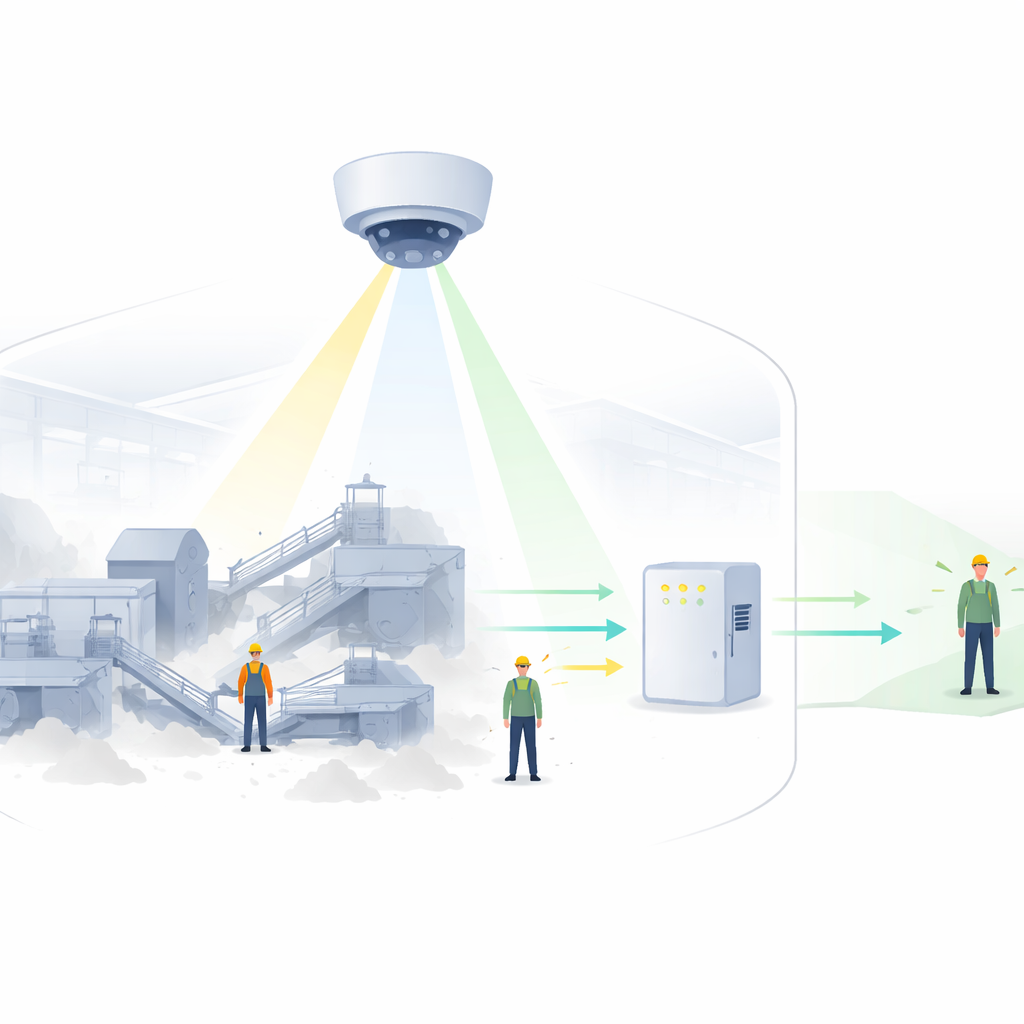
Coal preparation plants are where raw coal is cleaned and sorted before it is burned in power stations or used in industry. These plants are packed with fast-moving machinery, dust, noise, and water—conditions that can easily put workers in harm’s way. This study explores how combining structured risk analysis with modern computer vision can turn traditional surveillance cameras into intelligent guardians that watch distances between people and machines and warn workers before something goes wrong.
Hidden dangers in a busy worksite
Inside a coal preparation plant, danger comes from many directions at once. Crushers and vibrating screens can eject heavy chunks of coal or shed broken parts; dense-medium systems push abrasive slurry through pipes under high pressure, which can leak as powerful jets. High-voltage electrical gear sits in humid rooms where insulation can fail, and conveyors and storage areas may fill with fine coal dust that can explode if ignited. Pools, thickeners, and filter presses introduce drowning and crushing hazards. Long-term exposure to dust can also damage workers’ lungs. The authors used a structured checklist known as the 4M1E framework—looking at people, machines, materials, methods, and environment—to map these diverse risks across the plant.
Ranking what can hurt people most
Because not every piece of equipment is equally dangerous, the team set out to grade risk levels in a systematic way. They built a fault tree—a kind of logic diagram that starts with a serious accident, such as a worker injured when a conveyor unexpectedly starts, and works backward to the combinations of small failures that make it possible. This helped highlight weak spots such as skipped lockout procedures, electrical control faults, and missing physical guards. Using international risk management standards, they then combined how likely an event is with how severe its outcome could be, and applied a weighting method to balance equipment factors, environmental conditions, and human behavior. The result was a “traffic light” style ranking in which belt conveyors and vibrating screens, for example, were flagged as the highest-risk items requiring the strictest controls.
Teaching cameras to watch distances
To move from paper analysis to action, the researchers upgraded ordinary surveillance cameras with a modern object-detection algorithm known as YOLOv10. This software lets a computer pick out people and machines in each video frame in real time. Because coal plants are dusty, dim, and cluttered with pipes and structures, the team enhanced the algorithm with attention modules that help it focus on the most informative parts of the image, and with smarter ways of combining information from objects of different sizes. They also refined how the system judges the match between predicted and actual positions to make sure bounding boxes around workers and machines are stable and accurate even when conditions are poor.
From pixels to alarms on the shop floor
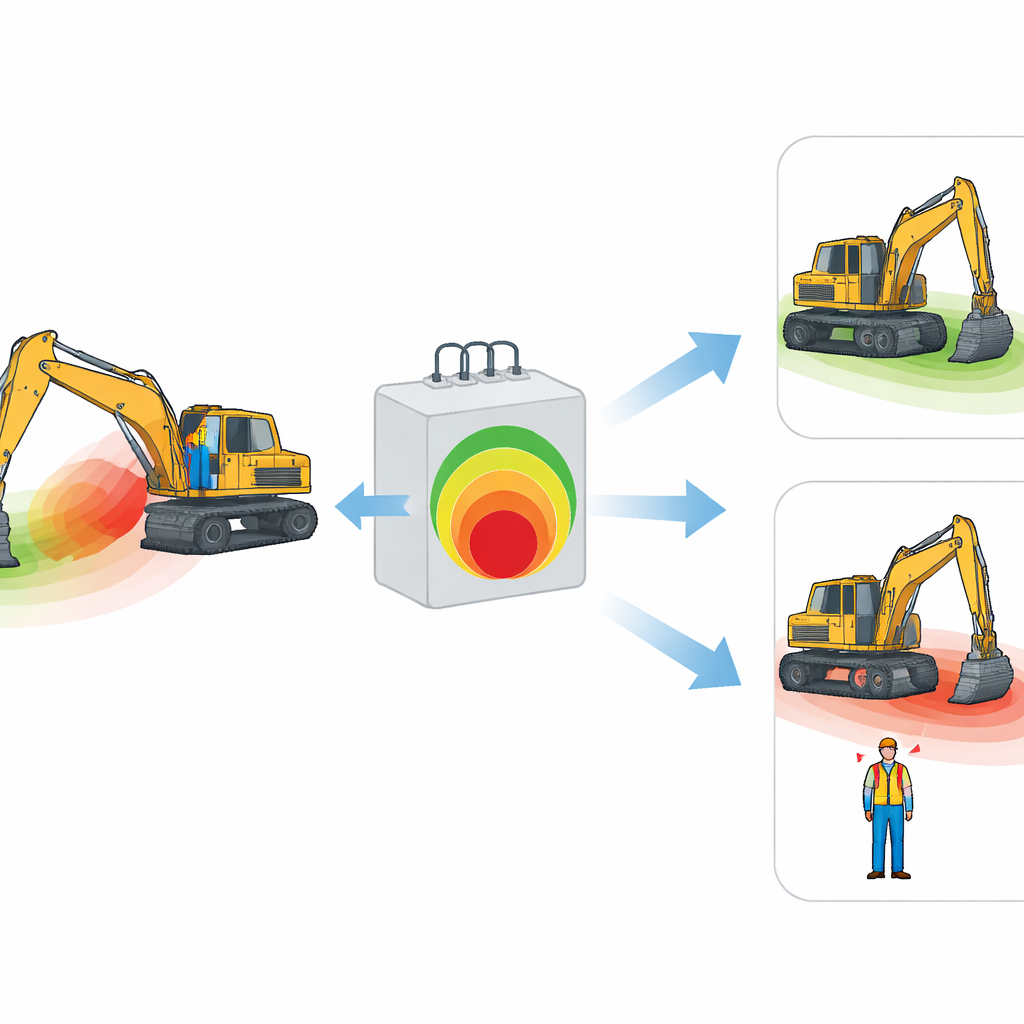
Detecting objects is only half the problem; the system must also know when people are too close to danger. Instead of using expensive 3D cameras or laser scanners, the team adopted a clever shortcut: a single camera is calibrated using an object of known width so that pixel distances in the image can be converted into approximate real-world distances on the floor. With this setup, the software continuously measures the gap between each person and nearby machines. If a worker enters a caution zone, a visual warning appears on the screen; stepping into a tighter danger zone triggers an audible alarm and automatic snapshots and log entries, creating a record of who did what, when, and where. Under controlled tests, the system could estimate distances within about six centimeters on average and raise alarms in roughly three-tenths of a second.
Putting intelligent warning into practice
The system was piloted in a real coal preparation plant, focusing on conveyor corridors and filter-press areas that were graded as high risk. On a typical day it generated around fifteen valid warnings, catching unsafe acts such as workers approaching running machines or failing to wear helmets. Because each event was documented with images and timestamps, safety managers could pinpoint when and where violations were most common—such as during shift handovers—and adjust supervision schedules. Within a month, recorded violations during these peak times dropped by about 40%, suggesting that the combination of real-time nudges and traceable evidence changed behavior on the ground.
What this means for safer coal operations
In simple terms, this research shows that pairing systematic risk ranking with smart cameras can help coal preparation plants move from reacting after accidents to preventing them in real time. The method does not claim to capture every twist of human behavior or organizational culture, and its accuracy depends on camera placement, lighting, and local re-training of the detection model. Still, by clearly identifying the most dangerous equipment, automatically watching how close workers get, and logging every warning, the approach offers a practical path for turning existing video systems into active safety partners—potentially saving lives and reducing injuries in one of industry’s most challenging environments.
Citation: Zhao, Y., Hu, Y. & Shi, Q. Intelligent risk assessment and early warning for human–machine–environment coupling in coal preparation plants. Sci Rep 16, 12503 (2026). https://doi.org/10.1038/s41598-026-42874-5
Keywords: coal preparation safety, computer vision monitoring, industrial risk assessment, human–machine interaction, early warning systems