Clear Sky Science · en
Immune, inflammatory, and metal biomarker profiles in chronic respiratory diseases receiving oligo-fucoidan under ambient PM₂.₅ exposure
Why this matters for everyday breathing
For people living in cities, every breath carries a trace of the surrounding air, including invisible specks of pollution. These fine particles can irritate the lungs, especially in people already coping with chronic breathing problems such as asthma or chronic obstructive pulmonary disease (COPD). This study explores whether a natural supplement made from brown seaweed, called oligo-fucoidan, might gently influence the body’s defenses and inflammation in such patients who are regularly exposed to fine particle air pollution.
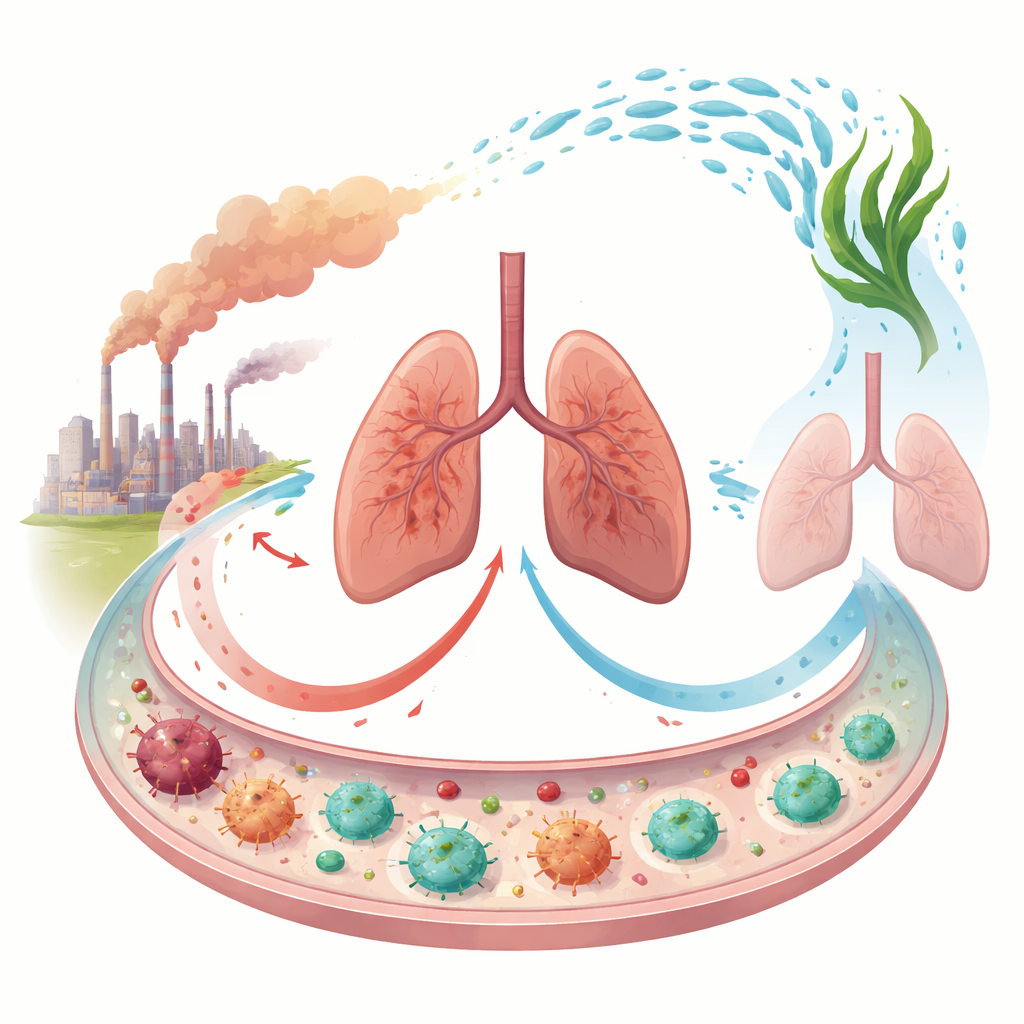
The challenge of dirty air and fragile lungs
Chronic respiratory diseases affect hundreds of millions of people worldwide and are often made worse by polluted air. One major culprit is PM2.5, a mix of tiny particles small enough to travel deep into the lungs and even reach the bloodstream. These particles can carry reactive chemicals and trace metals such as mercury and cadmium, which trigger stress and low-grade inflammation throughout the body. Over time, this smoldering irritation can disturb immune balance, worsen breathing, and contribute to other illnesses, from heart disease to cancer.
A seaweed-based helper enters the picture
Fucoidan is a sugar-rich compound found in brown seaweeds that has drawn attention for its anti-inflammatory and immune-tuning properties in laboratory and animal studies. Oligo-fucoidan is a smaller, more easily absorbed form designed to improve how much the body can use. Because tests in cells and animals suggest it can dampen pollution-related airway irritation, the researchers asked a practical question: in real patients with long-standing lung disease living in polluted areas of central Taiwan, what happens to their blood markers of immunity, inflammation, and metals when they take this supplement alongside their usual medical treatments for three months?
What the researchers actually did
The team enrolled 46 adults with various chronic lung conditions, including COPD, asthma, and pulmonary fibrosis. All continued their regular medications and added oligo-fucoidan tablets twice a day, totaling 2.2 grams daily, for 12 weeks. At the beginning and at weeks 4, 8, and 12, the researchers collected blood samples to measure standard health indicators, types of white blood cells that reflect immune balance, key inflammatory molecules in the blood, and levels of several heavy metals. They also estimated each person’s exposure to PM2.5 using government air monitoring stations near their homes, grouping participants into lower and higher exposure categories. Because this was an exploratory, single-group study without a comparison group, the results were described rather than tested for firm statistical proof.
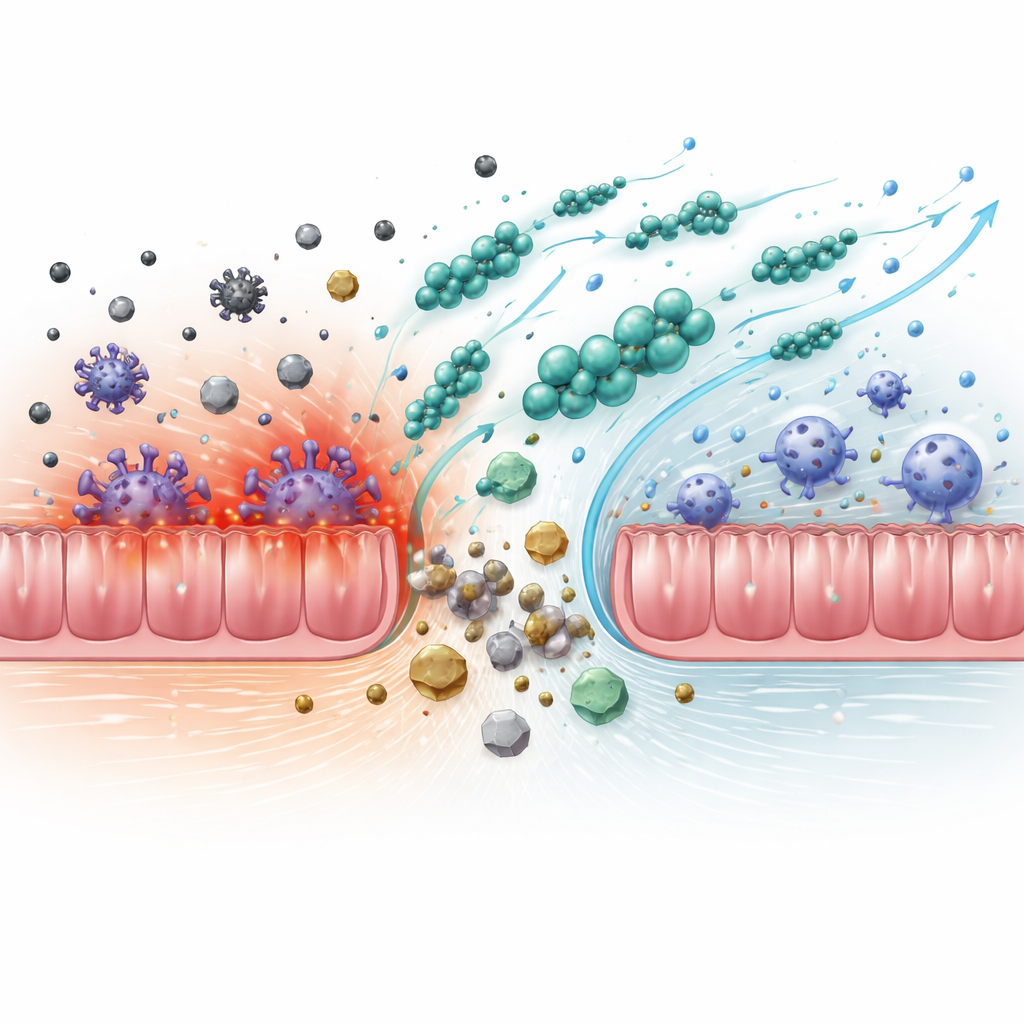
Hints of calmer inflammation and shifting immune balance
During the study period, outdoor PM2.5 levels were generally in the low to moderate range rather than extremely high. Against this background, several blood markers showed modest shifts over time. Overall white blood cell counts, liver enzymes, and routine chemistry values stayed within usual ranges. Inflammatory measures such as C-reactive protein tended to drift downward by week 12, and one signaling molecule in particular—interleukin-8, which helps draw certain immune cells into the airways—was consistently lower at later time points than at the start. Other inflammatory molecules, like tumor necrosis factor-alpha, also showed small declines, while interleukin-6 remained relatively stable. The mix of immune cells shifted slightly, with a small rise in certain T cells and a modest drop in B cells, especially among people living in somewhat more polluted areas, though these changes were subtle.
Metals in the blood and what they might mean
The study also tracked blood levels of metals such as lead, cadmium, and mercury. At the outset, the group living in higher PM2.5 areas tended to have more cadmium and mercury in their blood than those in cleaner-air neighborhoods, echoing the idea that air pollution can carry metal contaminants. Over the 12 weeks, metal levels fluctuated but did not show clear, consistent reductions that could be confidently tied to the supplement. Given that such metals can linger in the body for long periods, three months may be too short to reveal meaningful changes, especially in a small and varied patient group.
What this means for people with chronic lung disease
This work does not prove that oligo-fucoidan treats or prevents pollution-related lung damage, nor does it show cause-and-effect between the supplement and any improvements. Instead, it offers an early, cautious look at how a seaweed-derived product might be associated with gentle shifts in immune and inflammatory signals in people with chronic respiratory disease living in air-polluted environments. The supplement appeared safe over 12 weeks, and some markers of inflammation, like interleukin-8 and C-reactive protein, tended to decrease. These findings serve as a starting point, suggesting that larger, carefully controlled trials—tracking symptoms, lung function, personal pollution exposure, and long-term outcomes—are needed to determine whether oligo-fucoidan could one day play a supportive role in protecting vulnerable lungs from the everyday burden of dirty air.
Citation: Cho, JN., Shih, CJ., Liu, TC. et al. Immune, inflammatory, and metal biomarker profiles in chronic respiratory diseases receiving oligo-fucoidan under ambient PM₂.₅ exposure. Sci Rep 16, 13374 (2026). https://doi.org/10.1038/s41598-026-42873-6
Keywords: air pollution, chronic lung disease, PM2.5, oligo-fucoidan, inflammation