Clear Sky Science · en
Leveraging Industry 4.0 technologies for organizational sustainability performance in Chinese firms: an NRBV-mediated model advancing UN SDGs 9 and 12
Smart factories for a cleaner future
Factories are often blamed for pollution and waste, yet the same technologies powering the "fourth industrial revolution"—from artificial intelligence to networked sensors—could help industry shrink its environmental footprint. This study looks at hundreds of Chinese companies to see how digital tools and green equipment, when used together and built into daily routines, can turn traditional plants into smarter, cleaner, and more competitive operations that support global sustainability goals.
New tools in the factory toolbox
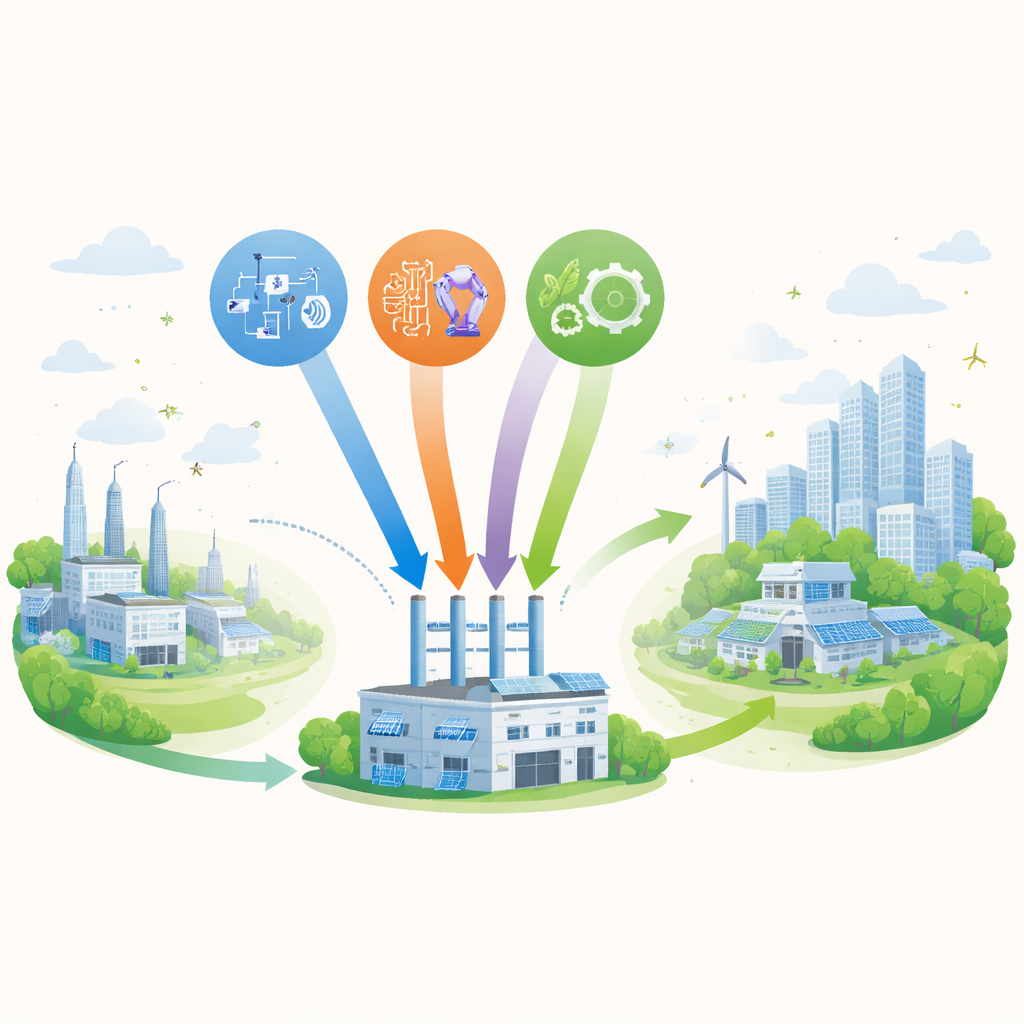
The researchers focus on four kinds of modern technologies that many manufacturers are now exploring. First are artificial intelligence and machine learning systems that sift through vast amounts of data to predict defects, schedule maintenance, and fine-tune processes. Second are digital twins, which are virtual replicas of machines or production lines that let engineers test "what if" scenarios without stopping the real equipment. Third is the Internet of Things: networks of sensors and connected devices that track energy, materials, and machine performance in real time. Finally, green technologies—such as energy‑saving machinery and recyclable materials—directly cut waste and emissions. Instead of treating these tools separately, the study asks what happens when firms adopt them as a coordinated package.
From gadgets to everyday habits
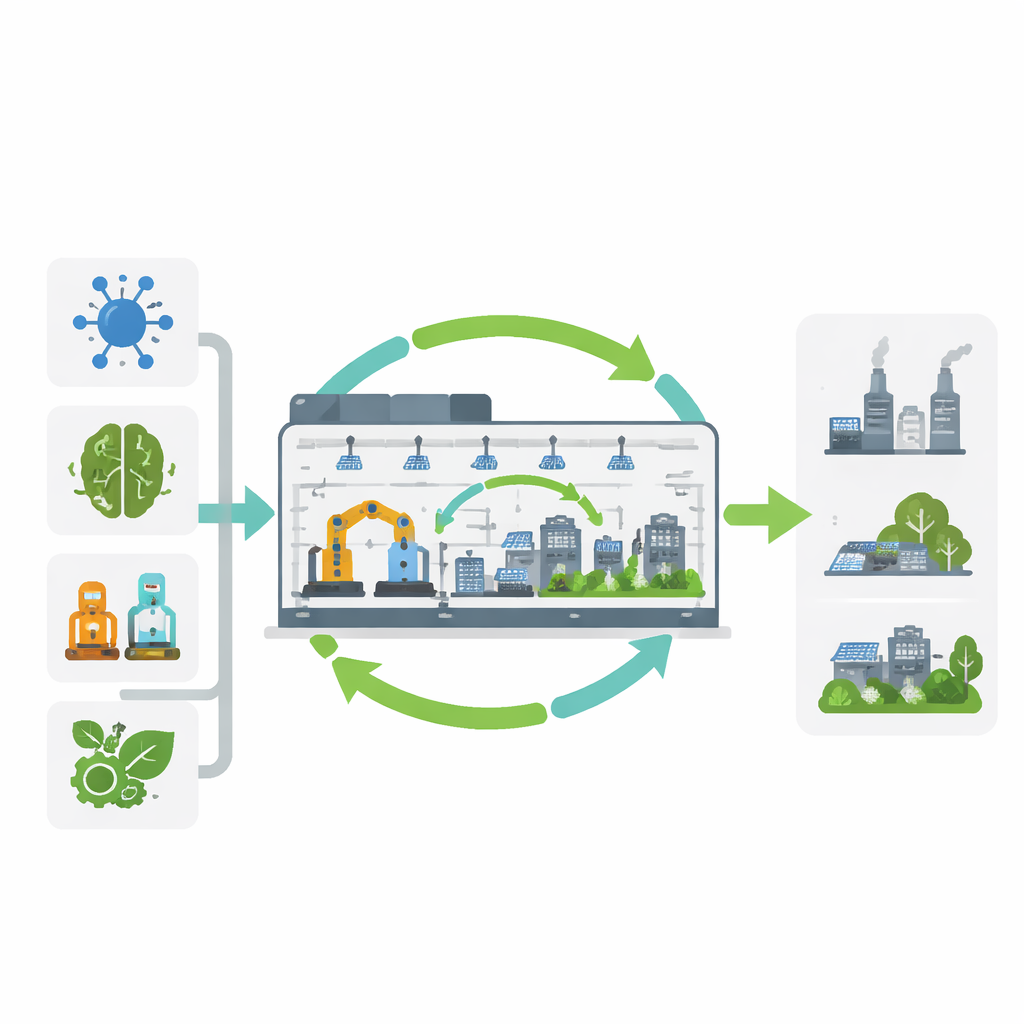
Owning advanced technology does not automatically make a factory sustainable. The key, the authors argue, is how these tools reshape everyday production habits, which they call sustainable manufacturing practices. These include designing products with reuse and recycling in mind, running closed‑loop systems that recover materials, tightening process controls to use fewer resources, and folding environmental checks into regular quality audits. In this view, sensors, AI, and digital twins are valuable because they give managers the information and insight needed to redesign routines around efficiency and pollution prevention, while green equipment makes those redesigned routines physically possible.
Evidence from hundreds of Chinese firms
To test these ideas, the team surveyed 719 firms across China from sectors such as manufacturing, high‑tech, and resource‑intensive industries. Senior managers and technical leaders reported how far their companies had gone in adopting the four types of technology, how deeply sustainability‑minded practices were embedded in their operations, and what results they were seeing in terms of energy use, emissions, waste, cost savings, and satisfaction among customers and other stakeholders. Using a statistical method designed to handle complex cause‑and‑effect networks, the authors examined both the direct impact of each technology and the indirect impact that runs through day‑to‑day practices.
How digital tools boost sustainability results
The analysis shows that all four technologies—artificial intelligence, digital twins, Internet of Things networks, and green equipment—are strongly linked to better manufacturing practices that emphasize resource efficiency and waste reduction. Green technologies have the strongest push, closely followed by AI and digital twins, with the Internet of Things adding a smaller but still meaningful contribution. These improved practices, in turn, have a powerful effect on overall sustainability performance, including lower emissions and energy use per unit of output, less waste sent to landfills, and measurable cost savings. Crucially, the technologies’ benefits flow almost entirely through these practices rather than directly: in other words, digital investments pay off when they are woven into how work is actually done on the shop floor.
Why this matters for global goals
Although the study does not track United Nations indicators directly, its results line up with the spirit of Sustainable Development Goal 9 (on cleaner, more resilient industry) and Goal 12 (on responsible consumption and production). By showing that digital and green technologies become powerful when combined with sustainability‑focused routines, the research offers a practical roadmap for firms and policymakers. For businesses, the lesson is to invest not only in hardware and software but also in training, process redesign, and a culture that rewards environmental stewardship. For society, it suggests that smart factories can be part of the solution: with the right mix of tools and habits, industrial growth and environmental protection need not be at odds.
Citation: Gao, Y., Wang, J., Chen, X. et al. Leveraging Industry 4.0 technologies for organizational sustainability performance in Chinese firms: an NRBV-mediated model advancing UN SDGs 9 and 12. Sci Rep 16, 14432 (2026). https://doi.org/10.1038/s41598-026-42871-8
Keywords: Industry 4.0, sustainable manufacturing, green technology, digital twins, IoT and AI in industry