Clear Sky Science · en
Development and performance evaluation of sustainable false banana fiber reinforced composite fan blades
Cooler Rooms, Greener Materials
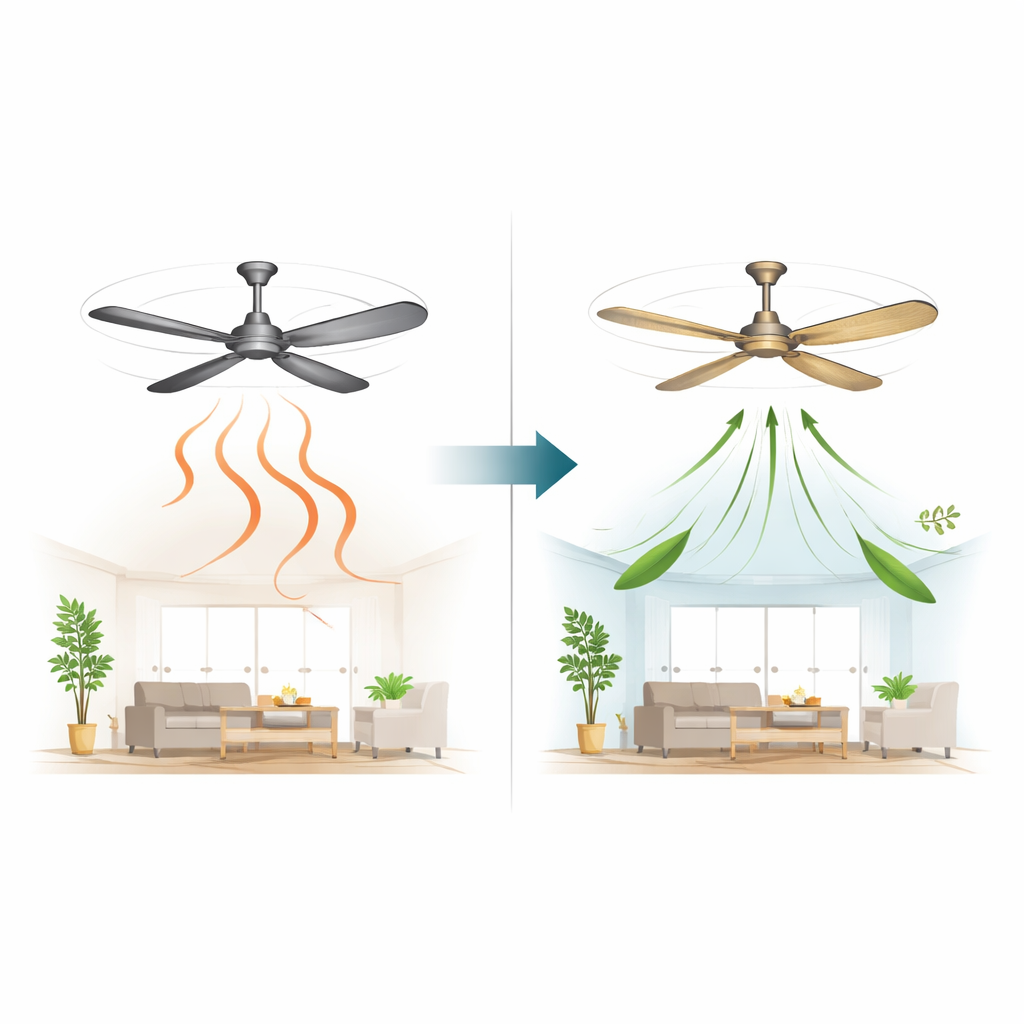
Ceiling fans quietly work above our heads every day, keeping homes and workplaces comfortable. But the materials used in their blades matter—for energy bills, safety, and the environment. This study explores whether a fast-growing Ethiopian crop known as false banana can provide strong, lightweight fibers for fan blades, replacing heavier metals and petroleum-based materials with something more sustainable.
From Farm Plant to Fan Blade
The researchers began with false banana, a staple plant in parts of East Africa whose leaves and stems are rich in strong natural fibers. Instead of letting these fibers go to waste, they processed them and combined them with a common plastic-like material called unsaturated polyester resin to form a composite—much like straw in dried clay bricks, but engineered with far greater precision. Before mixing, the fibers were washed in a mild alkaline solution to remove surface waxes and unwanted components, which helps them grip the surrounding resin more tightly and reduces their tendency to soak up water.
Designing and Making the New Blades
To turn this plant-based composite into a real fan blade, the team used a curved, airfoil-inspired shape shown in best-practice design guides for efficient ceiling fans. They built a mold and laid layers of woven false banana fiber into it by hand, then added liquid resin and hardener so the mixture could cure into a solid piece. By systematically varying the amount of fiber and resin, and analyzing the results with statistical software, they searched for the blend that would give the best combination of strength, stiffness, and low water uptake. They also measured how much empty space—or voids—remained trapped inside, because such tiny bubbles can weaken a composite.
How Strong and Durable Is It?
The optimum recipe turned out to be 30% false banana fiber and 70% resin. Test samples made with this mix showed solid performance: they resisted stretching, squeezing, and bending with strengths around 30 megapascals, a level that compares well with several other natural-fiber composites. The material absorbed only about 1.5% water over two days and had a void fraction just above 1%, considered acceptable for structural parts. The finished composite blade weighed 31% less than a conventional aluminum blade and slightly less than a similar glass-fiber composite blade. Lower weight means the motor needs less effort to start and spin the fan, which can improve efficiency and reduce wear over time.
Testing Performance in the Digital Wind Tunnel
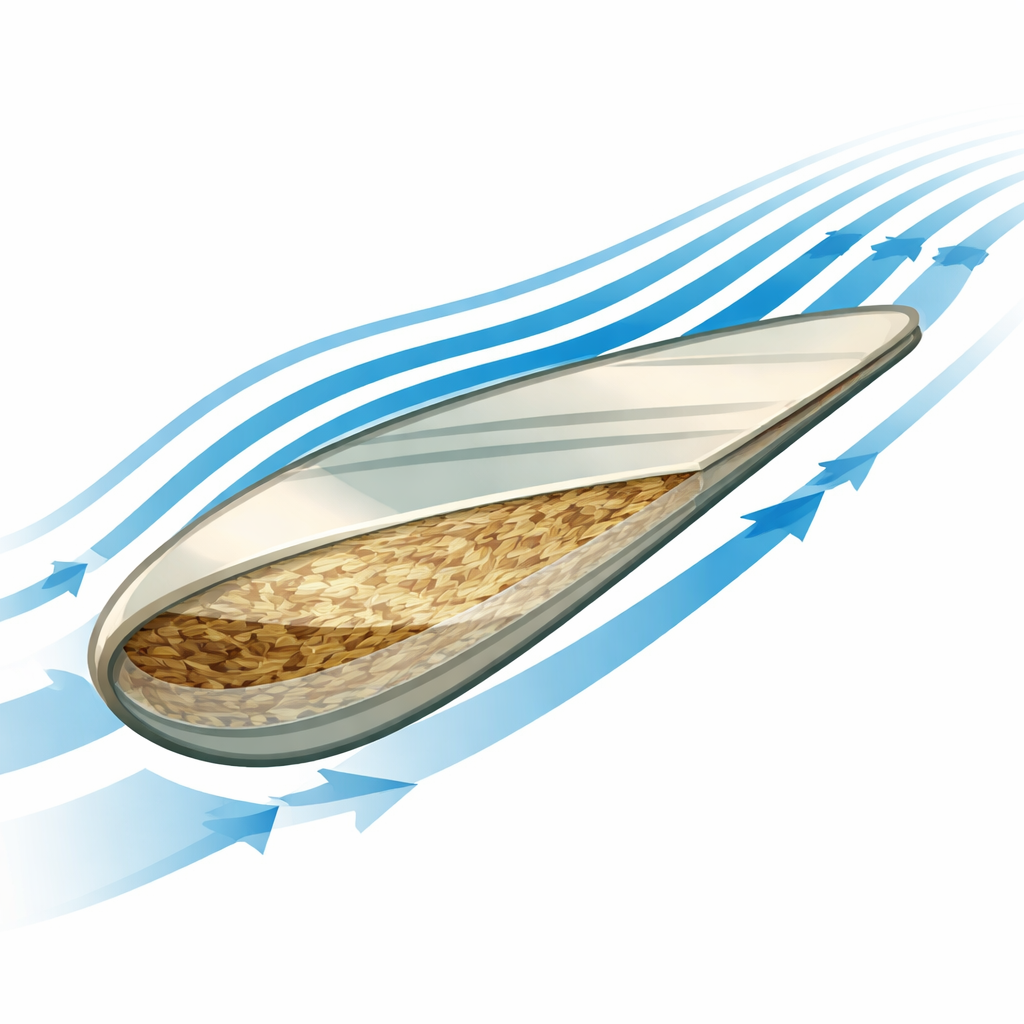
Physical tests were paired with advanced computer simulations. Using finite element analysis, the team modeled a blade spinning at a typical household fan speed of 200 revolutions per minute. They treated the blade like a cantilevered beam fixed at the hub and calculated how much it would bend and how stresses would distribute through the material. The model predicted a very small tip deflection—well under a millimeter—and maximum internal stresses significantly below the measured strength of the composite, yielding a generous safety margin. Fluid-flow simulations (CFD) showed smooth air streamlines around the curved blade and air speeds at the tip far above the minimum needed for comfortable room circulation.
What This Means for Everyday Fans
In simple terms, this work shows that fan blades made from false banana fiber and polyester resin can be strong, light, and efficient enough for real-world use, while also making use of a renewable agricultural resource. The blades stay safely within their strength limits under normal operating speeds and can withstand many cycles of rotation with a high factor of safety. Although long-term aging and detailed fatigue tests will be needed before mass production, the study points toward a future where the humble ceiling fan helps cut not only heat and energy use, but also our reliance on metals and fully synthetic materials.
Citation: Gebremaryam, Y.Z., Simachew, H., Molla, W.T. et al. Development and performance evaluation of sustainable false banana fiber reinforced composite fan blades. Sci Rep 16, 13483 (2026). https://doi.org/10.1038/s41598-026-42862-9
Keywords: ceiling fan blades, natural fiber composites, false banana fiber, sustainable materials, finite element analysis