Clear Sky Science · en
A fast and accurate UV–vis method for the quantification of polylactic acid in biodegradable plastics
Why measuring green plastics matters
As plastic waste piles up worldwide, biodegradable plastics made from plants promise a cleaner future. One of the most important of these materials is polylactic acid (PLA), used in cups, food packaging, and compostable bags. But many real products mix PLA with other plastics, and current lab methods to check how much PLA is actually inside are slow, expensive, and technically demanding. This study introduces a quicker, lower-cost way to measure PLA content that could help certify truly biodegradable products and prevent greenwashing.
Growing plastic mountains and a plant-based alternative
Global plastic production has soared from a few million tons in the 1950s to hundreds of millions of tons today, and it is expected to keep rising sharply. Most of this plastic is made from fossil fuels and lingers for decades as waste. PLA offers a different path: it is made from renewable sources such as corn starch and other plant materials, and under industrial composting conditions it can largely break down within a few months. These advantages have made PLA a leading player in the biodegradable plastics market, used in everyday items like disposable packaging and agricultural films.
Why it is hard to know what is really in a ‘biodegradable’ product
In practice, PLA is often blended with other polymers—such as polypropylene or other biodegradable plastics—to improve strength, flexibility, or processing. These mixtures complicate both how the material breaks down and how its true composition is measured. Sophisticated techniques like infrared spectroscopy, nuclear magnetic resonance, pyrolysis–chromatography, and high-performance liquid chromatography can give detailed information, but they require costly instruments, expert operators, and long analysis times. Standard biodegradation tests can run for up to 180 days and still do not directly report how much PLA is present. As a result, regulators and manufacturers lack a fast, affordable way to verify that “compostable” products contain enough PLA to behave as advertised.
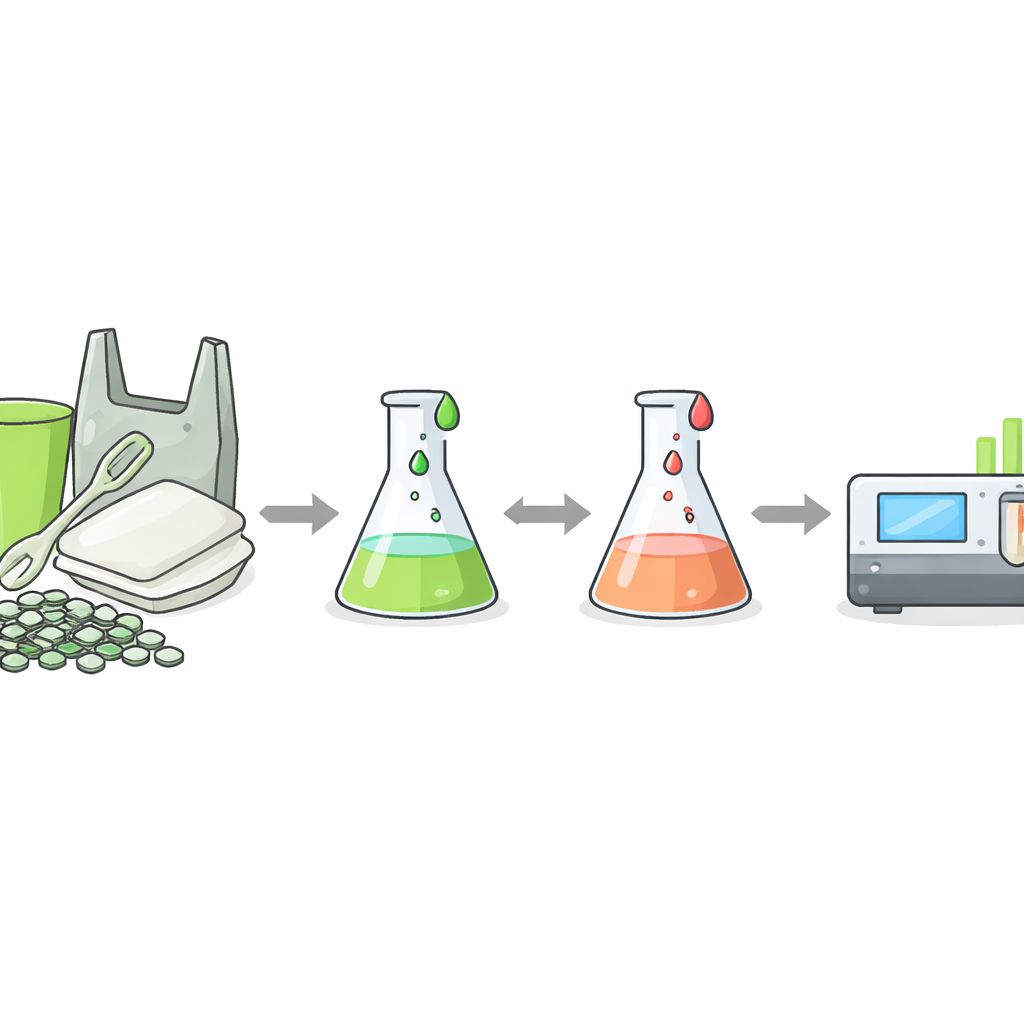
Turning plastic into a color signal
The researchers designed a simple strategy to translate hidden PLA content into an easily measured color change. First, they gently break down PLA within a plastic blend using an alcohol-based treatment, transforming the long PLA chains into smaller molecules called methyl lactate. Next, they carry out a basic water-based step that converts methyl lactate into sodium lactate, a salt. When this salt is mixed with iron(III) ions in solution, it forms a yellow–brown complex that absorbs light in a narrow region of the visible spectrum (around 400–410 nanometers). The stronger the color, the more PLA was present in the original sample. Using a standard ultraviolet–visible (UV–vis) spectrophotometer—a relatively simple and common laboratory instrument—the team measures how much light the colored solution absorbs and directly links this to the PLA content.
Testing accuracy across many plastic mixtures
To show that the method works reliably, the authors prepared well-controlled mixtures of PLA with polypropylene and several other common biodegradable plastics, including PBAT, PHB, and cellulose acetate. They used established techniques like infrared and nuclear magnetic resonance spectroscopy to confirm how PLA and the partner polymers interacted and to verify that PLA was indeed converted into the expected smaller molecules during the two-step treatment. They then measured the colored iron complexes with UV–vis. The absorbance in the 400–410 nanometer region increased in a clean straight line as the fraction of PLA in the blend rose, with excellent agreement between measured and known values. The method could detect PLA at levels as low as a few percent and quantify it accurately above about 7.5 percent, with small measurement errors and good repeatability.
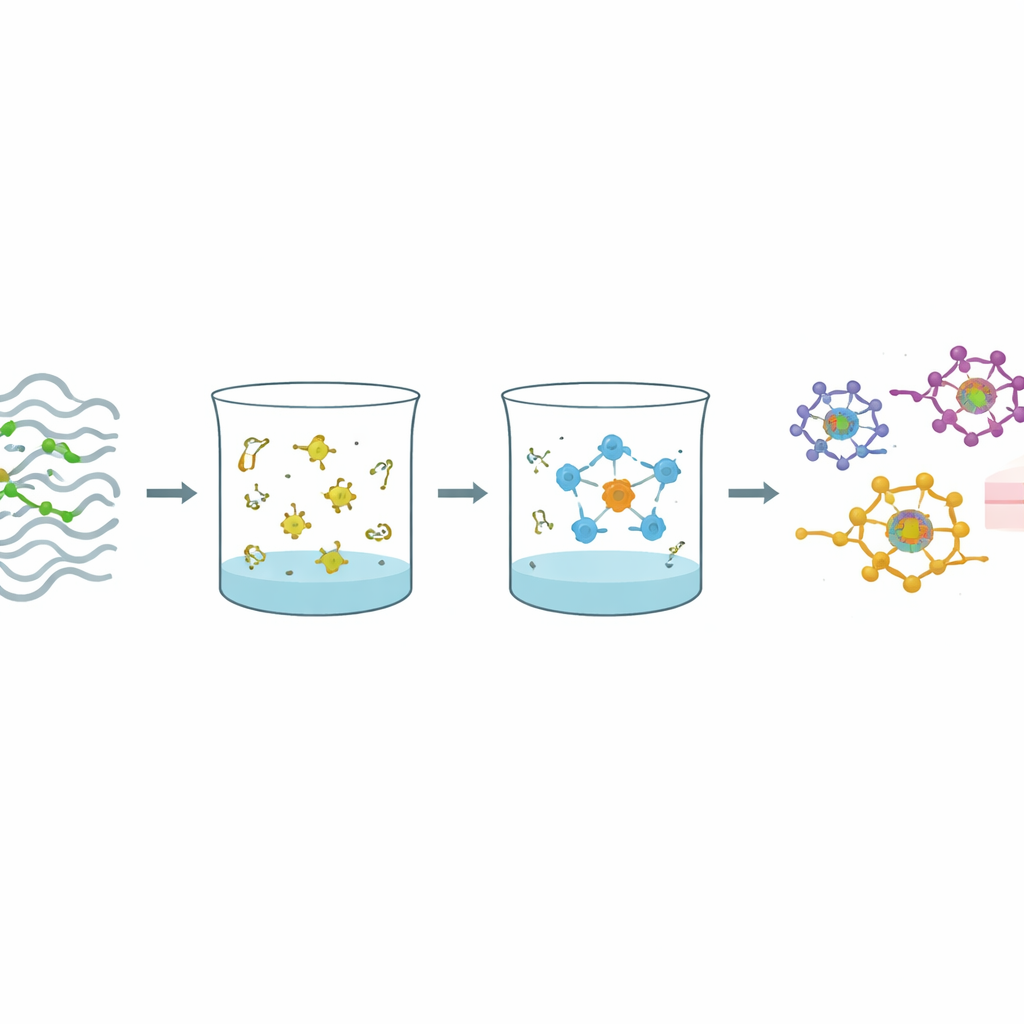
Robustness, limits, and real-world use
The researchers further checked that substances often found in biodegradable plastics, such as typical breakdown products of other polymers, did not interfere with the color signal in the chosen wavelength range. Even when these extra acids were added, the PLA readings remained very close to the true values. They also discussed how simple steps like filtering or spinning down cloudy samples can help when dealing with commercial products that contain fillers or other additives. Although the study focused mainly on carefully prepared blends in the lab, the authors note that the same framework could be adapted to more complex waste streams and extended to other plant-based or petroleum-derived polyesters by choosing suitable pretreatment and color-forming reactions.
A clearer path to honest biodegradable plastics
In summary, this work shows that a straightforward two-step chemical treatment followed by a quick UV–vis measurement can accurately reveal how much PLA is in mixed plastic materials. Because the approach uses relatively inexpensive equipment and gives results in a short time, it could be adopted for routine quality control and certification of biodegradable products. That, in turn, would make it easier to confirm that items labeled as compostable truly contain enough plant-based, degradable content, helping regulators, companies, and consumers push the plastics economy toward more genuine sustainability.
Citation: Ji, S.M., Lee, T.G. A fast and accurate UV–vis method for the quantification of polylactic acid in biodegradable plastics. Sci Rep 16, 12623 (2026). https://doi.org/10.1038/s41598-026-42821-4
Keywords: biodegradable plastics, polylactic acid, UV–vis analysis, plastic certification, plastic waste