Clear Sky Science · en
In vitro and in vivo evaluation of oleuropein loaded hyalurosomes for diabetic foot ulcer healing
Why stubborn foot wounds matter
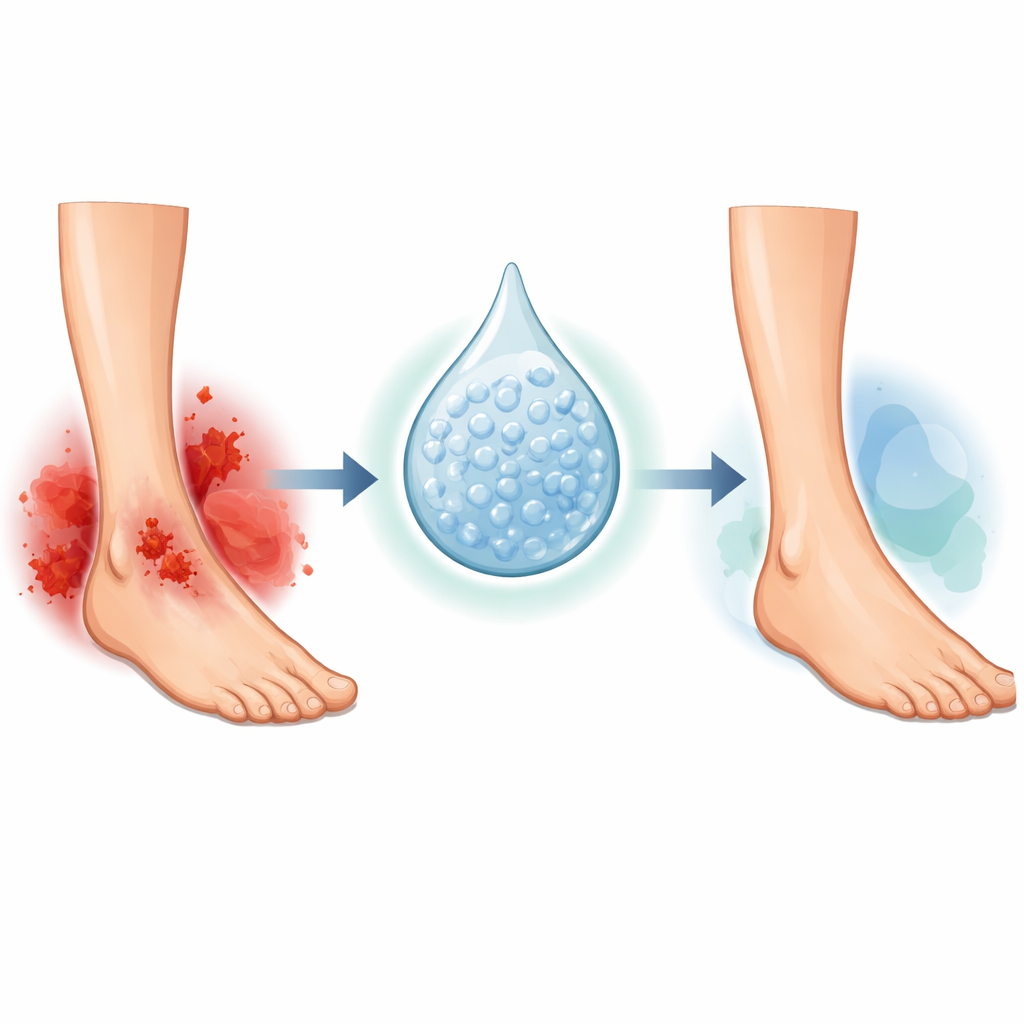
For many people with diabetes, a small sore on the foot can quietly grow into a serious, hard‑to‑heal wound. These diabetic foot ulcers are painful, prone to infection, and a major cause of amputation worldwide. Doctors have dressings, creams, and antibiotics, but healing is often slow because the local tissue is stuck in a state of ongoing irritation and chemical stress. This study explores a new gel based on a natural olive‑leaf compound, packaged in tiny soft bubbles, to see whether it can nudge damaged skin back toward healthy repair.
A healing boost from olive leaves
The key ingredient in the new treatment is oleuropein, a plant molecule abundant in olive leaves. Oleuropein is known for calming inflammation, fighting harmful microbes, and neutralizing damaging "rust‑like" molecules in the body. On paper, it looks ideal for helping chronic wounds. In practice, it is hard to use: it breaks down easily, does not pass through skin well, and is quickly cleared from tissues. The researchers addressed these hurdles by trapping oleuropein inside microscopic, bubble‑like carriers made from fat and a sugar‑based polymer called hyaluronic acid. Suspended in a soft gel, these "hyalurosomes" are designed to cling to the wound surface, seep into the upper skin layers, and release oleuropein slowly over many hours instead of all at once.
Tiny carriers built for skin
Laboratory tests showed that the hyalurosomes were uniform, stable, and firmly loaded with drug. On average, the particles were about a quarter of a micrometer across—small enough to move through the outer skin, but large enough to remain where they are applied rather than slipping deep into the bloodstream. Electron microscopy revealed smooth, spherical vesicles, and chemical fingerprinting confirmed that oleuropein sat securely within their structure without being altered. When placed in a fluid that mimics skin conditions, free oleuropein rushed out in just a few hours, while the encapsulated form leaked out gently in two stages: a quick initial dose followed by a long, steady release over a full day.
Faster closure in cell and animal wounds
The team first tried the formulation on sheets of human skin cells grown in dishes. By scratching a gap in the cell layer, they created a simple model of a wound and watched how quickly cells crawled back to cover the bare area. Cells exposed to oleuropein‑loaded hyalurosomes moved far more quickly than those given plain oleuropein or no treatment, almost completely closing the scratch within three days. Next, the scientists tested the approach in rats with diabetes, which had round skin wounds made on one leg. Animals received daily applications of either the new gel, a gel with free oleuropein, a standard antibiotic cream, or no treatment. Over two weeks, the hyalurosome gel produced the most rapid and complete shrinkage of the wound area, rivaling or exceeding the antibiotic cream.
Quieting chemical and immune attacks
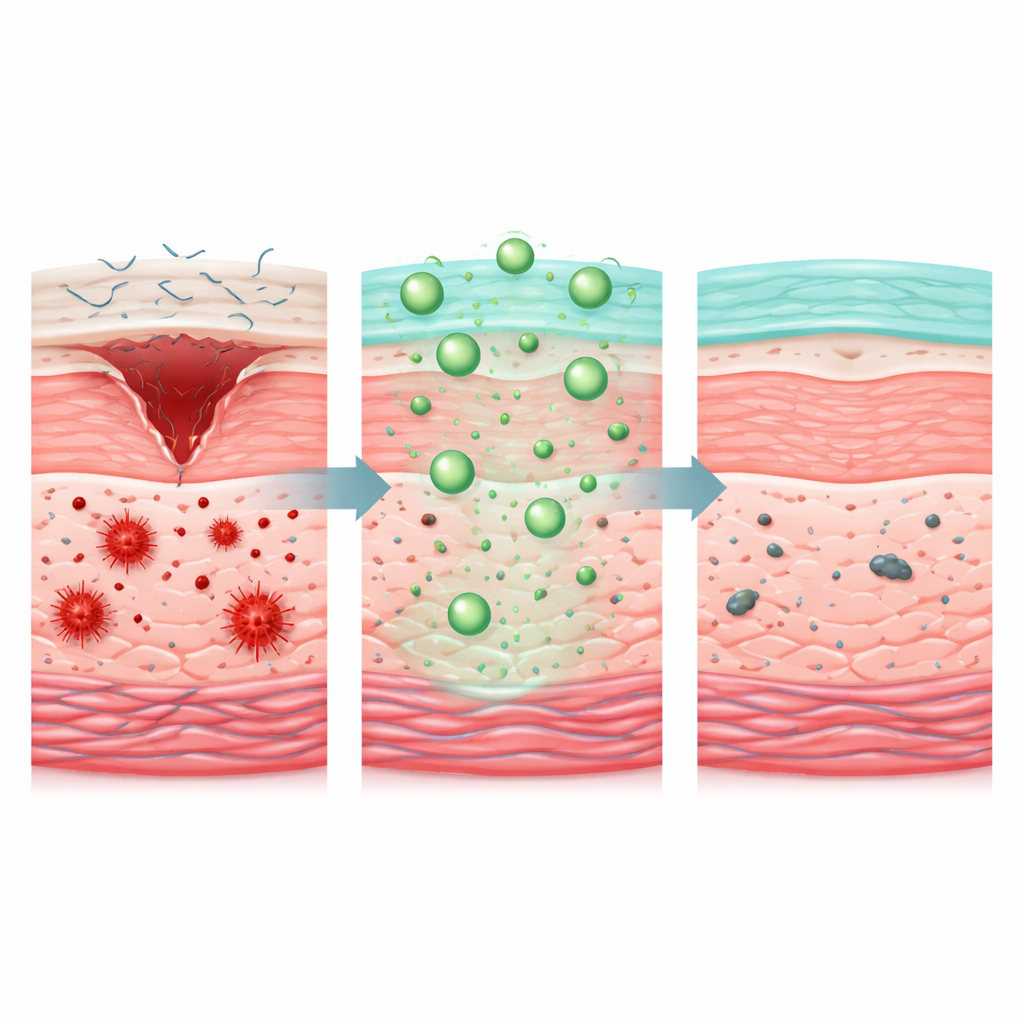
Beyond simply watching wounds close, the researchers probed what was happening inside the tissue. In untreated diabetic wounds, they found high levels of molecules that signal oxidative stress and prolonged immune attack, along with enzymes that chew up the supporting framework of the skin. With the oleuropein‑hyalurosome gel, these harmful markers dropped sharply. Protective antioxidants in the tissue rose, aggressive enzymes fell, and a natural enzyme blocker rebounded. A growth‑control signal (TGFβ1), which is often stuck in overdrive in chronic ulcers, moved back toward normal levels. Under the microscope, skin from treated animals looked strikingly more like healthy skin, with a continuous outer layer, well‑organized fibers, and far fewer invading immune cells.
What this could mean for people
Taken together, the findings suggest that packaging a plant‑based compound from olive leaves into smart, skin‑friendly nano‑bubbles can transform it from a fragile ingredient into a powerful local therapy. In diabetic rats, the oleuropein‑hyalurosome gel did not cure diabetes or correct blood sugar, but it did change the harsh environment inside the wound: less chemical damage, calmer inflammation, and better tissue rebuilding. While human trials are still needed, this work points to a future in which stubborn diabetic foot ulcers might be treated not only by covering them, but by delivering targeted, long‑lasting bursts of natural protectors directly where healing needs the most help.
Citation: Elgendy, A.I., El-Gendy, A.O., Aboud, H.M. et al. In vitro and in vivo evaluation of oleuropein loaded hyalurosomes for diabetic foot ulcer healing. Sci Rep 16, 10480 (2026). https://doi.org/10.1038/s41598-026-42804-5
Keywords: diabetic foot ulcers, wound healing, oleuropein, nanocarriers, hyaluronic acid gel