Clear Sky Science · en
CD47 as a prognostic biomarker and potential immunotherapy target in penile squamous cell carcinoma
Why this hidden signal matters
Penile cancer is rare, but when it advances, treatment options are limited and outcomes can be poor. This study looks at a tiny "don’t‑eat‑me" signal on cancer cells, called CD47, and asks a simple question with big consequences: does having more of this signal make penile tumors harder to treat and more deadly? By combining genetic tests, tissue staining, and immune‑system analysis, the researchers show that CD47 may help these tumors grow, escape immune attack, and predict which patients are at higher risk.
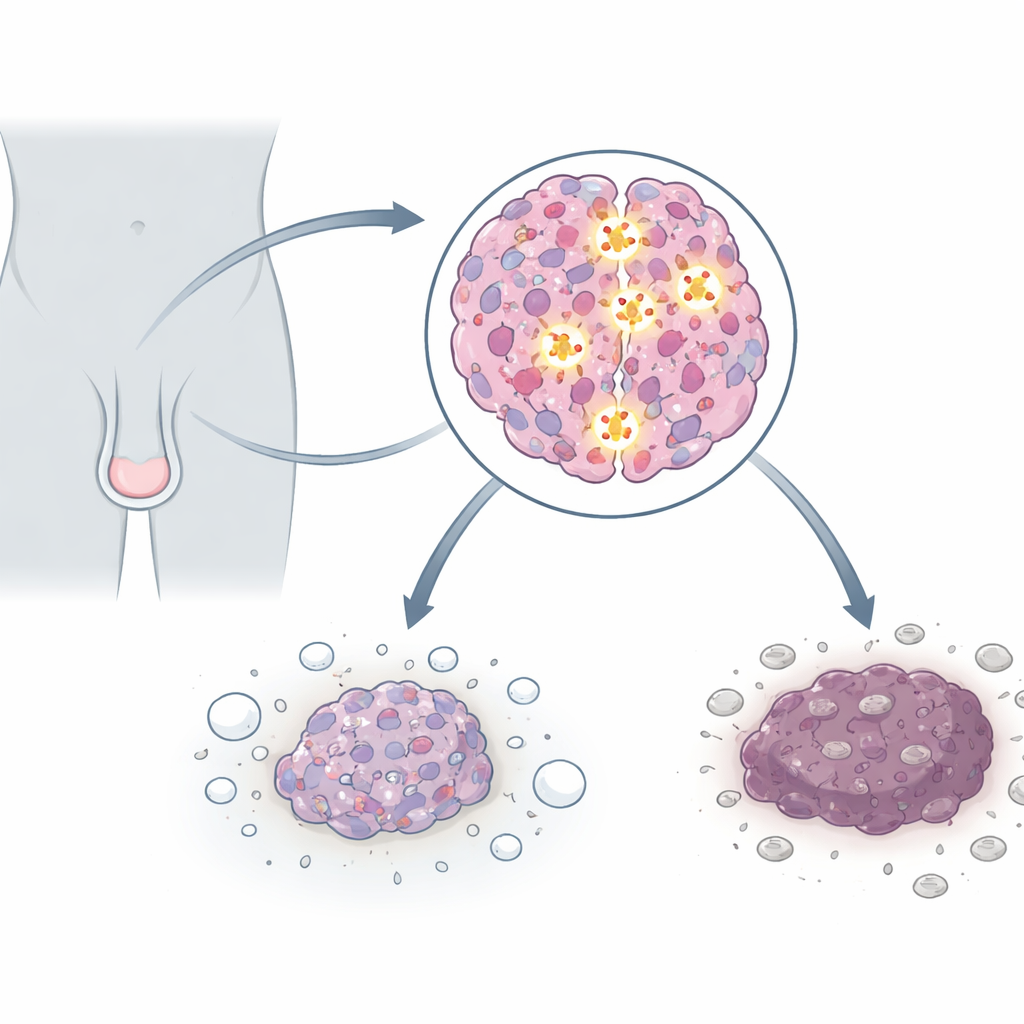
Looking closely at tumor and normal tissue
The team began by comparing genetic activity in eight penile tumors and nearby healthy tissue from the same patients. Thousands of genes were switched on or off differently in the cancers, and many of the changes involved the body’s defense system. Among a long list of immune‑related switches, CD47 stood out. It sits on the surface of cells and sends a calming signal to immune cells that would otherwise engulf and destroy abnormal targets. The researchers found that the gene for CD47 was more active in tumor tissue than in normal tissue, and this pattern held up when they checked two independent public datasets of penile cancer.
Measuring CD47 in many patients
To see how this signal behaves in real‑world patients, the scientists examined tissue samples from 131 men treated for penile squamous cell carcinoma over a decade. Using a standard staining method, they scored how strongly CD47 was present on the cancer cells. About 42 percent of tumors showed high levels. These CD47‑rich tumors tended to be larger and at a more advanced stage, suggesting that the "don’t‑eat‑me" signal goes hand in hand with more aggressive disease, even though it was not tied to age, infection with human papillomavirus, or how abnormal the cells looked under the microscope.
Linking the signal to survival and immune defense
The most sobering finding came when the team followed 100 patients over a median of just over three years. Men whose tumors had high CD47 levels were more likely to die during the follow‑up period than those with low levels. Even after accounting for other powerful risk factors such as age and spread to lymph nodes, CD47 remained an independent warning sign of poor overall survival. When the researchers explored the tumor environment, they found that cancers rich in CD47 had fewer of the key "killer" immune cells known as CD8 T cells inside them. Computer‑based analyses of gene activity and additional staining confirmed that high‑CD47 tumors seemed to activate growth‑promoting routes inside the cell, particularly those controlled by the MYC and mTORC1 pathways.
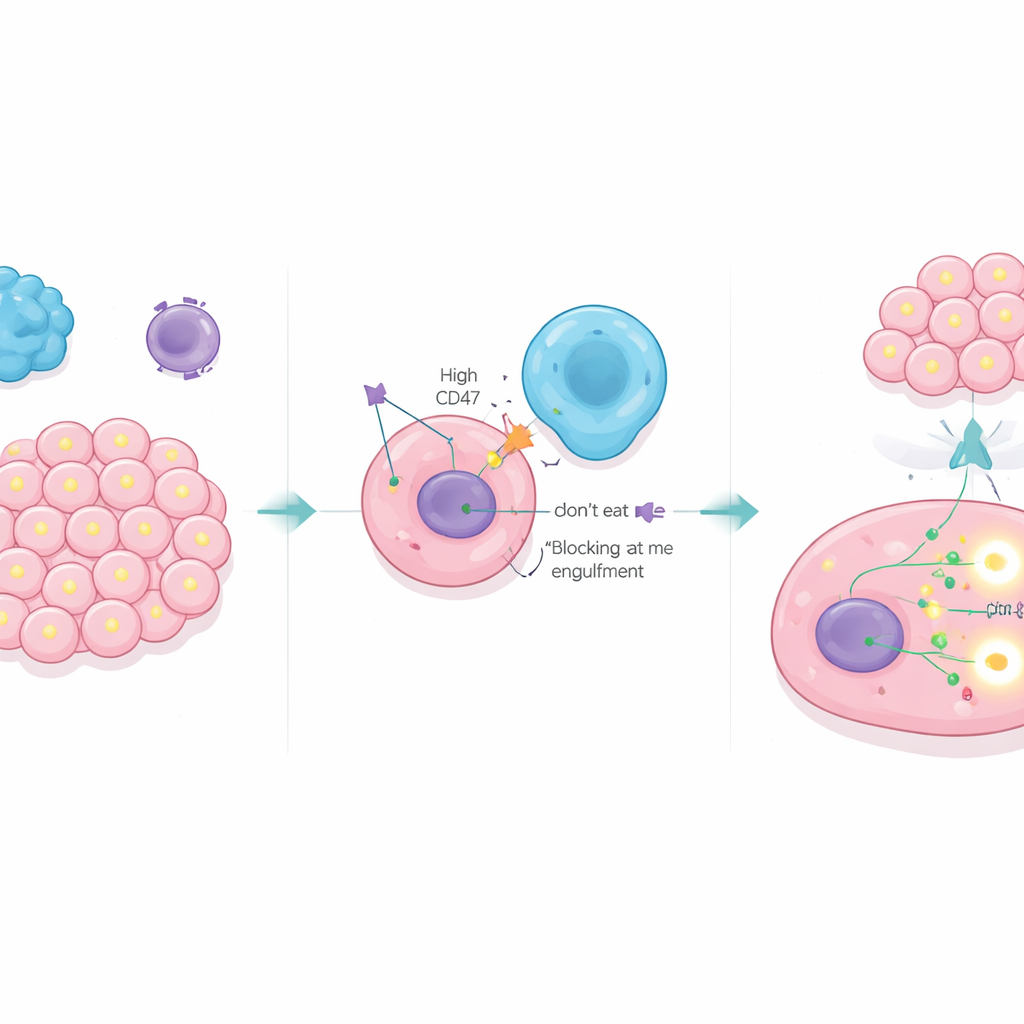
What this means for future treatments
Taken together, the results paint CD47 as a double threat: it helps penile cancer cells avoid being eaten by immune cells and is tied to internal growth programs that let tumors expand and spread. Because drugs that block CD47 or its partner on immune cells are already being tested in other cancers, this pathway is more than just a marker—it is a potential new treatment target. The study also suggests that CD47 could be combined with existing immune‑checkpoint drugs to open up tumors to both better immune attack and better response to therapy.
A hopeful path forward
For patients and clinicians facing advanced penile cancer, these findings offer both a warning and an opportunity. High levels of CD47 on tumor cells signal a higher risk of poor outcome, but they also point directly to a target that modern immunotherapy can reach. While larger and more detailed studies are still needed, especially to map out exactly how CD47 shapes the immune landscape in this disease, this work supports using CD47 as a prognostic flag and exploring it as a new line of attack against an often‑overlooked cancer.
Citation: Zhang, J., Hu, X., Xu, J. et al. CD47 as a prognostic biomarker and potential immunotherapy target in penile squamous cell carcinoma. Sci Rep 16, 12819 (2026). https://doi.org/10.1038/s41598-026-42801-8
Keywords: penile cancer, CD47, immune evasion, biomarker, immunotherapy