Clear Sky Science · en
Distinguishing between response conflict and error expectancy in inhibitory error processing: the role of the presupplementary motor cortex
Why our mistakes matter
Every day we make split-second choices, from braking at a traffic light to replying to a message. When we slip up, the brain normally detects the mistake and nudges us to slow down or change course. But scientists still debate what the brain actually tracks in these moments: is it the clash between competing actions, or the surprise of an unexpected error? This study uses brain imaging to tease apart these two possibilities and pinpoints a key patch of the frontal brain that seems to care mainly about internal conflict.
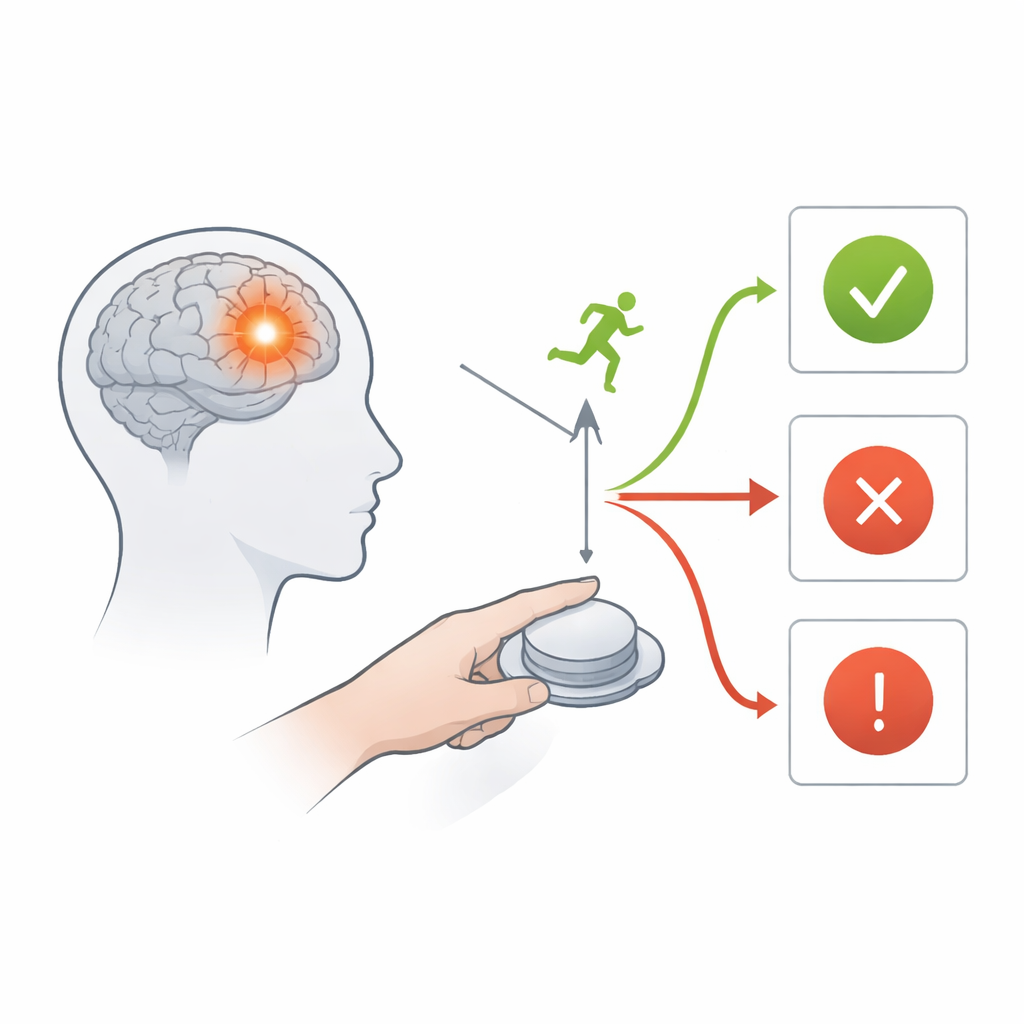
Two ways to think about a mistake
Researchers have proposed two main stories about how the brain monitors errors. One focuses on conflict: when we are torn between pressing a button and holding back, special regions detect this tug-of-war and call for more control. The other is rooted in learning from outcomes: the brain compares what happened with what it expected and reacts strongly when things go worse than predicted. In real life, these two often go hand in hand—errors usually feel both conflicted and surprising—making it hard to tell which mechanism is driving the brain’s alarm signal.
A stopping game inside the scanner
To separate conflict from surprise, the authors turned to the stop-signal task while scanning people’s brains with functional MRI. Volunteers responded quickly to simple visual cues but had to cancel their response when a stop signal appeared after a delay. One timing measure, the stop-signal delay, captured how hard it was to stop: longer delays gave the “go” process more time to build up, increasing conflict between doing and stopping. Another timing measure, the stop–response interval, captured how expected an error was: errors that happened long after the stop signal were less expected, because in principle there was enough time to withhold the response. By tracking both measures on every trial, the team could ask which one best matched brain activity when stopping failed.
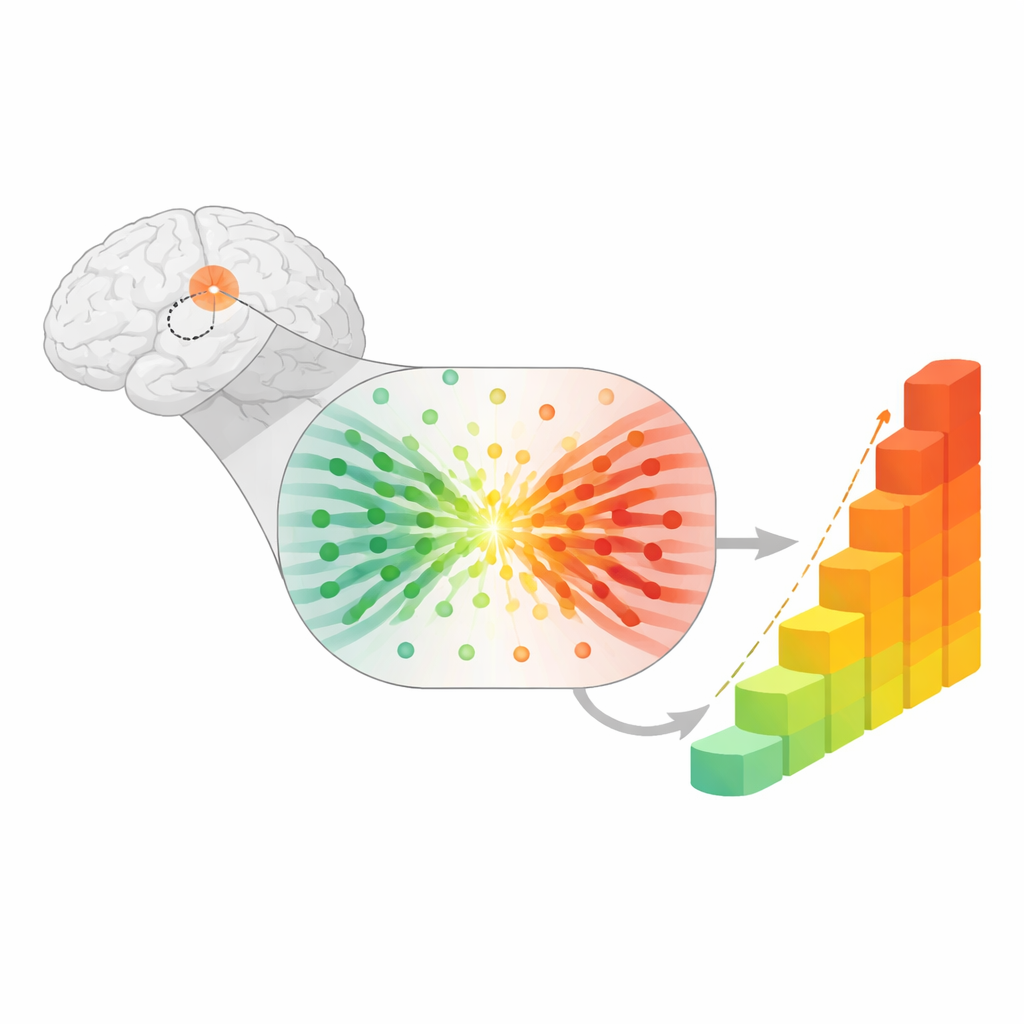
How the brain reacts after a slip
Behaviorally, participants showed classic post-error slowing: after failing to stop, they tended to respond more slowly on the next trial. Both higher conflict (longer stop-signal delays) and more unexpected errors (longer stop–response intervals) were linked to stronger slowing. This suggests that our behavior after a mistake blends caution in the face of conflict with learning from surprising outcomes. But when the researchers looked directly at brain signals, a different picture emerged. Comparing failed and successful stop trials, and zooming in on several regions known to respond to errors, they found that only conflict—not error expectancy—tracked the size of the brain’s error response.
A key role for a frontal control hub
The most telling changes occurred in the pre-supplementary motor area, a patch of tissue on the midline of the frontal lobes that has been repeatedly tied to performance monitoring. Activity here grew stronger when the stop-signal delay was longer, meaning when internal conflict between going and stopping was more intense. A similar, though less clear-cut, pattern appeared in a right parietal region often associated with attention. In contrast, the timing measure linked to how surprising an error was showed no reliable relationship with brain activity in any of the examined areas. This held even though the same expectancy measure clearly influenced how much people slowed down after they erred.
What this means for everyday control
These findings suggest that, at least in this kind of stopping task, the brain’s core error-monitoring network is tuned more to the clash between competing actions than to the sheer surprise of being wrong. While both conflict and expectancy shape how we adjust our behavior after a mistake, only conflict leaves a clear fingerprint in the blood-oxygen signals recorded from frontal control regions. For a layperson, the takeaway is that when you catch yourself doing the wrong thing—like failing to hit the brakes in time—it is the internal struggle between acting and holding back, centered in the pre-supplementary motor area, that most strongly drives your brain’s immediate error signal.
Citation: Bielski, K., Wichary, S., Nęcka, E. et al. Distinguishing between response conflict and error expectancy in inhibitory error processing: the role of the presupplementary motor cortex. Sci Rep 16, 12321 (2026). https://doi.org/10.1038/s41598-026-42784-6
Keywords: error monitoring, cognitive control, response inhibition, functional MRI, pre-supplementary motor area