Clear Sky Science · en
Physical characterization of cotoneaster seeds to improve sorting efficiency
Why Seed Shape Matters in the Garden
Anyone who has tried to grow a hedge or a row of flowering shrubs knows that some seeds sprout quickly while others lag behind. For nurseries that raise thousands of plants at a time, this uneven growth makes sowing and tending seedlings harder and more expensive. This study looks closely at the seeds of cotoneaster, a popular ornamental shrub, to find simple physical features that can be used to sort seeds more efficiently and produce more uniform young plants.
From Garden Shrub to Scientific Sample
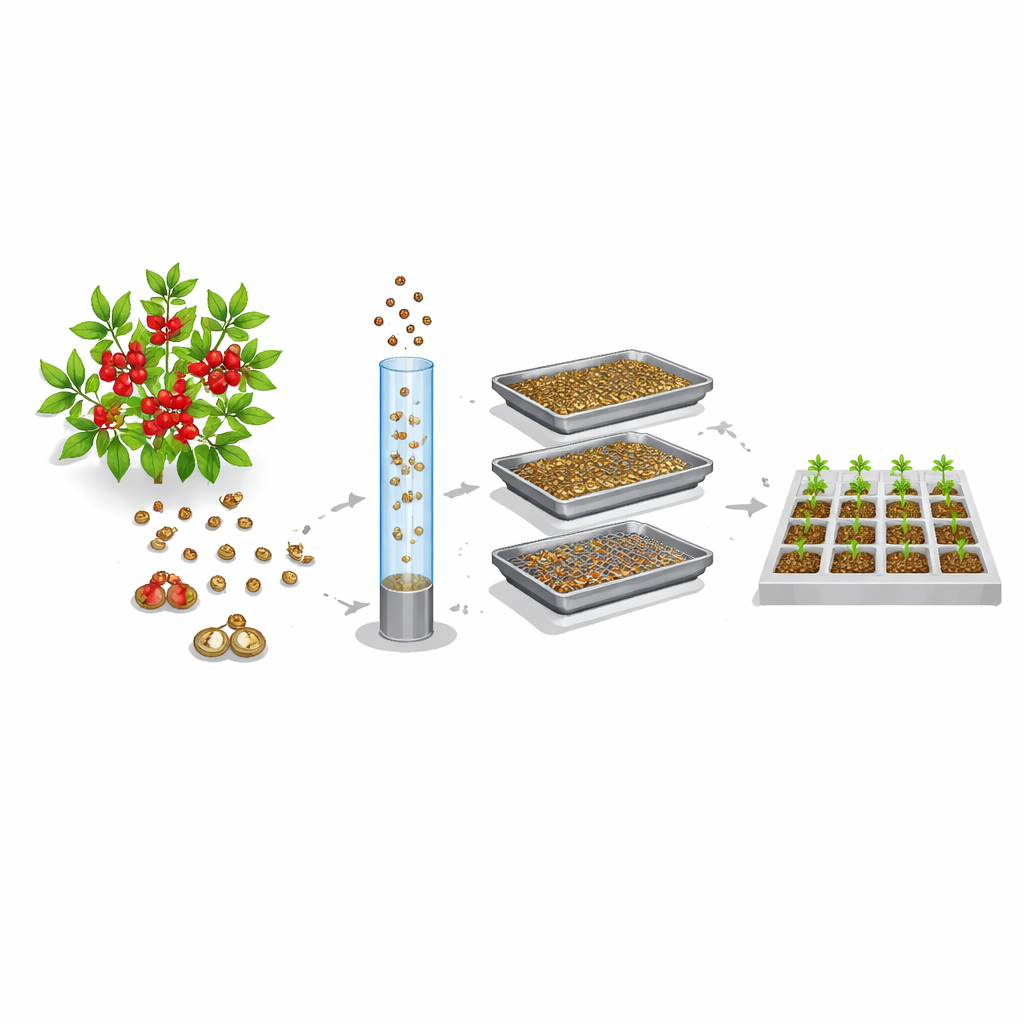
Cotoneaster shrubs are widely planted in cities, gardens, and around industrial areas for their glossy leaves and bright red berries. Their seeds can produce large numbers of genetically identical plants, which is ideal for mass production. However, before sowing, the seeds must be cleaned, stored, and often treated to overcome dormancy. A key step is sorting: removing debris and grouping seeds that are similar so they germinate and grow at roughly the same pace. The authors focused on five common cotoneaster species and asked which simple measurements—such as size, thickness, or how fast a seed falls in air—could best guide this sorting.
Measuring Tiny Differences
To answer this question, the researchers collected about one hundred healthy seeds from each of the five species. For every individual seed, they measured its length, width, thickness, weight, how quickly it dropped through a column of moving air, and how easily it slid along a steel surface. From these basic measurements, they calculated shape indicators like “roundness” and estimated how much space each seed occupies. This detailed physical portrait allowed them to compare the species, see which ones resembled each other, and look for tight links between seed weight and other traits.
Some Seeds Are Flat, Others Are Chunky
The study revealed striking differences between species. Showy cotoneaster produced the largest, thickest, most nearly round seeds, while Diels’ cotoneaster produced the smallest. The other three species had flatter seeds that behaved more like thin flakes when they slid or tumbled. These contrasts influenced how the seeds interacted with air and surfaces. For example, flat seeds had higher friction and tended to grip the metal plate, whereas the more rounded showy cotoneaster seeds moved more easily. Because of these differences, a single, one-size-fits-all sorting method would not work equally well for all species.
Finding the Best Clues for Sorting
The central goal was to find easy-to-measure features that closely track seed weight, since heavier seeds generally germinate more reliably and at similar speeds. Statistical analysis showed that, for three of the species, the speed at which a seed settles in an air stream was strongly linked to its weight. For the remaining two species, seed thickness was the best stand-in for weight. When the researchers used airflow or thickness as a basis for dividing seeds into two to four groups, the spread in seed weight within each group dropped sharply—by as little as about five percent in some cases and by more than sixty percent in others. The biggest improvement was seen in showy cotoneaster, while hollyberry cotoneaster proved the most difficult to sort perfectly.
Practical Steps for Nurseries
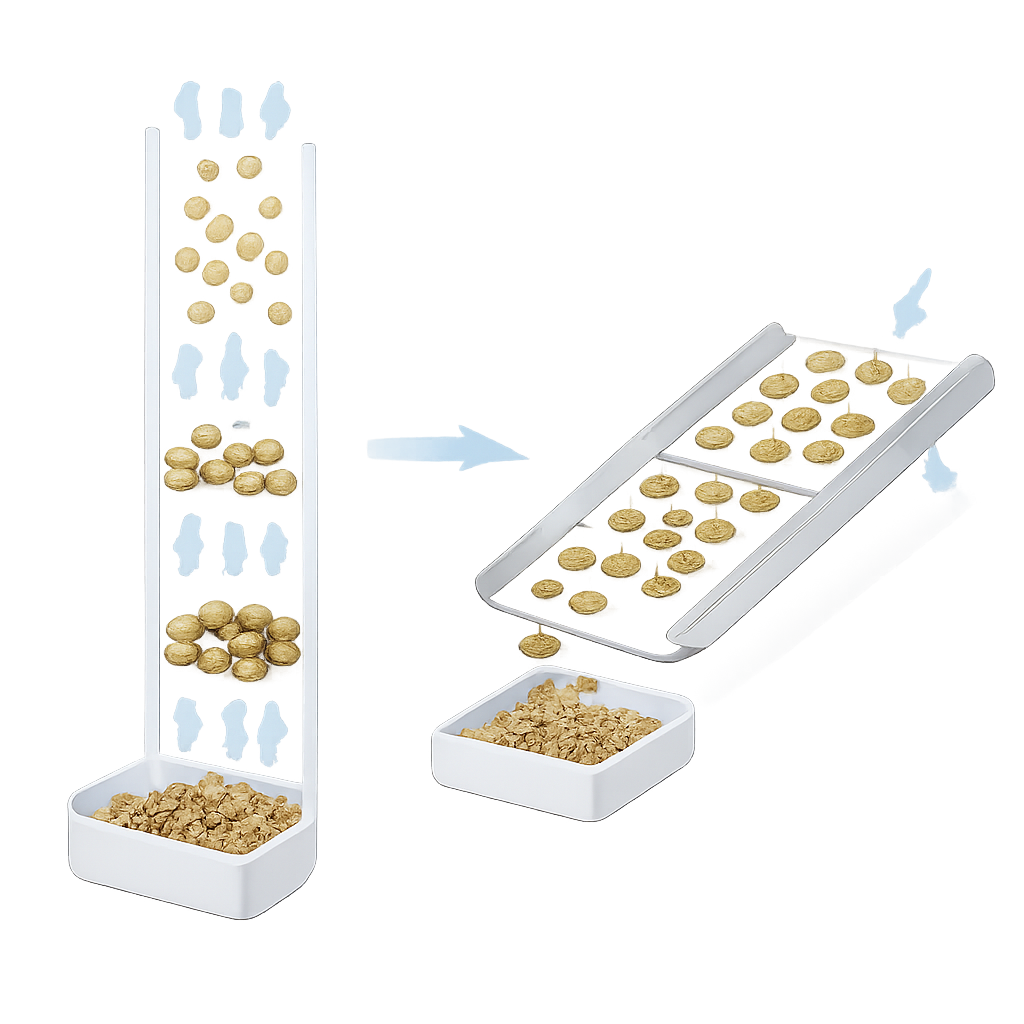
Using these findings, the authors recommend straightforward equipment choices for seed processors. For species where falling speed tracks weight best, simple air-based machines can separate lighter and heavier seeds by adjusting airflow so that seeds with different terminal velocities land in different compartments. For species where thickness is the better guide, mesh screens with long, narrow slots of carefully chosen sizes can be used to trap or pass seeds according to how thick they are. In both cases, nurseries can divide a mixed batch into two, three, or four more uniform lots that can be sown separately.
What This Means for Better Plants
In everyday terms, the study shows that by paying attention to such plain traits as how thick a seed is, or how fast it falls in air, growers can sort cotoneaster seeds into groups that behave more consistently. These groups contain seeds of similar weight, which tend to sprout and grow at comparable rates. That makes mechanical sowing more precise, reduces waste, and helps produce even rows of shrubs with predictable growth. In short, a better understanding of seed shape and movement can translate directly into healthier, more uniform plants in our gardens and green spaces.
Citation: Kaliniewicz, Z., Markowski, P., Anders, A. et al. Physical characterization of cotoneaster seeds to improve sorting efficiency. Sci Rep 16, 11937 (2026). https://doi.org/10.1038/s41598-026-42777-5
Keywords: cotoneaster seeds, seed sorting, ornamental shrubs, nursery propagation, seed physical properties