Clear Sky Science · en
Transfer learning and knowledge graph enhanced VR animation resource recommendation with creativity prediction
Why Smarter VR Lessons Matter
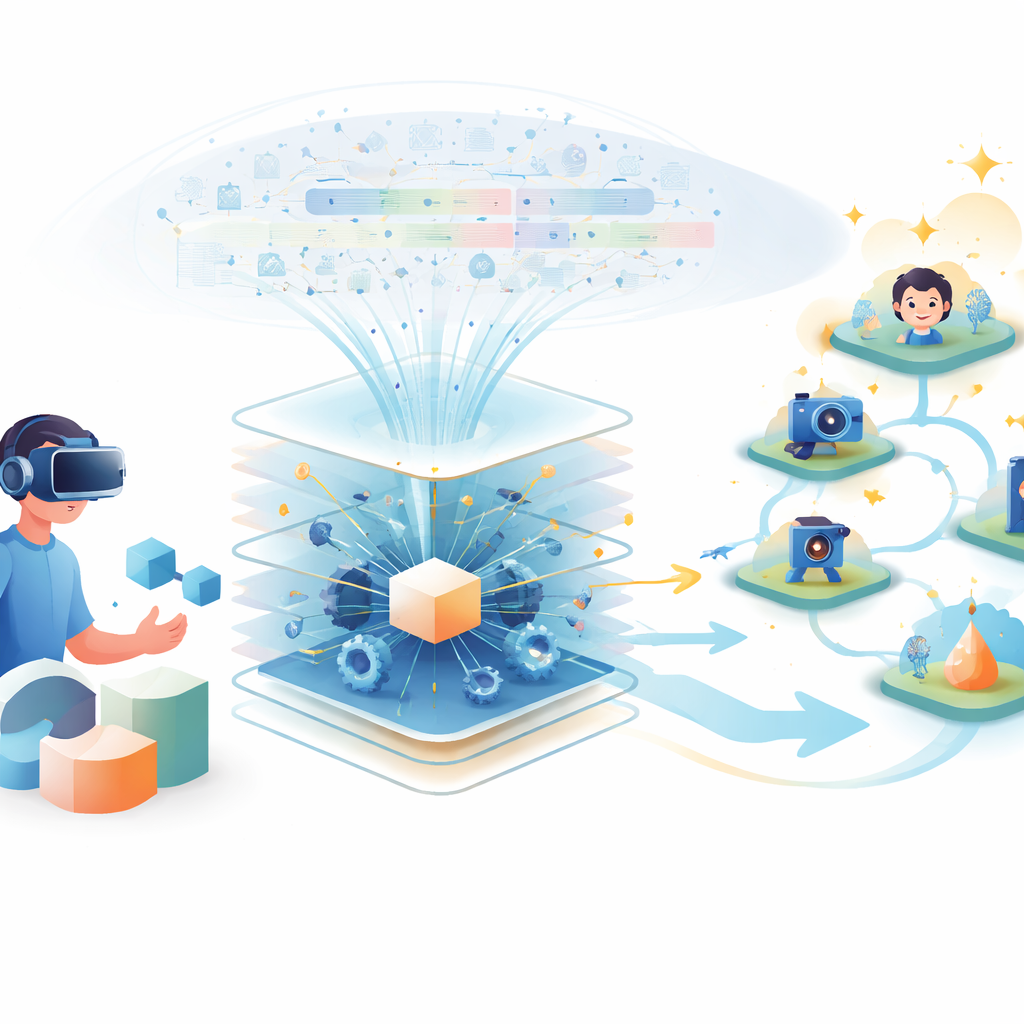
Virtual reality is rapidly changing how students learn animation: instead of watching videos or reading manuals, they can step inside a 3D studio and experiment. But as schools add hundreds of VR lessons, teachers and students face a new problem—finding the right activity at the right time. This study introduces an intelligent system that not only recommends VR animation resources tailored to each learner, but also predicts how their creativity is likely to grow, helping teachers guide students toward more original and confident work.
From Overloaded Libraries to Tailored Learning
Modern VR animation courses can include tutorials on character movement, special effects, scene design, and more. Students usually touch only a small fraction of what is available, and new learners have little history for a typical recommender system to use. The authors tackle this by designing a recommendation engine that understands both the content of each resource and the needs of different learners. Instead of relying only on “people who liked this also liked that,” the system reasons about what concepts build on one another and which activities best match a student’s current level and goals.
Teaching the System What Animation Really Is
To make recommendations that respect how animation is actually taught, the researchers built a structured map of the field, known as a knowledge graph. In this map, each VR lesson is linked to topics such as character animation or motion graphics, the tools it uses, its difficulty, the kind of interaction it offers, and the type of learner it suits. Relationships like “prerequisite,” “closely related,” and “part of a bigger topic” are encoded between items. By embedding this map into a mathematical space, the system can judge which resources are genuinely similar or logically follow one another, rather than just happen to be popular.
Borrowing Experience from Other Courses
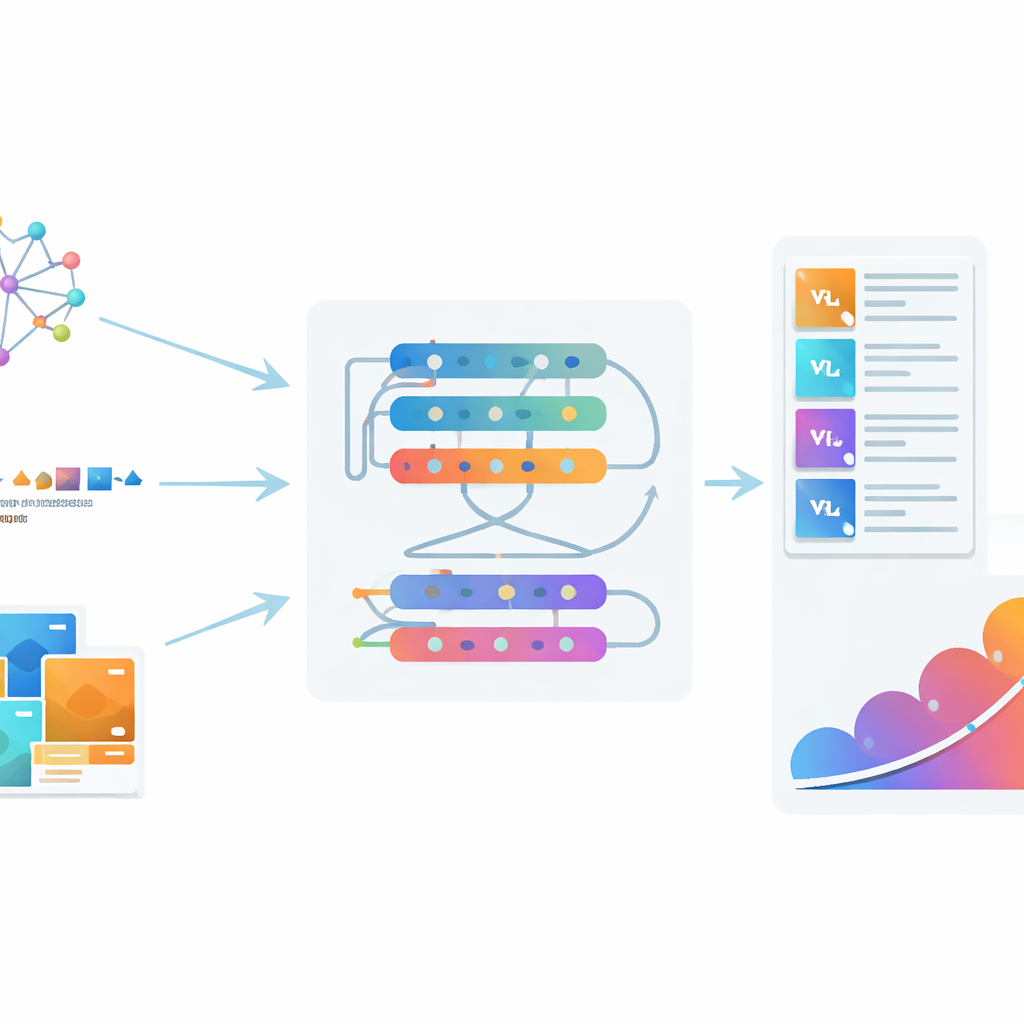
Because VR animation programs are still relatively small, there is not enough data to train a powerful recommendation model from scratch. The authors therefore use transfer learning: they pre-train a model on millions of interactions from large online course platforms in related subjects such as computer science, design, and digital arts, and then carefully adapt it to the smaller VR animation setting. A specialized fusion layer learns how to combine several signals—knowledge-graph information, students’ past behavior, resource properties, and context such as time and session characteristics—so that the system can still make sensible suggestions even for brand‑new students with almost no history.
Predicting and Nurturing Creativity
Beyond suggesting what to study next, the system tracks how each student’s creativity develops over time. The researchers measure creativity along seven dimensions, including idea fluency, flexibility, originality, technical mastery, aesthetic quality, and problem‑solving. Using detailed VR interaction logs and repeated expert ratings of student projects, they train a sequence model that learns patterns in how students explore tools, iterate on designs, and complete tasks. This model can forecast future creativity scores and feeds its predictions back into the recommender: when it detects that a learner’s originality or problem‑solving is stagnating, the system raises the priority of resources that challenge those specific skills and reduces repetitive drill‑type exercises.
What the Results Mean for Students and Teachers
Tests with real classes show that this dual system works noticeably better than standard recommendation methods, especially for newcomers and for less frequently used resources. It improves precision, recall, and ranking quality, and predicts creativity growth more accurately than simpler models. Students who used it showed higher learning gains and produced more varied and original animation work, while teachers spent less time hand‑curating materials and more time mentoring. In plain terms, the study demonstrates that combining structured knowledge about a subject with modern machine learning can turn a crowded library of VR lessons into a guided, evolving journey that actively supports students in becoming more skilled and more creative animators.
Citation: Yan, C., Mohamed, H.B. Transfer learning and knowledge graph enhanced VR animation resource recommendation with creativity prediction. Sci Rep 16, 12649 (2026). https://doi.org/10.1038/s41598-026-42774-8
Keywords: virtual reality learning, animation education, intelligent tutoring, personalized recommendation, creativity development