Clear Sky Science · en
Contactin-2 protects against aortic valve calcification via osteogenic differentiation inhibition
Why stiff heart valves matter
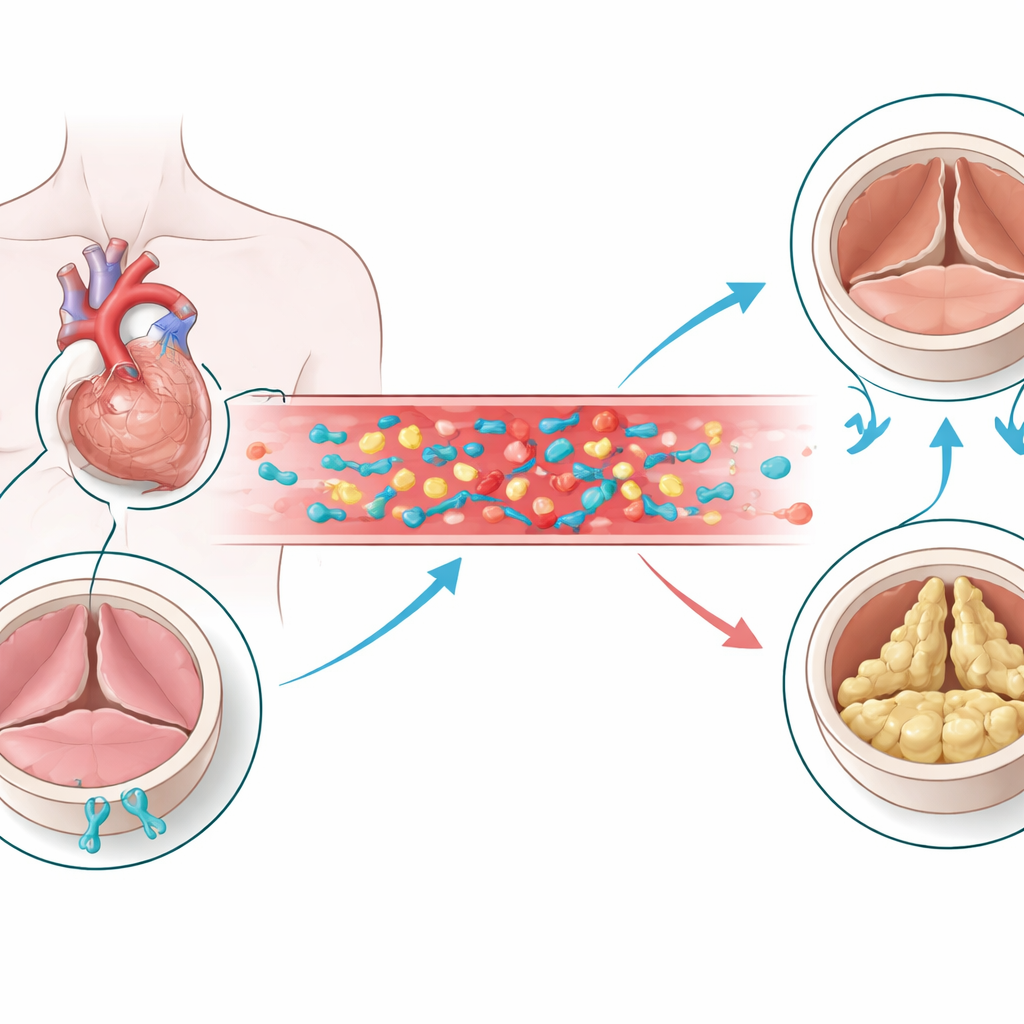
As people age, one of the heart’s main doors—the aortic valve—can slowly turn rigid and crusted with calcium, like limescale in a pipe. This condition, calcific aortic valve disease (CAVD), makes the heart work harder to pump blood and can lead to chest pain, fainting, and heart failure. Today, there are no proven drugs to halt this process; most patients eventually need valve replacement surgery or a catheter procedure. The study summarized here asks a hopeful question: is there a natural protective factor in our blood that helps keep this valve from turning to stone, and could it be turned into a treatment?
A search for nature’s own protectors
The researchers turned to human genetics to look for blood proteins that might influence who develops CAVD. They used a technique called Mendelian randomization, which treats natural genetic differences between people as a kind of built-in, lifelong experiment. By combining large genetic studies of over a thousand blood proteins with data from more than 450,000 people in the FinnGen project, they asked: when genes nudge the level of a given protein up or down, does the risk of valve calcification change in a consistent way? Out of 1,118 proteins tested, one stood out—Contactin-2 (CNTN2), a cell-surface protein better known for its role in nerve cells, emerged as strongly linked to a lower risk of CAVD.
Connecting genetics to real heart tissue
Finding a statistical link is only the first step; the team then checked whether Contactin-2 is actually involved in the diseased valve. They examined human aortic valve tissue from patients with severe calcification and from comparison patients whose valves were thin and flexible. Using protein-detection methods on frozen valve samples and staining techniques on tissue slices, they found that Contactin-2 levels were clearly lower in calcified valves than in normal ones. This real-world evidence from the valve itself supported the genetic signal that Contactin-2 might act as a defender against calcification.
Watching valve cells turn bone-like in the lab
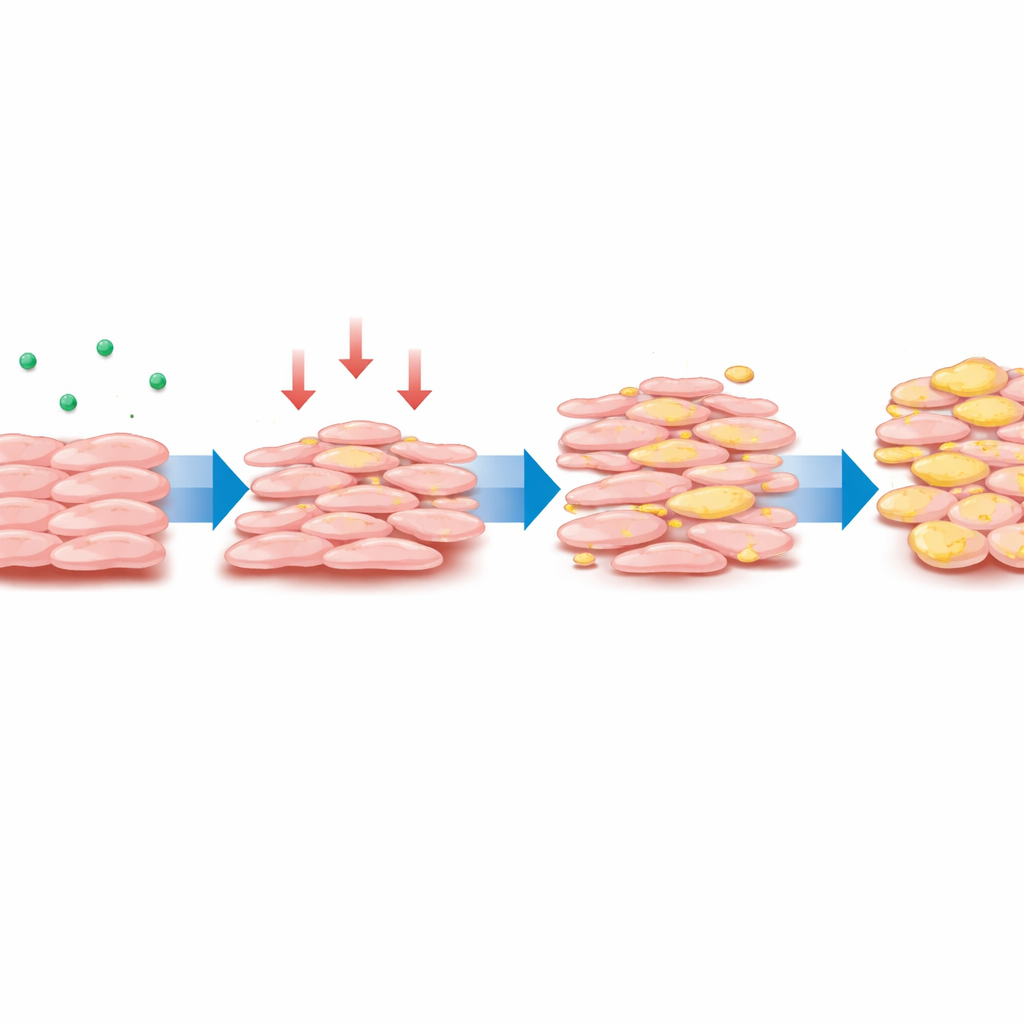
To understand what Contactin-2 might be doing, the scientists focused on valve interstitial cells—support cells in the valve that, under strain or injury, can change identity and start behaving like bone-forming cells. The team grew human valve cells in dishes and bathed them in an "osteogenic" cocktail that encourages this bone-like shift. Over three weeks, the cells formed visible mineral deposits and ramped up classic bone markers, showing that they were undergoing this harmful transformation. When they examined the cells’ overall gene activity, Contactin-2 and other adhesion-related molecules were among the genes most strongly dialed down, tying low Contactin-2 to the bone-like change.
Boosting a shield against calcification
The key test came when the researchers forced valve cells to make extra Contactin-2 using a harmless adenovirus carrier. Under the same calcification-inducing conditions, these boosted cells developed far fewer mineral nodules and showed reduced levels of bone-related proteins. In other words, raising Contactin-2 acted like a brake on the cells’ drift toward a rigid, stone-forming state. Together with genetic analyses showing that variants controlling Contactin-2 and CAVD risk lie in the same stretch of DNA, the data point to Contactin-2 not just as a bystander but as an active protector of the valve.
What this could mean for future care
This work suggests that Contactin-2 helps keep the aortic valve supple by discouraging its cells from turning into bone-like builders of calcium. People whose genetics favor higher levels of this protein seem to be less likely to develop valve calcification, and boosting it in valve cells in the lab slows the disease-like process. Although the study has limits—it focused on severe disease, a small number of human valve samples, and mainly people of European ancestry—it highlights Contactin-2 as a promising target for new therapies. One future vision is to deliver Contactin-2 or drugs that increase its activity directly to the valve, perhaps using nanoparticles, to delay or prevent the need for valve replacement.
Citation: Zhou, Z., Shen, R., Chen, S. et al. Contactin-2 protects against aortic valve calcification via osteogenic differentiation inhibition. Sci Rep 16, 12006 (2026). https://doi.org/10.1038/s41598-026-42767-7
Keywords: aortic valve calcification, calcific aortic valve disease, Contactin-2, valve interstitial cells, osteogenic differentiation