Clear Sky Science · en
An intelligent approach for early smoke/fire detection using vision sensors in smart cities
Why Watching Smoke Matters in Smart Cities
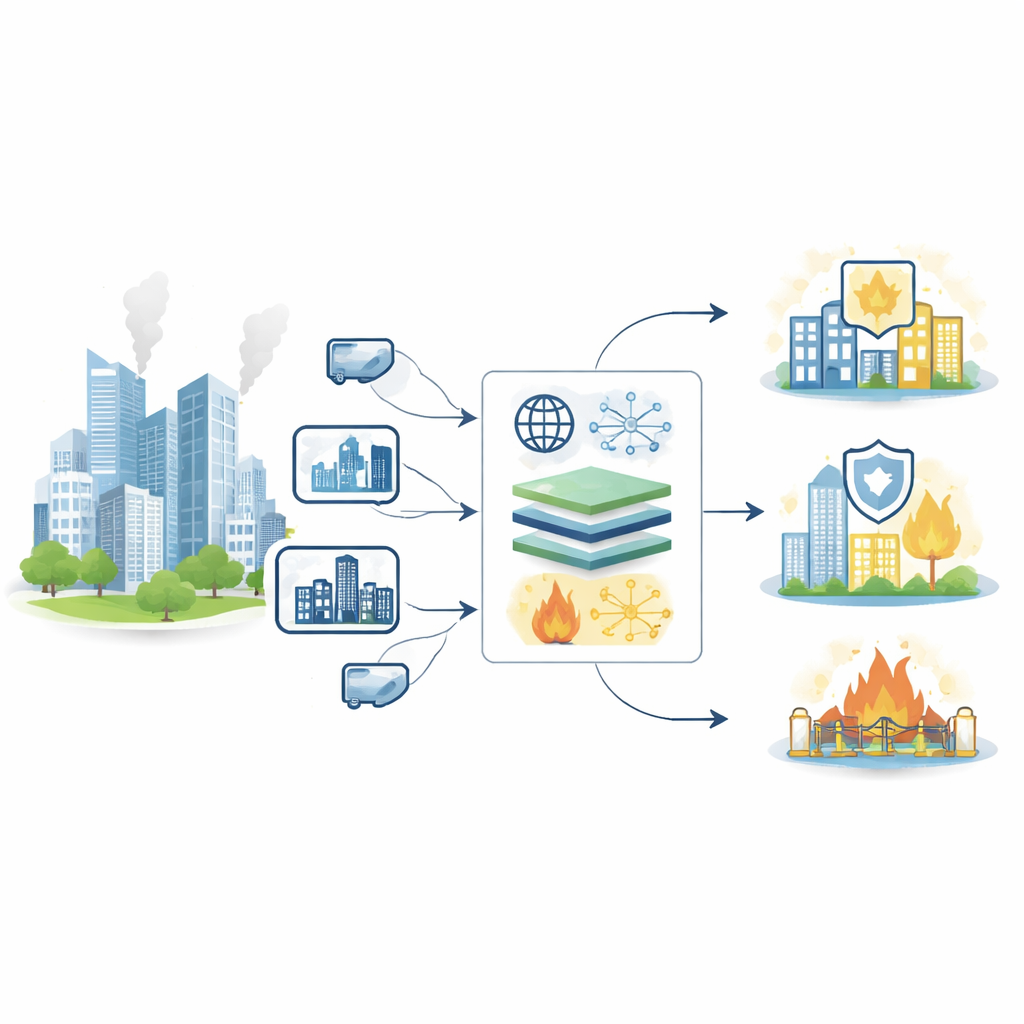
In crowded modern cities, a small wisp of smoke can quickly turn into a deadly blaze that endangers people, buildings, and vital services. Traditional fire alarms often react late or trigger for the wrong reasons, like steam from a shower or kitchen smoke. This article presents a new camera-based system that can spot smoke and fire early and accurately, giving emergency teams precious extra minutes to respond. It combines the latest advances in artificial intelligence to watch over streets, forests at the city edge, and public spaces, helping make smart cities safer and more resilient.
The Problem with Today’s Fire Alarms
Conventional fire detection systems rely on heat, gas, or smoke sensors inside buildings. These devices must be close to the flames before they react, which can delay alarms just when every second counts. They also suffer from many false alerts caused by harmless sources such as dust, steam, or cooking fumes, which waste resources and erode public trust. Outdoor fire detection is even harder: smoke looks similar to clouds, haze, or shadows, and can change shape and density rapidly. Fixed sensors cover only small areas, leaving blind spots in large or complex city settings such as parks, industrial sites, and transport hubs.
Cameras and Smarter Vision as a New Safety Net
As digital cameras and networked devices have become cheaper and more powerful, researchers have turned to computer vision—teaching machines to “see” like humans—to spot smoke and flames. Earlier systems used hand‑crafted tricks, such as looking for grayish blobs or flickering colors, but these rules broke down under changing light, weather, or background clutter. Deep learning methods, which learn patterns directly from large image collections, have improved detection, yet many of them still focus on small local details and miss faint or early smoke signals. Others are accurate but too slow or too heavy to run in real time on city infrastructure.
A Two‑Step AI Watchdog for Fire and Smoke
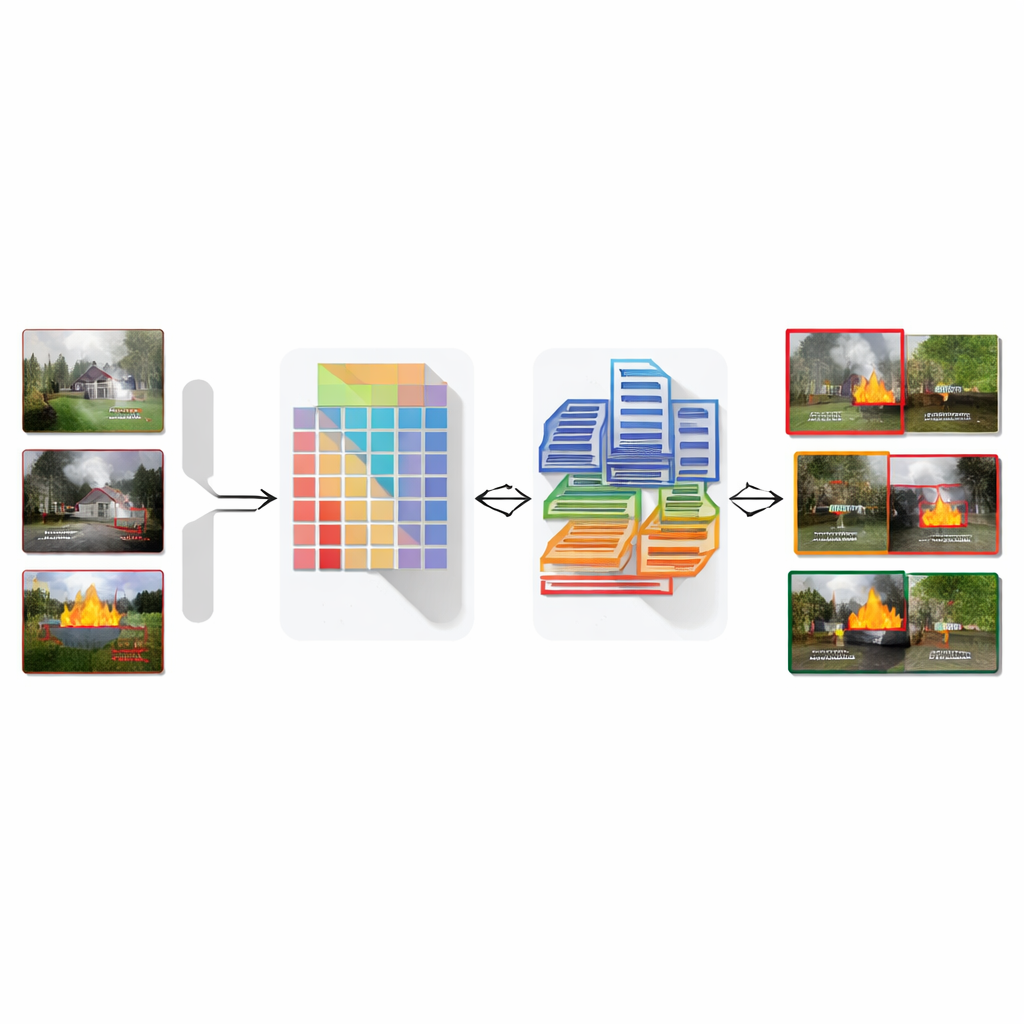
The study introduces an intelligent framework that marries two powerful AI ideas into one pipeline. First, a Vision Transformer—an image analysis method adapted from language models—breaks each camera frame into many small patches and looks at how they relate to one another across the whole scene. This global view helps it notice subtle signs of smoke, such as soft color gradients, hazy textures, and diffuse edges that stretch over large areas. Next, these rich visual clues are passed to YOLOv8, a fast‑acting detector designed to draw boxes around objects of interest. YOLOv8 pinpoints the exact regions where smoke or open flames appear and does so quickly enough to keep up with live video streams.
Putting the System to the Test
To see how well this two‑step watchdog performs, the authors trained and evaluated it on more than 7,700 carefully labeled images drawn from two large public collections that include city streets, buildings, and forested areas under many lighting and weather conditions. They increased the variety further by rotating, flipping, and brightening images to mimic day and night scenes and different viewing angles. On unseen test pictures, the system correctly recognized smoke and fire in more than 99% of cases and balanced missed events and false alarms remarkably well. It also processed each frame in about 45 milliseconds—around 22 frames per second—fast enough for real‑time monitoring in control rooms or on connected devices.
How This Approach Stands Out
Compared with other advanced methods, including earlier versions of the same detector family and various deep‑learning ensembles, the new framework delivers higher accuracy and better localization of risky areas. By combining a model that understands the wider scene with one that excels at quick, precise marking of objects, it reduces confusion from look‑alikes such as fog, smoke‑colored clothing, or images of fire on screens. At the same time, its moderate size and efficient design make it more practical for deployment in real smart‑city systems, where computing resources and network bandwidth can be limited.
What This Means for Everyday Safety
For non‑specialists, the takeaway is that cameras in smart cities can do far more than record footage for later review—they can help prevent disasters as they unfold. The proposed system shows that by fusing broad visual understanding with swift detection, it is possible to spot fires in their earliest stages, cut down on false alarms, and support quicker, better‑targeted emergency responses. With further work to handle extreme weather, nighttime scenes, and additional sensor data, similar tools could become a core part of urban safety networks, quietly watching over homes, forests, and public spaces to keep small sparks from turning into major disasters.
Citation: Abozeid, A., Alanazi, R. An intelligent approach for early smoke/fire detection using vision sensors in smart cities. Sci Rep 16, 11387 (2026). https://doi.org/10.1038/s41598-026-42762-y
Keywords: fire detection, smoke detection, smart cities, computer vision, deep learning