Clear Sky Science · en
Cross-species transferability and genetic diversity analysis in Linum species using microsatellite markers
Why the hidden family tree of flax matters
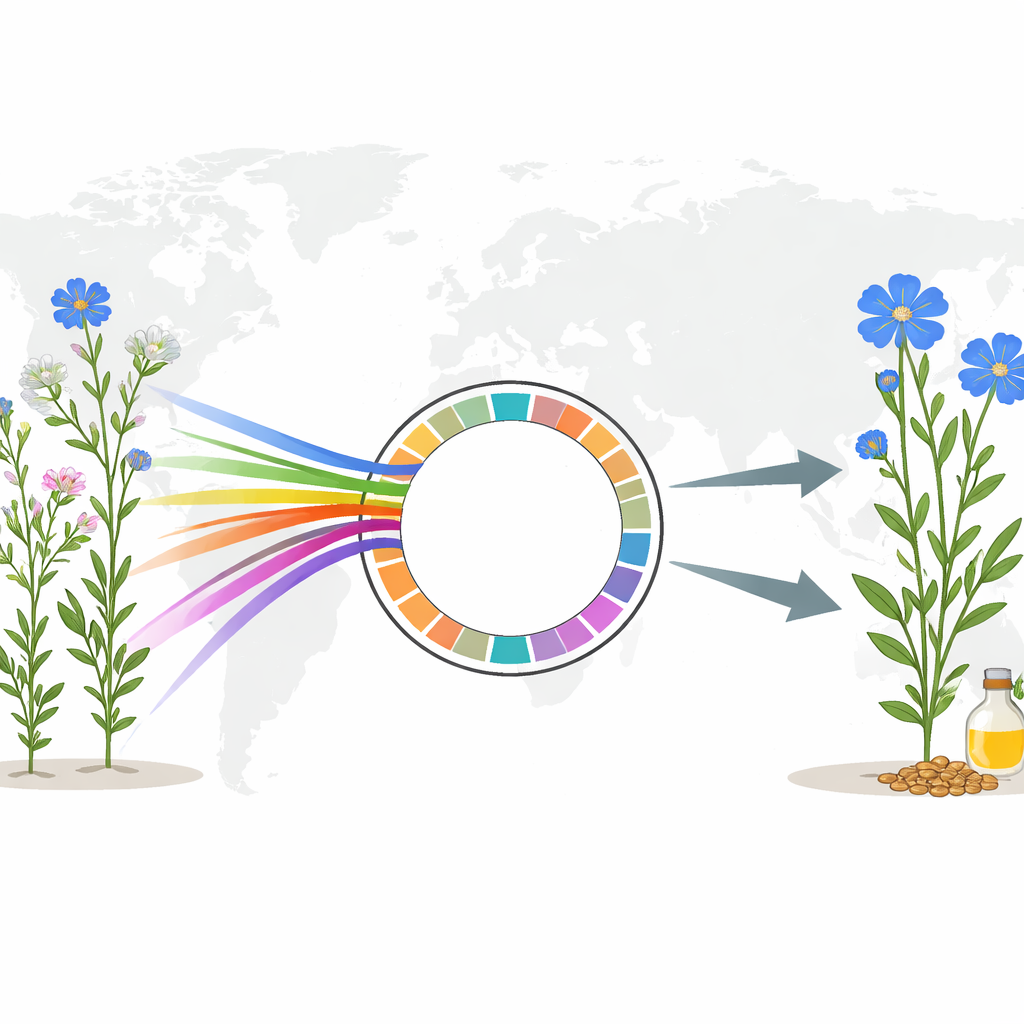
Flax is best known for two everyday products: crisp linen fabric and golden linseed oil. Yet behind these familiar goods lies a surprisingly narrow genetic base, which makes the crop vulnerable to pests, diseases, and climate stress. In the wild, however, flax has more than 200 lesser-known relatives scattered across the globe, many carrying traits that breeders would love to tap. This study explores how to unlock that wild genetic treasure using tiny DNA signposts called microsatellite markers, offering a roadmap to stronger, more resilient flax crops.
Meeting flax’s extended wild family
The researchers assembled 96 samples from 17 Linum species, including cultivated flax and 16 wild cousins from three major taxonomic groups. These wild relatives grow in contrasting climates and soils and are known or suspected to harbor useful traits such as better fiber quality, improved oil composition, and resistance to drought, rust, or insect pests. Despite their potential, most of these species are poorly represented in seed banks and have rarely been examined at the DNA level. The team set out to change that by applying 49 microsatellite markers—short, highly variable stretches of DNA—to measure how much genetic variation each species holds and how closely they are related.
Using DNA fingerprints to map diversity
Microsatellite markers work a bit like bar codes: closely related plants often share similar patterns, while distant relatives look very different. Across all samples, the 49 markers revealed 473 distinct DNA variants, with some markers showing up to 22 forms—far more than earlier studies in flax. Most markers proved highly informative, meaning they could reliably distinguish one genotype from another. Species such as Linum bienne, the wild progenitor of cultivated flax, and Linum lewisii, a blue-flowered Western North American species, stood out for their rich “allelic” diversity and unique variants that do not appear in other species. These private variants are particularly valuable, because they may underpin rare traits that breeders cannot find in ordinary cultivated lines.
Unraveling relationships and evolutionary history
To understand how these species are related, the scientists used several complementary approaches. Cluster analysis grouped the 96 accessions into seven major genetic clusters that broadly matched known species boundaries and taxonomic sections. Cultivated flax clustered most closely with its wild progenitor L. bienne and with L. perenne and L. lewisii, echoing earlier ideas about its origins. An analysis of molecular variance showed that most genetic differences lay between individuals rather than between species, and a global differentiation index (Fst) indicated clearly structured populations. A Bayesian population-structure model further divided the material into up to five subgroups and identified individuals with mixed ancestry. These admixed plants bear genetic signatures from more than one lineage, pointing to historic gene flow and introgression events that have shaped the genus through time.
Testing whether one species’ tools work in another
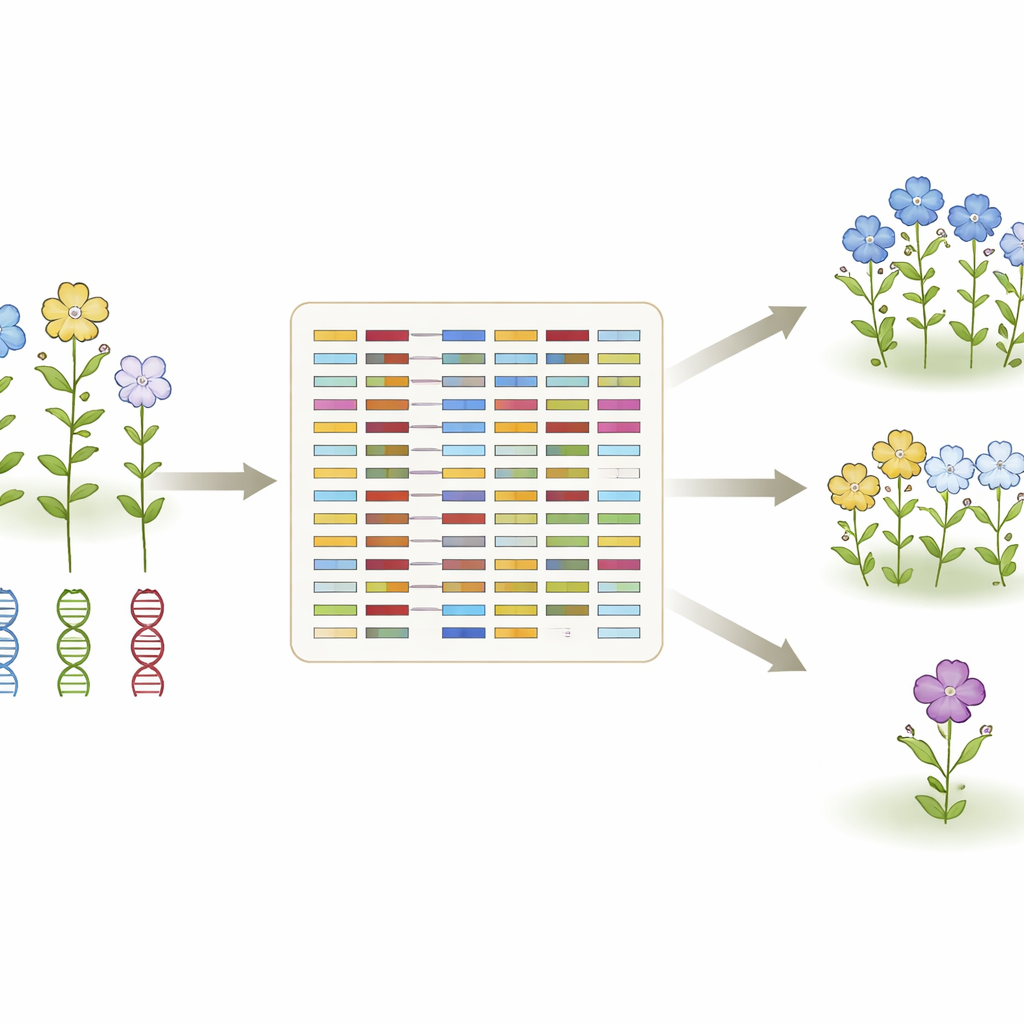
A key goal was to find out whether markers developed for cultivated flax can be reused directly in its wild relatives—a concept known as cross-species transferability. Of the 49 markers, 33 amplified well in the cultivated samples; many of these also worked in wild species. In fact, some markers successfully amplified across all 17 species, and overall transferability within the main Linum section averaged about 89%, reaching nearly 97% in the closely related Dasylinum section. Particularly high transferability was observed among L. bienne, L. perenne, and L. lewisii, reflecting their close evolutionary ties. Other species, such as Linum altaicum, showed much lower transferability, suggesting that parts of their genomes have diverged more strongly. Interestingly, some phylogenetically distant species still showed high transferability, hinting that important DNA regions around these markers have been conserved over long evolutionary timescales.
What this means for future flax breeding
For non-specialists, the takeaway is straightforward: the wild relatives of flax harbor a wealth of genetic variation that modern varieties have largely lost, and we now have a reliable set of DNA markers to find and track that diversity. The study demonstrates that these microsatellite tools can both reveal the hidden family relationships among Linum species and pinpoint rare, potentially useful variants in underused wild gene pools. By integrating these wild resources into breeding programs, scientists can broaden the genetic base of cultivated flax, making it easier to breed varieties with stronger fibers, healthier oils, and better resilience to environmental stress. In essence, the work turns scattered wild flax populations into an accessible genetic library, giving breeders practical tools to future-proof this ancient crop.
Citation: Raut, V.K., Ngangkham, U., Yadav, A. et al. Cross-species transferability and genetic diversity analysis in Linum species using microsatellite markers. Sci Rep 16, 13358 (2026). https://doi.org/10.1038/s41598-026-42744-0
Keywords: flax breeding, wild relatives, genetic diversity, microsatellite markers, crop improvement