Clear Sky Science · en
Mycophenolic acid exerts dichotomous regulation of hepatic lipogenesis in a metabolic context-dependent manner
Why this matters for transplant patients and liver health
Fatty liver disease now affects roughly a quarter of the world’s population and is becoming a leading reason for liver transplantation. After surgery, patients must take lifelong immune-suppressing drugs to protect the new organ—but these medicines can also disturb metabolism. This study asks a practical, urgent question: how does one widely used drug, mycophenolic acid, influence fat buildup in the liver, and could it sometimes help rather than harm?
A common transplant drug under the microscope
Mycophenolic acid (MPA) is the active form of mycophenolate mofetil, a staple drug that helps prevent the immune system from attacking transplanted organs. Doctors value it because it is gentler on the kidneys than some alternatives. Yet its impact on blood fats and liver fat has been unclear, with clinical reports ranging from raised cholesterol to no obvious change. The researchers suspected that the drug’s effects might depend on the liver’s starting condition—whether it is lean or already fatty—an important issue as more donors and recipients have fatty liver disease.
Opposite effects in lean and fatty liver cells
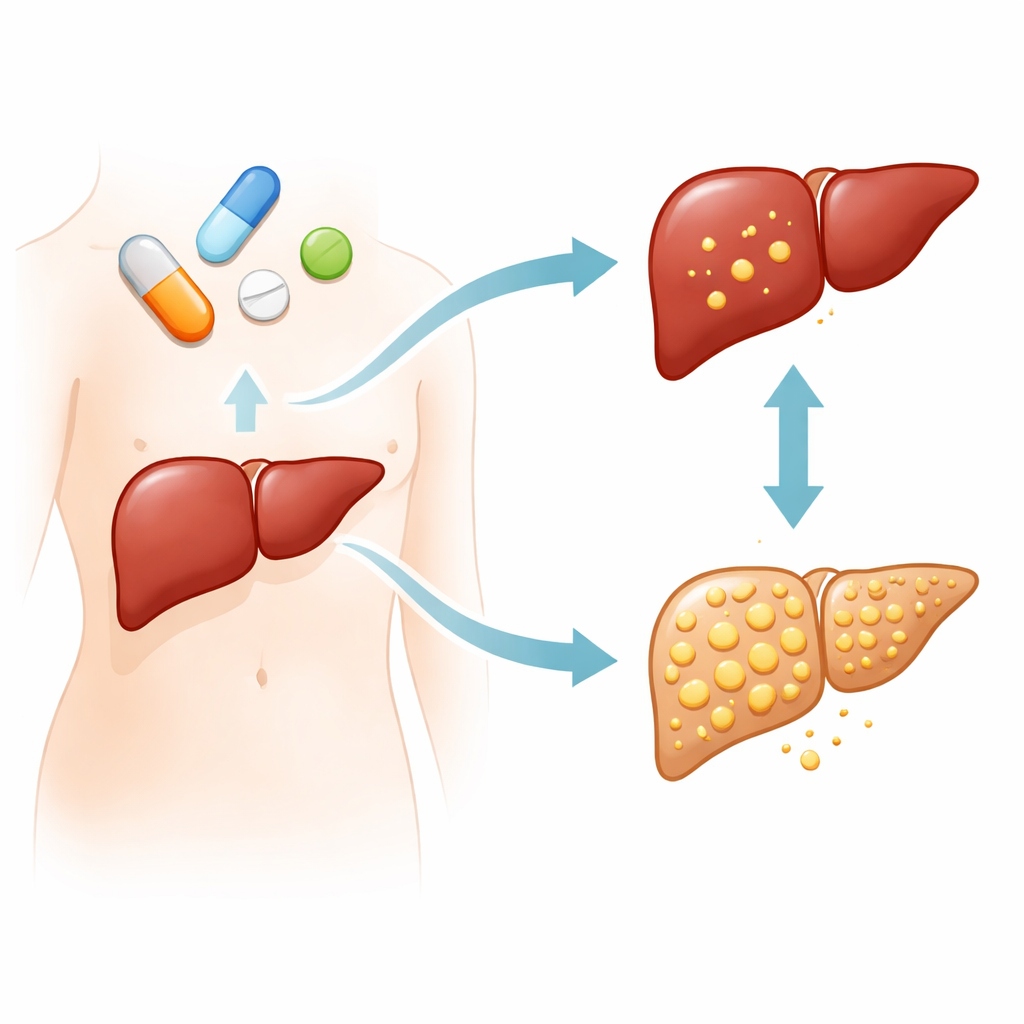
The team first examined human liver cell lines grown in dishes. In otherwise “healthy” cells, MPA was not notably toxic, but it did drive the buildup of fat droplets and increased levels of key regulators that turn on fat-making pathways. In contrast, when the cells were preloaded with fat to mimic fatty liver, adding MPA reduced fat droplets and lowered both the message and protein levels of several fat-promoting factors. In other words, the drug pushed lean cells toward storing more fat, but pulled already overloaded cells in the opposite direction, easing their fat burden.
Animal studies confirm a two-way response
To see whether this paradox held up in living organisms, the researchers treated mice on two different diets. Mice on a normal diet who received MPA for 12 weeks showed modest weight gain and clear signs of extra fat in the liver, along with higher liver and blood fat measurements—though standard markers of liver injury remained stable. When the same drug was given to mice made obese and fatty-livered through a high-fat, high-sugar diet, the outcome flipped. These animals did not gain extra weight, their liver tissue showed fewer fat-filled cells, and both liver and blood fat levels fell. Measures of liver damage also improved, suggesting a protective effect in the fatty liver setting.
A molecular switch linking energy building blocks and fat storage
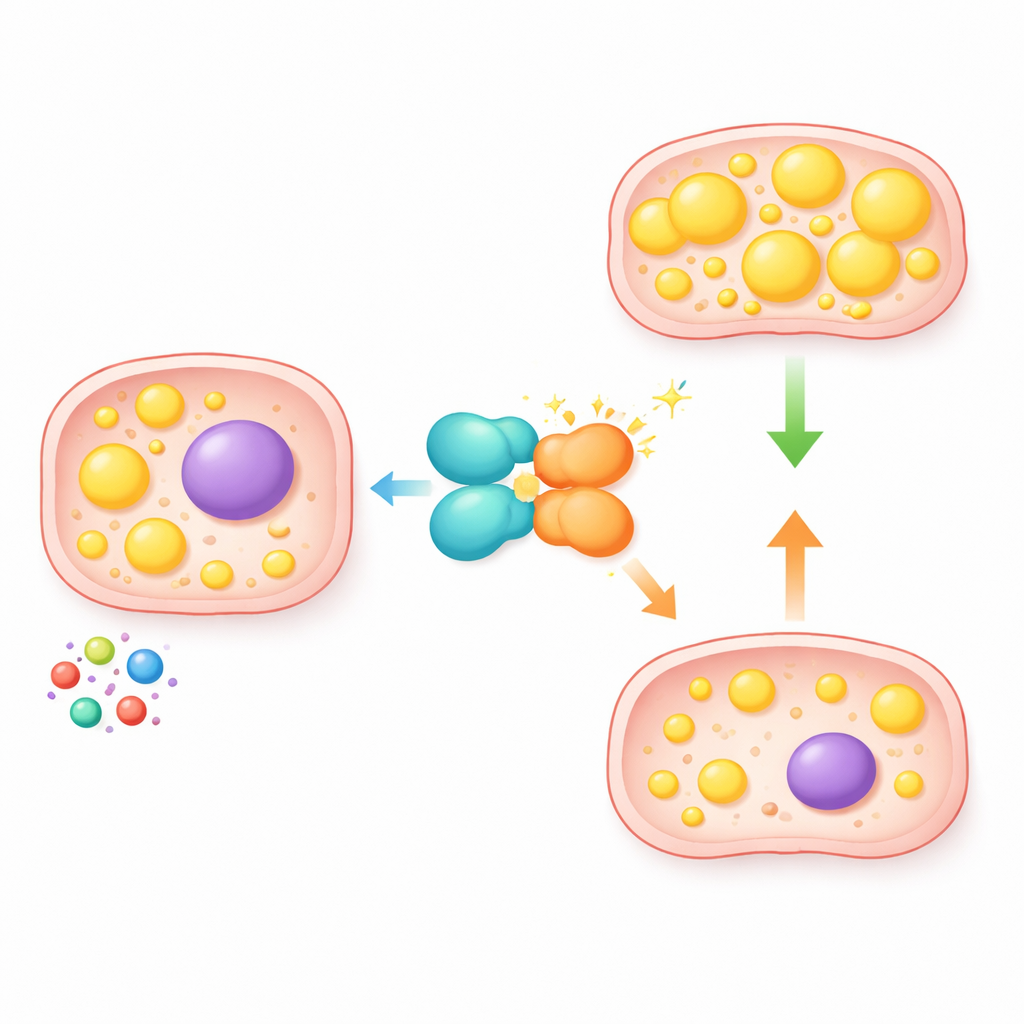
Digging deeper, the scientists focused on a protein called IMPDH2, the main target of MPA and a key player in producing the cell’s guanosine nucleotides—basic building blocks for DNA, RNA, and energy reactions. They found that this protein behaved differently depending on diet and fat load. High-fat diet raised its levels in mouse livers. In cell experiments, MPA increased IMPDH2 in normal liver cells but decreased it in fatty ones. When the team deliberately reduced IMPDH2 in liver cells, fat droplet formation and fat accumulation dropped, pointing to this protein as a driver of fat synthesis. They also discovered that IMPDH2 physically interacts with another central regulator of fat storage, PPARγ, and that lowering IMPDH2 reduced PPARγ levels. This connection suggests an “axis” through which the cell’s nucleotide status can shape how strongly fat-producing genes are turned on.
Toward more tailored treatment after transplantation
Putting these findings together, the authors propose that MPA acts as a context-sensitive modulator of liver fat: in a lean liver, it nudges pathways that favor fat production, but in an already fatty liver, it helps dial those pathways down via the IMPDH2–PPARγ link. For transplant medicine, this means the same drug could worsen fat buildup in some patients yet help control it in others. The study outlines a future precision approach in which doctors would assess how fatty a patient’s liver is—before and after transplant—then decide whether to lean on, avoid, or adjust MPA-based regimens accordingly. While clinical trials are still needed, the work points toward a future where immune suppression is chosen not only to protect the graft, but also to safeguard long-term metabolic health.
Citation: Xu, Z., Li, H., Ni, Y. et al. Mycophenolic acid exerts dichotomous regulation of hepatic lipogenesis in a metabolic context-dependent manner. Sci Rep 16, 14096 (2026). https://doi.org/10.1038/s41598-026-42743-1
Keywords: fatty liver disease, liver transplantation, mycophenolic acid, lipid metabolism, precision immunosuppression