Clear Sky Science · en
Machine learning and mechanistic studies on p-nitrophenol remediation using sustainable activated carbon
Turning Nut Shells into Water Cleaners
Many everyday products—from pesticides and dyes to explosives and pharmaceuticals—leave behind stubborn chemical traces in water. One such compound, p‑nitrophenol, is toxic, long‑lived, and officially labelled a priority pollutant. This study explores an inventive way to trap and remove it from water using activated carbon made from discarded pistachio shells, and then uses modern machine learning tools to understand and predict how well this cleanup method works.
Why This Pollutant Is Hard to Get Rid Of
p‑Nitrophenol is widely used in industry and agriculture, and it leaks into rivers, lakes, and groundwater through factory discharges, lab waste, and farm runoff. Once it reaches water, it is remarkably persistent: it resists breakdown in both acidic and alkaline conditions and can linger for long periods, posing risks to aquatic life and human health. Existing treatment methods—such as advanced oxidation, photocatalysis, biodegradation, and membrane filtration—can remove it in the lab but often prove costly, delicate, or hard to scale up in real wastewater. Membranes foul, catalysts degrade, and specialized reagents drive up operating costs, highlighting the need for simpler, cheaper, and more robust solutions.
From Pistachio Waste to Powerful Filter
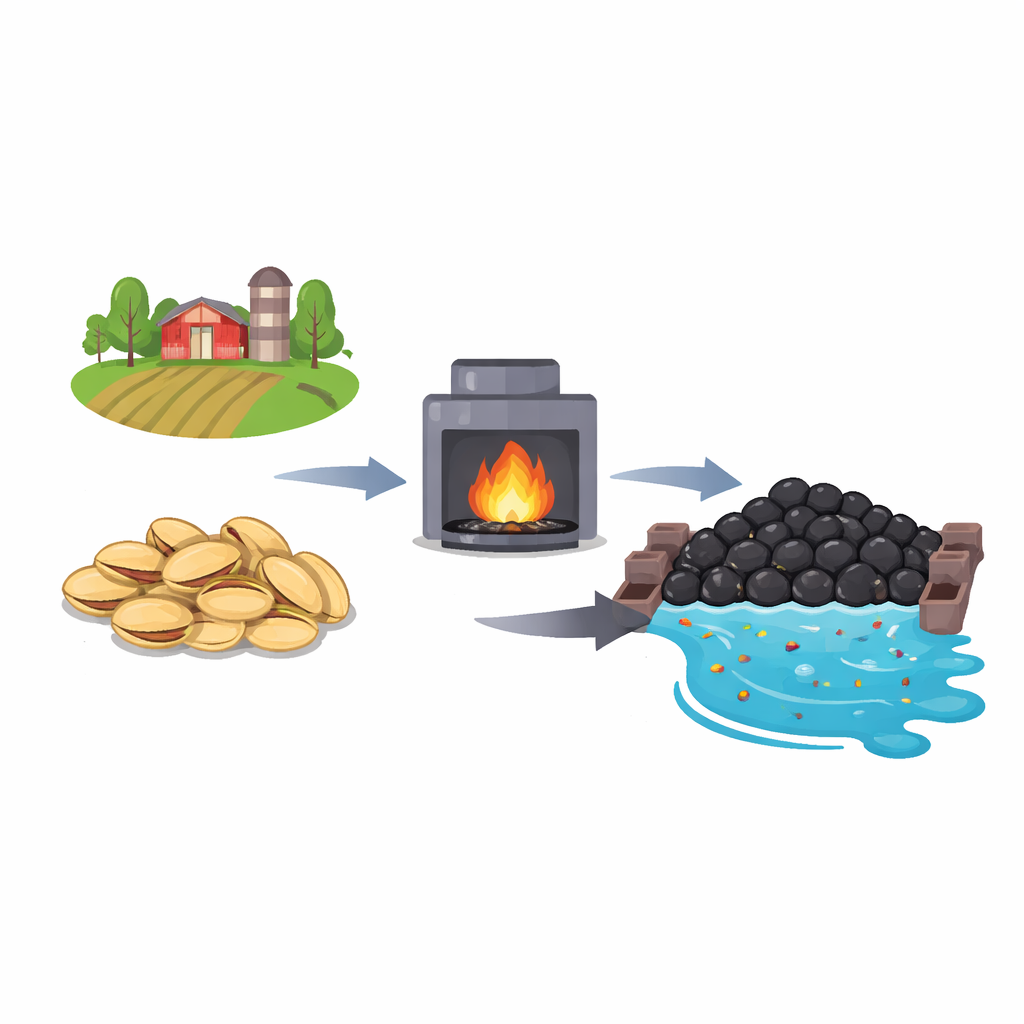
The researchers turned waste Pistacia vera (pistachio) shells into a high‑performance filter material by converting them into activated carbon. The shells were cleaned, mixed with phosphoric acid, heated at relatively low temperature, and then washed and dried. This treatment produced a carbon with a very large internal surface area and a maze of pores where pollutant molecules can lodge. Detailed imaging and spectroscopy showed a rough, highly porous structure rich in oxygen‑containing groups and traces of phosphorus—features that help attract and hold p‑nitrophenol. Compared with other activated carbons made from olive cake, date stones, or orange peels, the pistachio‑shell carbon offered both high surface area and one of the highest reported capacities for capturing this pollutant.
How the Cleanup Process Behaves
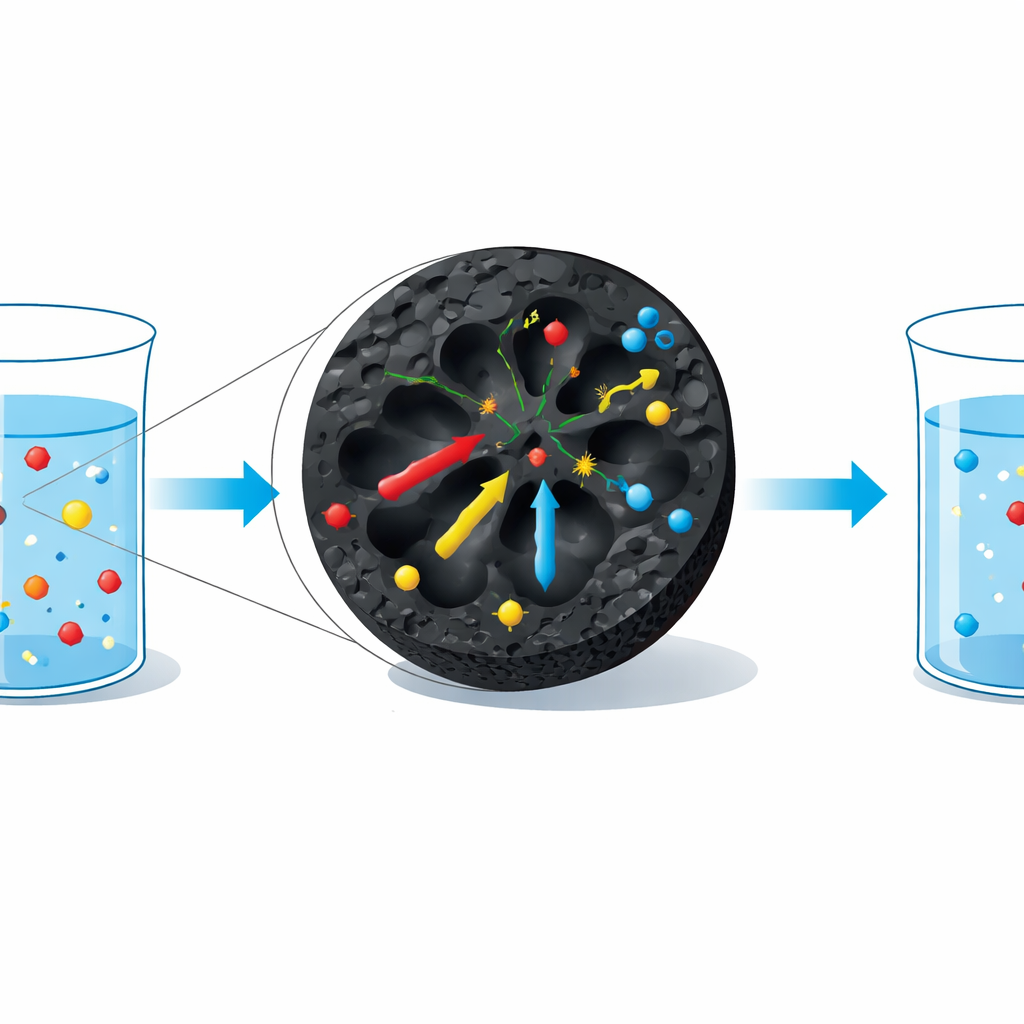
To see how well the material works in practice, the team stirred it with p‑nitrophenol solutions while varying pH, dosage, concentration, temperature, and contact time. They found that slightly acidic conditions around pH 6 gave the best removal, because the pollutant remains mostly neutral and can approach the carbon surface without strong electrical repulsion. Increasing the amount of carbon raised the overall removal but reduced the amount captured per gram, as some sites remained unused. At low pollutant levels, the material quickly cleaned the water; at higher levels, the surface filled up and performance leveled off. Mathematical models showed that p‑nitrophenol forms essentially a single layer on the carbon surface and that the rate of removal is governed by how many free sites remain available. Thermodynamic analysis indicated that the process is spontaneous, releases a modest amount of heat, and is dominated by relatively gentle physical forces, aided by hydrogen bonding and stacking between flat aromatic rings on the pollutant and on the carbon.
Machine Learning as a Crystal Ball
Because all these factors interact in complex ways, the researchers trained two types of machine learning models—an artificial neural network and an adaptive neuro‑fuzzy inference system—to predict how much pollutant the carbon would capture under different conditions. Both models learned from 180 experimental data points and then were asked to predict new outcomes. While the neural network performed well, the neuro‑fuzzy model did even better, reproducing the measurements with very high accuracy and low error. Sensitivity analysis using this model revealed that contact time and starting pollutant concentration are the most influential levers, followed by the amount of carbon used and the pH, with temperature playing a smaller role.
Ready for Real‑World Water
Beyond clean laboratory solutions, the team tested the pistachio‑shell carbon in several real water samples, including river, lake, well, and tap water spiked with p‑nitrophenol. Even in the presence of natural organic matter and dissolved salts that can compete for space on the carbon, the material consistently removed a substantial fraction of the pollutant, in some cases performing even better than in the simple control solution. The carbon could be regenerated with a mild alkaline wash and reused at least five times while retaining about 85% of its original capacity, pointing to good durability and lower long‑term costs.
A Simple, Green Path to Cleaner Water
In plain terms, this work shows that a common food waste—the shells of pistachio nuts—can be upgraded into a powerful filter for a difficult and dangerous water pollutant. The process is energy‑efficient, uses a relatively benign activating agent, and turns an agricultural by‑product into a valuable cleanup tool. Combined with machine learning models that reliably forecast performance and highlight the most important operating knobs to turn, this approach offers a practical, low‑cost, and sustainable option for protecting waterways from p‑nitrophenol and similar contaminants.
Citation: Kodandoor, A., Murugesan, G., Varadavenkatesan, T. et al. Machine learning and mechanistic studies on p-nitrophenol remediation using sustainable activated carbon. Sci Rep 16, 12153 (2026). https://doi.org/10.1038/s41598-026-42718-2
Keywords: activated carbon, pistachio shell adsorbent, p-nitrophenol removal, wastewater treatment, machine learning adsorption