Clear Sky Science · en
Bioinspired Ag/CeO2 and Ag/Bi2O3 nanohybrids synthesized with Nauplius graveolens for antioxidant, antibacterial, and insecticidal applications
Fighting Germs and Crop Pests with Green Chemistry
Antibiotic‑resistant infections and crop‑damaging insects are twin threats to our health and food supply. This study explores a nature‑inspired way to tackle both problems at once: using a wild medicinal plant to build tiny, metal‑based particles that can kill harmful bacteria and sap‑sucking crop pests, while avoiding harsh industrial chemicals during production.
A Desert Plant as a Tiny Factory
The researchers focused on Nauplius graveolens, a strongly scented desert plant long known in traditional medicine. Its leaves and stems are rich in natural molecules such as phenolics and flavonoids, which readily donate electrons. Those same traits that make the plant a good natural antioxidant also let it act as a “green” factory for making nanoparticles. Instead of relying on high‑energy chemical processes, the team soaked dried plant material in an alcohol‑water mixture to draw out these active compounds, then used the resulting extract to transform dissolved metal salts into solid particles.
Building Hybrid Particles from Silver and Oxides
Using this extract, the scientists first formed silver nanoparticles, then anchored them onto particles of two different metal oxides: cerium oxide (CeO2) and bismuth oxide (Bi2O3). The result was two “nanohybrids,” each composed of many tiny silver spheres attached to a larger oxide support. Plant‑derived molecules helped reduce metal ions to metals and then stayed on the surface of the particles, acting as a natural coating that keeps them from clumping together. Advanced microscopes and X‑ray methods confirmed that the particles were nano‑sized, crystalline, and that silver was uniformly distributed over the oxide surfaces. Spectroscopy and surface‑charge measurements showed that plant compounds remained bound to the particles and likely helped stabilize them in water. 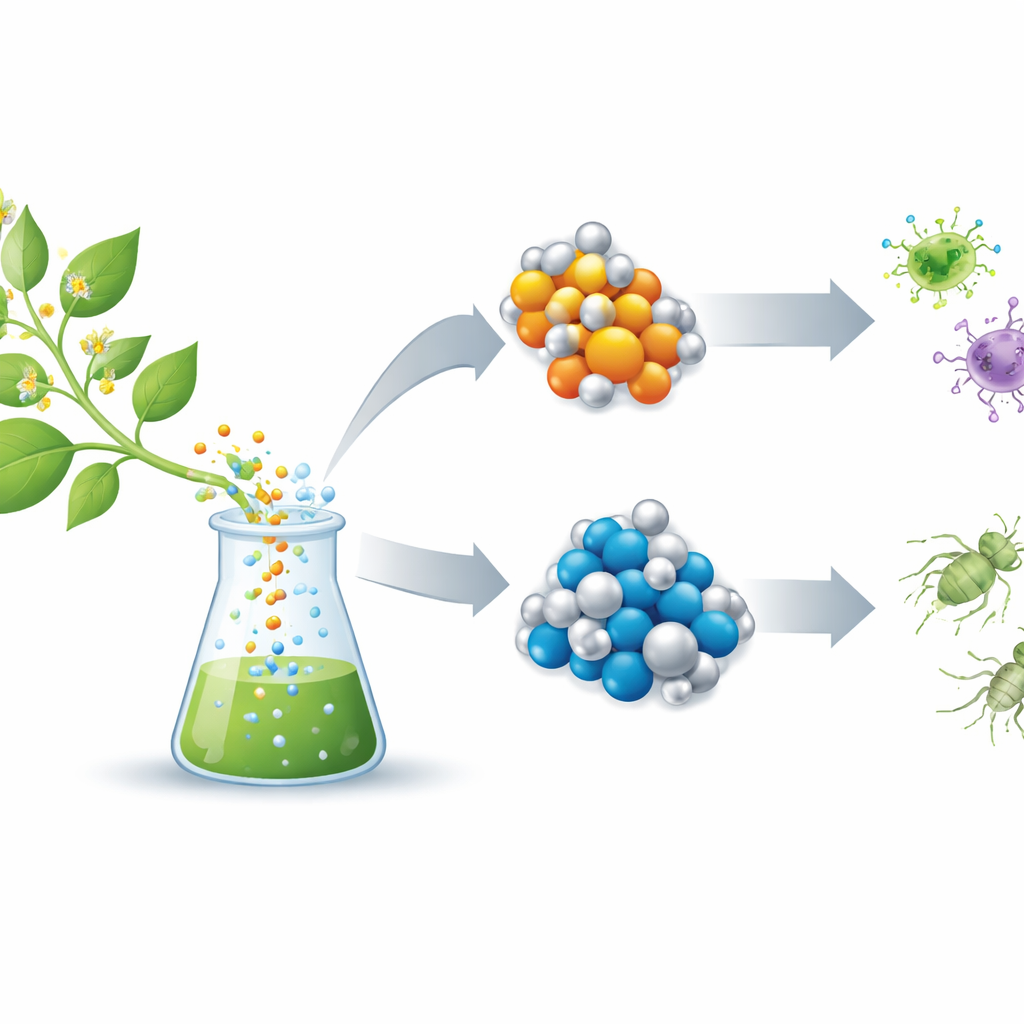
Balancing Antioxidant Power and Germ‑Killing Strength
The team compared the antioxidant strength of the raw plant extract with that of the two nanohybrids. Because some of the most active plant molecules were consumed in building the particles, the finished materials had weaker antioxidant power than the original extract, but still showed a clear ability to neutralize free radicals. More notably, the hybrids were far better at stopping harmful microbes. When tested against eight disease‑causing bacteria, both nanosystems produced clear zones where bacterial growth was halted, with especially strong effects on common Gram‑positive pathogens such as Staphylococcus aureus. The authors suggest that silver, working together with the metal oxides, damages bacterial membranes and boosts the production of reactive oxygen species that overwhelm the microbes’ defenses.
Turning Nanohybrids Against Crop Pests
Beyond germs, the study examined whether these green‑made particles could control two aphid species that attack beans and cabbage. In carefully controlled lab tests, leaves carrying different doses of plant extract or nanohybrids were exposed to aphids. The plain extract killed some insects only at relatively high concentrations. In contrast, the Ag/CeO2 and Ag/Bi2O3 nanohybrids caused high mortality at much lower doses and even outperformed azadirachtin, a widely used natural insecticide derived from neem. The authors propose that the very small size and high surface reactivity of the particles allow them to cross the insects’ outer layer, where they generate oxidative stress, disrupt cell membranes, and interfere with key protective enzymes and energy production inside aphid cells. 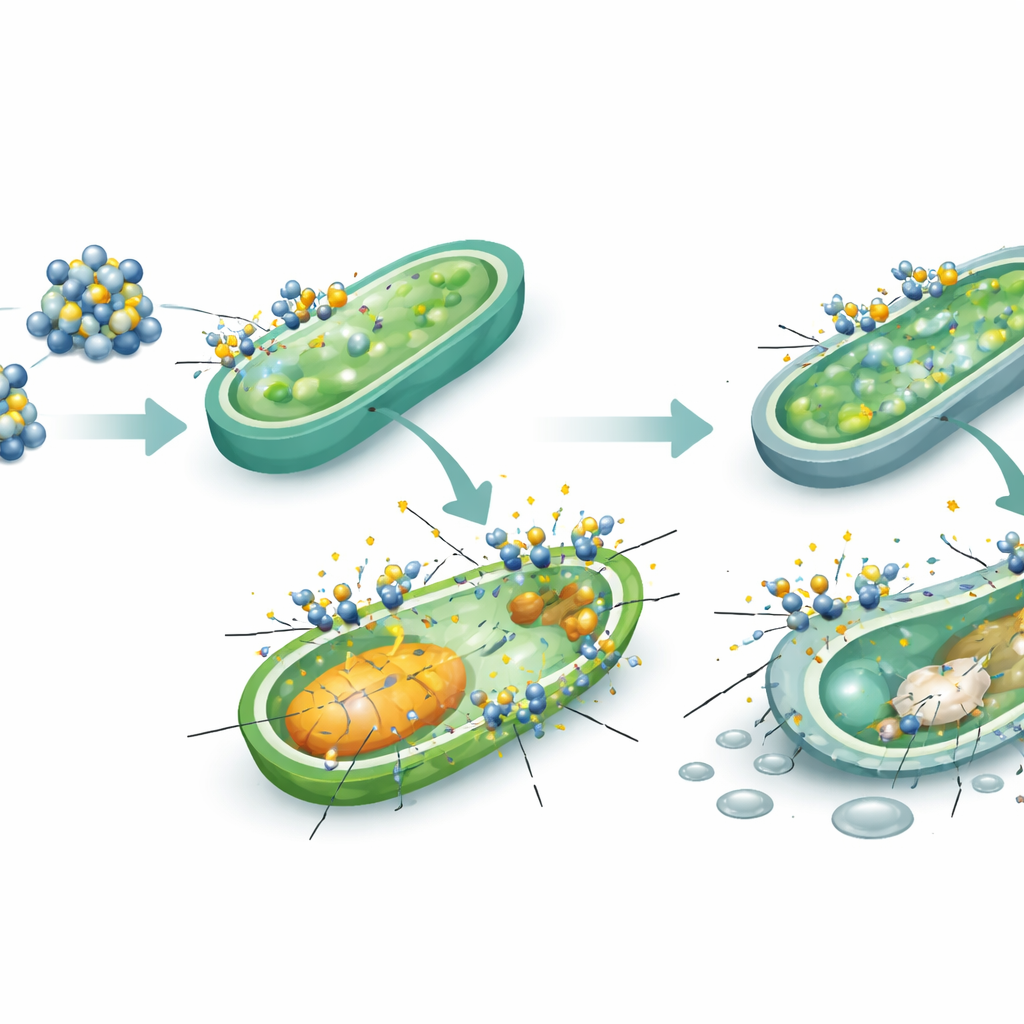
Promise and Precautions for Real‑World Use
Overall, the work shows that a common desert plant can be used as a low‑impact chemical factory to create hybrid silver‑oxide nanomaterials that combine antioxidant, antibacterial, and insecticidal activities. To a lay reader, the key message is that we may be able to fight stubborn infections and crop pests using tiny particles built with help from plants rather than harsh industrial chemicals. However, the authors stress that much remains to be done before such materials are used in clinics or fields. Their safety for mammals, beneficial insects, and the broader environment has not yet been established, and issues like long‑term stability and breakdown in soil and water need careful study. For now, these nanohybrids are promising prototypes that point toward greener tools in the ongoing battle against drug‑resistant microbes and agricultural pests.
Citation: Elattar, K.M., El Hersh, M.S., Al-Huqail, A.A. et al. Bioinspired Ag/CeO2 and Ag/Bi2O3 nanohybrids synthesized with Nauplius graveolens for antioxidant, antibacterial, and insecticidal applications. Sci Rep 16, 12879 (2026). https://doi.org/10.1038/s41598-026-42713-7
Keywords: green nanotechnology, silver nanohybrids, plant-based synthesis, antibacterial materials, nano insecticides