Clear Sky Science · en
Phenome-wide study connects behavioral genetics of odor detection dogs with temperament traits
Why the personalities of sniffer dogs matter
Odor detection dogs help keep airports, public events, and city streets safe by finding explosives, drugs, and other threats that humans can’t easily detect. But not every dog who starts training for this work is able to handle the stress, distractions, and social demands of the job. This study asks a deceptively simple question with big practical consequences: are there specific genetic differences that make some Labrador Retrievers more likely to be calm, focused working dogs and others more prone to problem behaviors that end their careers before they begin?
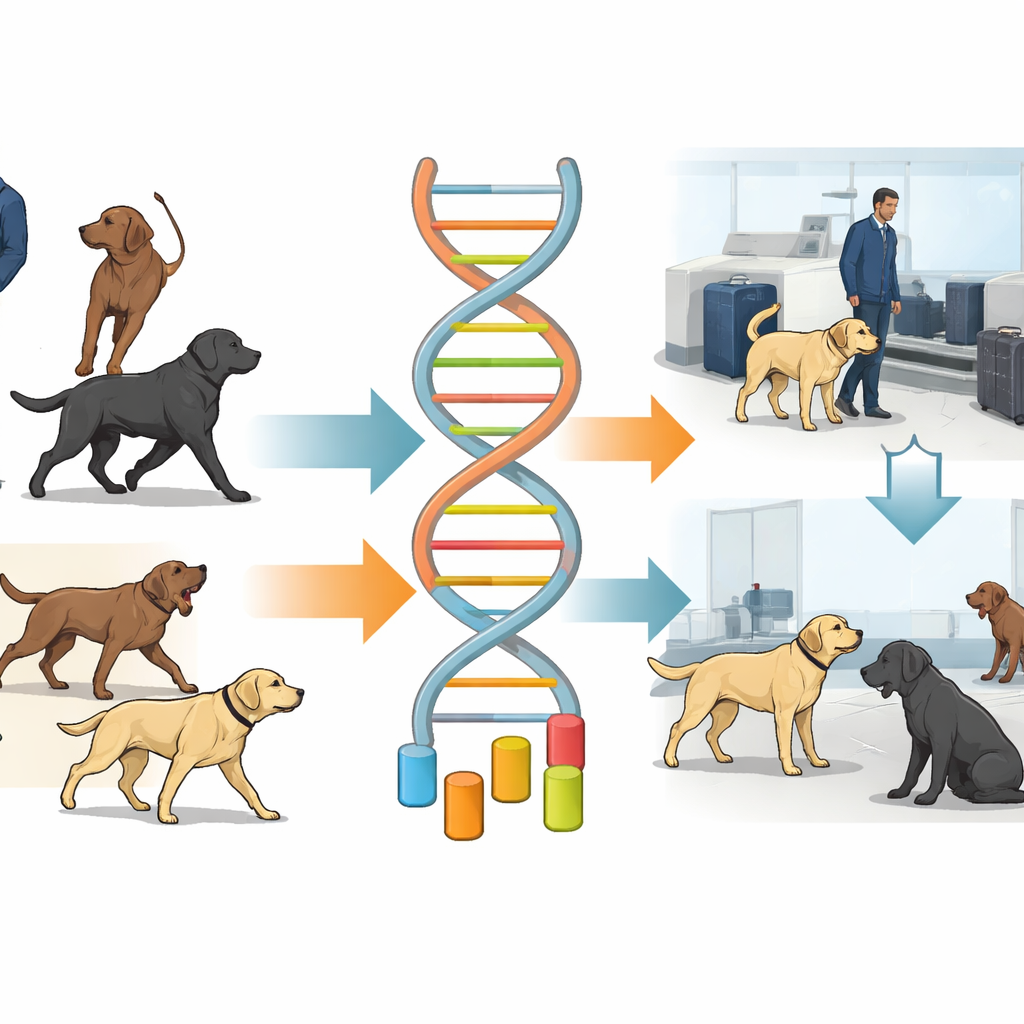
Connecting genes to everyday dog behavior
The researchers began with a group of Labrador Retrievers bred or selected for the U.S. Transportation Security Administration’s odor detection program. A previous genetic study in that cohort had found stretches of DNA associated with being removed from training for behavioral reasons, such as poor focus or unsuitable temperament. However, detailed behavior notes were not available at the time, so no one knew exactly which traits these DNA regions were influencing. To fill that gap, the team turned to three other Labrador groups—Australian pet dogs, U.K. pet and gamebird-retrieving dogs, and U.S. guide dogs—where owners had completed an in‑depth questionnaire about their dogs’ habits and temperament.
A wide scan of traits across many dogs
Instead of starting from behavior and looking for genes, the scientists flipped the approach. They took 22 genetic markers previously linked to behavioral dismissal in the security dogs and then scanned, one by one, across nearly 100 detailed questionnaire items describing fear, aggression, excitability, separation problems, and more. This style of analysis, called a phenome‑wide association study, looks for consistent links between particular DNA variants and many different traits at once, while using strict statistics to guard against false positives. After sifting through data from hundreds of Labradors in each country, the study identified 15 solid associations involving 12 specific temperament traits and 8 genetic markers spread across 6 regions of the canine genome.
Patterns of aggression, fear, and everyday quirks
One of the clearest signals involved various forms of aggression—but with an unexpected twist. The strongest and most repeated links were to aggression directed at familiar dogs or people in the household, for example when a family member tried to take away an object or when another household dog approached a favorite resting place. No significant genetic links were found for aggression toward strangers. Other connected traits included anxiety‑like behaviors when a dog was left alone, sudden urination when handled or approached, intense excitement when visitors arrived, persistent barking, and chasing small animals like cats. Interestingly, these signals varied by population: pet Labradors, which have generally undergone less intense selection for specific work, tended to show more associations, while carefully bred guide dogs showed fewer, suggesting that long‑term breeding programs may quietly weed out some high‑risk variants.
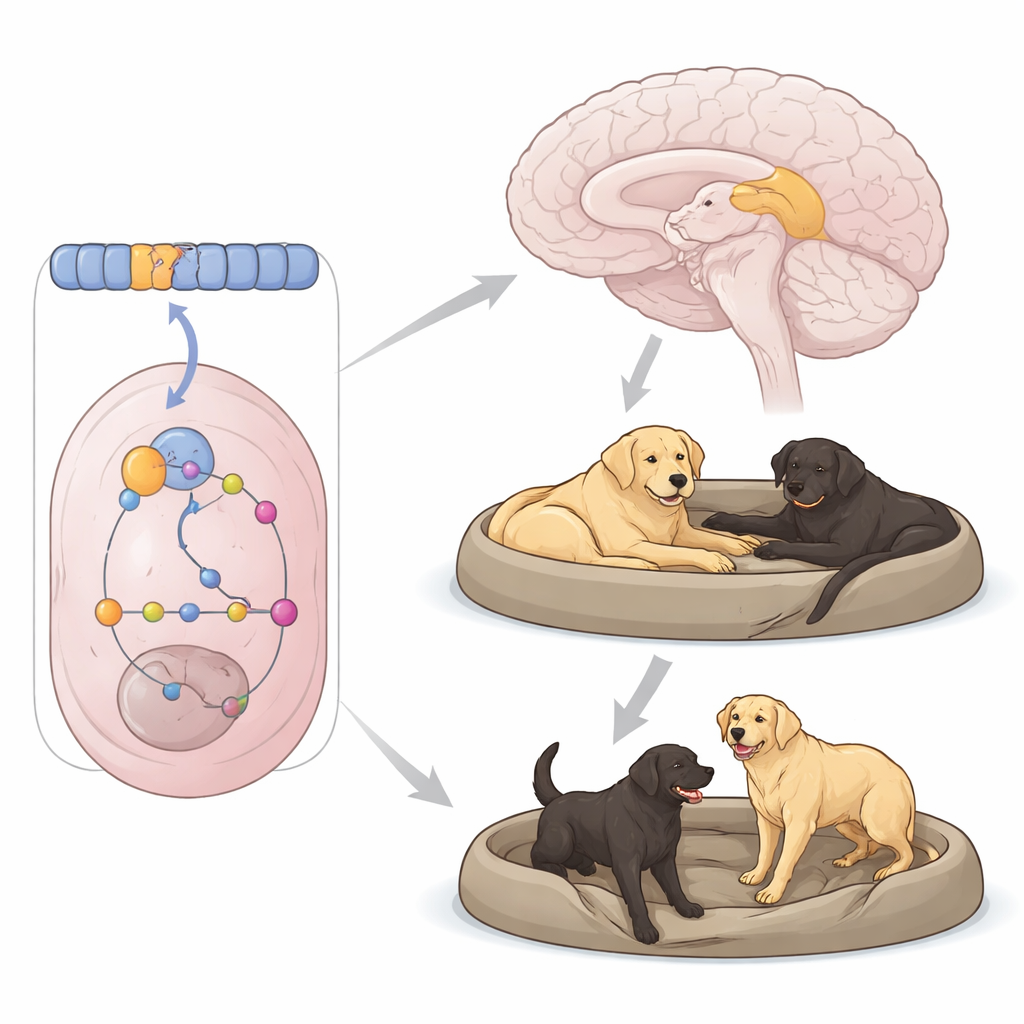
Zooming in on a candidate behavior gene
To move beyond statistical links and toward a possible mechanism, the team focused on one stretch of DNA strongly tied to aggression when approached by a familiar dog at a resting spot. This region overlaps a gene called ADAMTSL1, which produces a protein involved in the brain’s structural and signaling environment. Using whole genome sequencing of current detection dogs from two breeds, the researchers identified a small change within a highly conserved noncoding segment of this gene—DNA that does not code for protein but likely helps control when and where the gene is switched on. By comparing this sequence across dozens of mammal species and by predicting how known regulatory proteins might bind to it, they propose that the risky version of this variant may reduce binding of a repressor protein, potentially increasing ADAMTSL1 activity in certain brain cells that regulate social and emotional responses.
What this means for working and family dogs
Taken together, the findings suggest that a handful of genetic variants can tilt a dog’s temperament toward or away from traits that matter greatly for service, guide, and detection work—especially aggression and fear in familiar, day‑to‑day situations. The study does not claim that genes alone determine whether a dog will be safe and successful; early life care, training, and environment remain crucial. But by pinpointing specific DNA markers and a promising candidate gene, it opens the door to more precise selection, better targeted socialization and training for at‑risk puppies, and eventually even experimental studies in model animals to test how such variants shape brain development. For the public, this work underscores that the calm, reliable behavior we expect from working Labradors is the product of both careful breeding and thoughtful upbringing, and that understanding the biology behind temperament can improve welfare and performance for dogs and humans alike.
Citation: Eyre, A.W., Zapata, I., Fraire, J. et al. Phenome-wide study connects behavioral genetics of odor detection dogs with temperament traits. Sci Rep 16, 13768 (2026). https://doi.org/10.1038/s41598-026-42708-4
Keywords: detection dogs, canine behavior genetics, Labrador temperament, working dog selection, dog aggression