Clear Sky Science · en
A novel solid-state approach for enhancing the antimicrobial and colorimetric properties of pine sawdust using selenium nanoparticles
Turning Workshop Waste into Smart Wood
Every plank of furniture leaves behind a trail of sawdust, most of which is thrown away or burned. This study shows how that humble waste can be upgraded into a smart material that not only looks attractive but also helps fight germs and mold. By coating pine sawdust with tiny particles of the element selenium, the researchers created a colorful, germ-resistant wood ingredient that could lead to cleaner, longer‑lasting panels, furniture, and interior finishes.
Why Sawdust Needs an Upgrade
Sawdust-based boards are already used as a cheaper and more sustainable alternative to solid wood in buildings and furniture. However, they have two big weaknesses. Because the material is porous and rich in natural nutrients, it can easily be colonized by bacteria and fungi, especially in damp spaces such as kitchens and bathrooms. At the same time, many conventional glues and treatments used to improve durability can release unwanted chemicals into indoor air. The authors set out to find a cleaner way to turn pine sawdust into a more durable, good-looking material using ideas from green chemistry and nanotechnology.
Tiny Selenium Particles on Wood
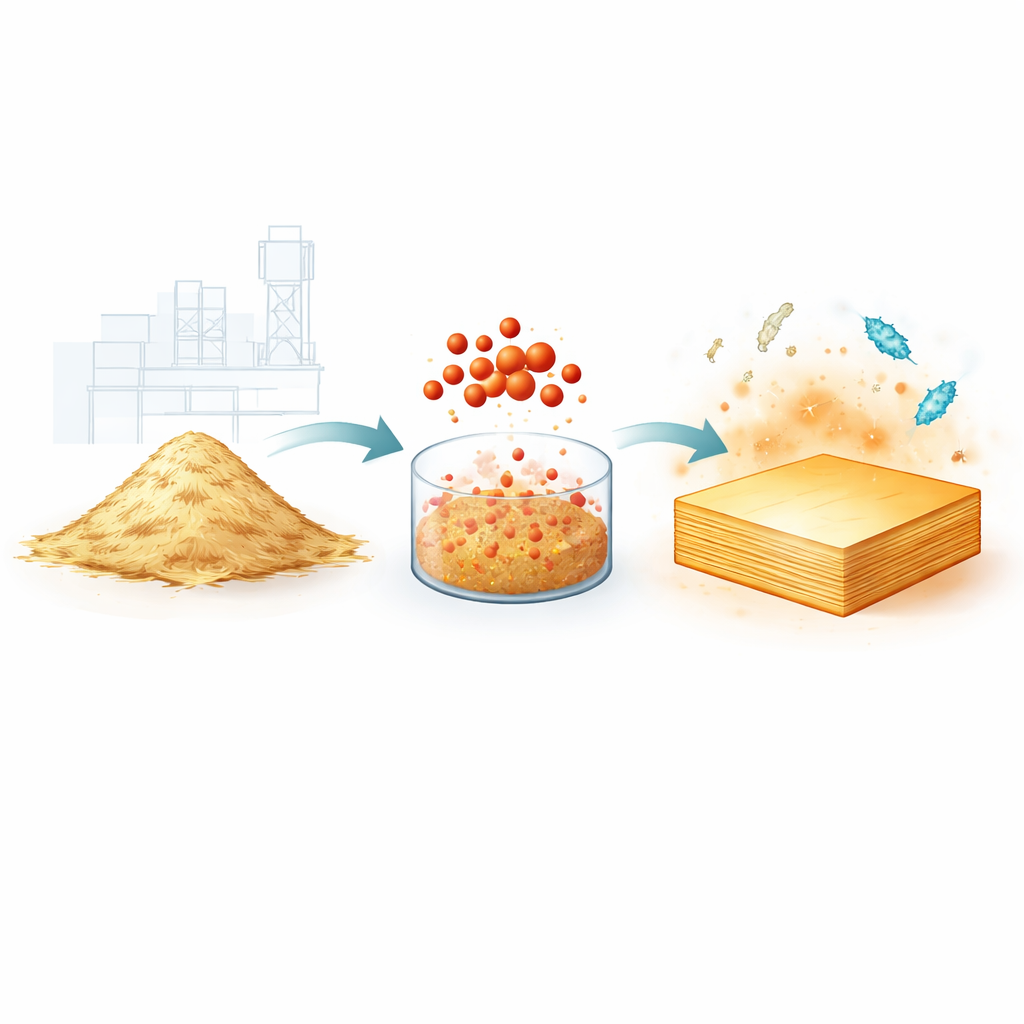
The team focused on selenium nanoparticles—ultra-small spheres of selenium only a few billionths of a meter across. Selenium in this form is known to have strong antimicrobial activity and a vivid orange color, which makes it doubly attractive for wood products. Instead of using liquid chemicals and solvents, they developed a “solid-state” method: dry pine sawdust was mixed with a selenium-containing salt and vitamin C powder, then gently ground. This simple step triggered a chemical reaction right on the sawdust surface, forming selenium nanoparticles that stuck to the wood fibers.
Seeing and Measuring the New Material
To check that the process worked, the researchers examined the treated sawdust with several imaging and measurement techniques. Electron microscopes showed that the untreated particles had smooth, fibrous surfaces, while the treated ones were covered with evenly distributed, round selenium nanoparticles ranging from a few to several dozen nanometers in size. Other methods confirmed that the selenium had formed solid crystals and that the wood structure itself remained intact. Visually, the treated sawdust changed from pale beige to a uniform orange, and color measurements revealed that color intensity rose with selenium loading up to an optimum level, after which crowding and clumping of particles reduced the effect.
Fighting Bacteria and Molds
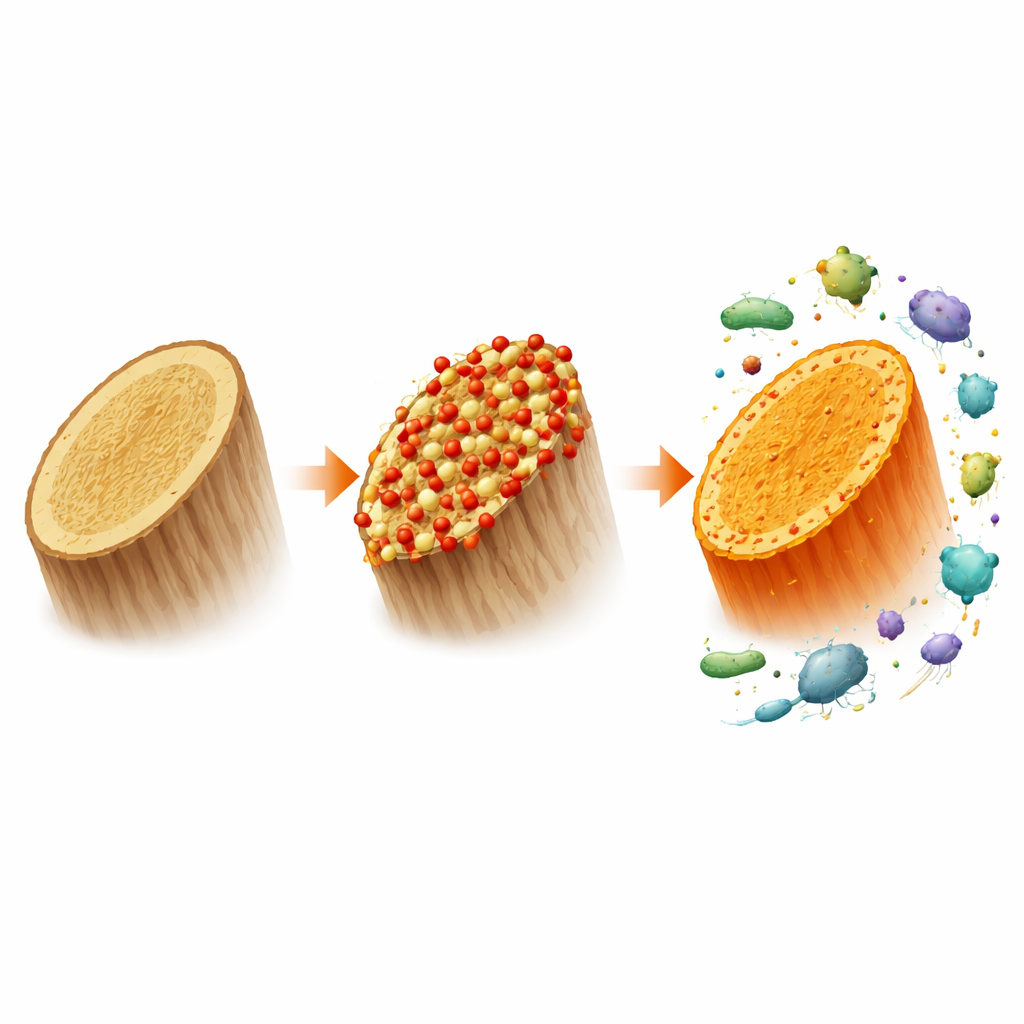
The true test was whether the modified sawdust could stop microbes from growing. The team pressed small amounts of untreated and treated sawdust into nutrient gels seeded with common problem organisms: two types of bacteria that are often found in contaminated water and surfaces, and three species of mold that readily attack wood. Plain sawdust had no protective effect. In contrast, selenium-coated sawdust created clear, microbe-free rings around itself. For certain bacteria and for the black mold Aspergillus niger, the best-performing samples produced inhibition zones comparable to or even larger than those of standard antibiotics and antifungal drugs tested in similar ways. Interestingly, there was again an optimum selenium level: too little gave weak protection, while too much encouraged particle clumping and slightly reduced performance.
From Waste Dust to Protective Surfaces
In simple terms, this work shows that a dry, one-step mixing process can turn leftover pine sawdust into a bright orange, germ-fighting ingredient without using liquid solvents or extra stabilizing chemicals. The selenium nanoparticles stay anchored to the wood, providing a combination of color and protection against a wide range of bacteria and molds. Because the method is straightforward, scalable, and based on waste wood, it could help manufacturers create safer, more hygienic panels, coatings, and packaging while reducing reliance on harsher chemical treatments.
Citation: Zaghloul, N., El-Twab, M.A. & Sayed-Ahmed, K. A novel solid-state approach for enhancing the antimicrobial and colorimetric properties of pine sawdust using selenium nanoparticles. Sci Rep 16, 10887 (2026). https://doi.org/10.1038/s41598-026-42703-9
Keywords: sawdust, selenium nanoparticles, antimicrobial surfaces, wood composites, green materials