Clear Sky Science · en
Opportunistic screening data for early prediction of GDM in Northern Chinese women: a multicenter machine learning study
Why this matters for mothers and babies
Many pregnant women develop high blood sugar for the first time during pregnancy, a condition called gestational diabetes. It raises the risk of complications such as very large babies, difficult births, and later-life diabetes for both mother and child. Today, most women are not tested until the middle of pregnancy, when there is less time to prevent problems. This study from Northern China explored whether simple information collected during routine early checkups could flag high‑risk pregnancies months earlier, without extra blood tests or expensive equipment.
Looking for early warning signs
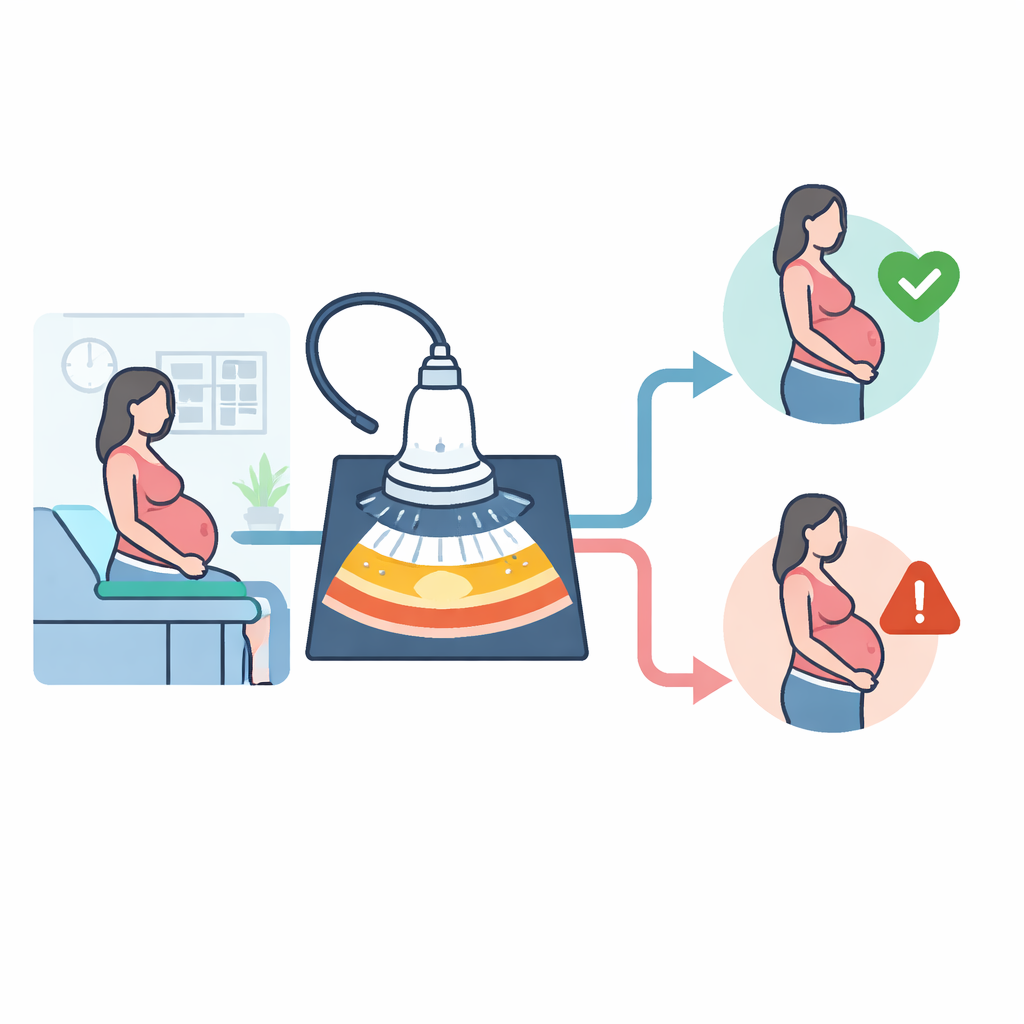
The researchers followed over 500 pregnant women who attended three types of hospitals in Northern China, from district to provincial level. All had single pregnancies and came for their first prenatal visit between 8 and 14 weeks. At that visit, staff recorded basic details such as age, body mass index (BMI, a ratio of weight to height), family history of diabetes, and previous pregnancy problems. Importantly, they also used a standard abdominal ultrasound—already common in prenatal care—to measure two layers of belly fat: the fat just under the skin (subcutaneous fat) and the deeper fat around the internal organs (visceral fat).
Turning routine scans into a smart risk tool
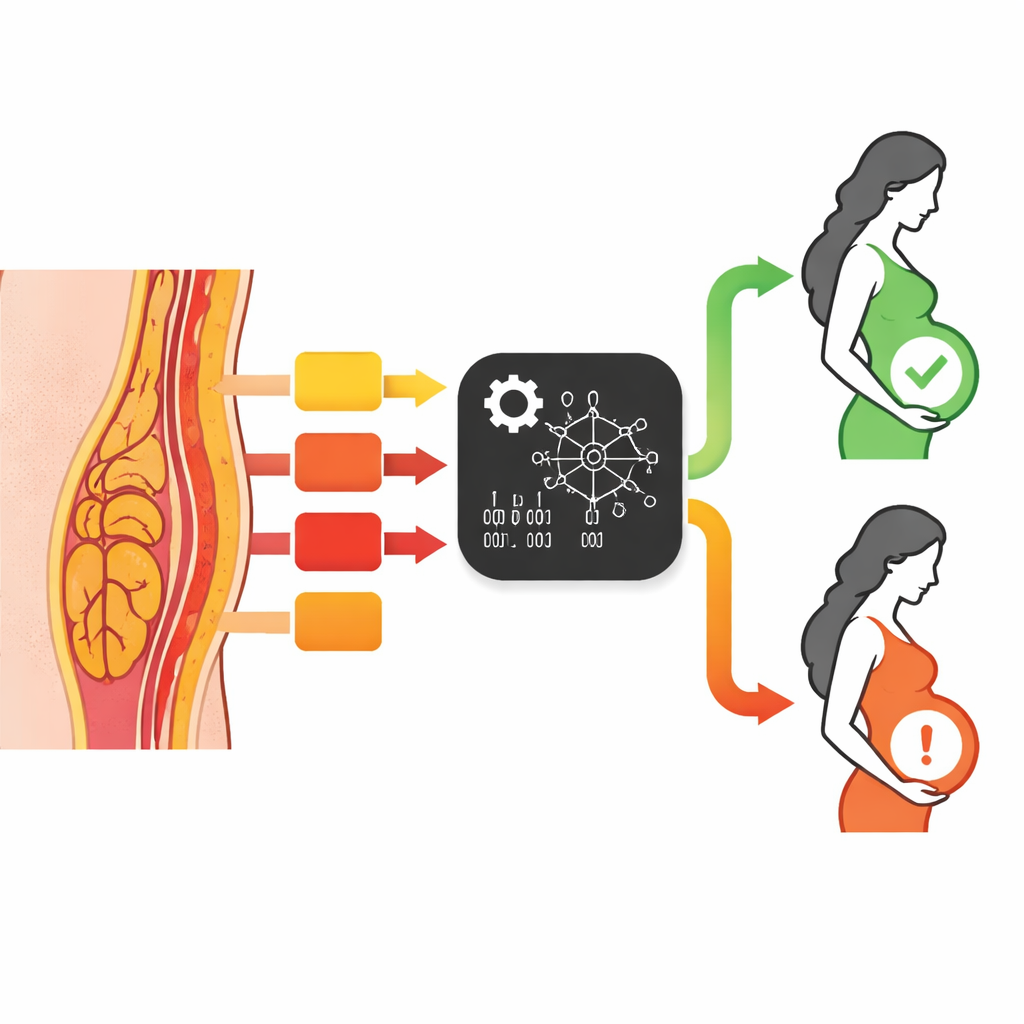
Instead of relying on a few simple cut‑off values, the team built computer models that learn patterns from data, a field known as machine learning. They tested several types of models and used a search process inspired by genetics to pick out the most informative features. Across repeated tests, the same three factors kept standing out: BMI, the thickness of subcutaneous fat, and the thickness of visceral fat. These three measurements together captured not just how heavy a woman was, but how her fat was distributed—information strongly tied to how the body handles sugar during pregnancy.
How well the model worked
Using data from two hospitals, the researchers trained and tested different algorithms, then checked the best one in a third, completely separate hospital. Their top model, a method called XGBoost, used only the three key fat‑related measures. In the original test group it could correctly distinguish women who would later develop gestational diabetes from those who would not with very high accuracy. When tried on the independent hospital, performance dipped slightly—as expected when moving to new patients—but remained strong. The model successfully identified most high‑risk women while rarely misclassifying low‑risk women, suggesting it could be trusted as a screening tool rather than a perfect diagnostic test.
Why belly fat tells a deeper story
The study also helps explain why these measures matter biologically. Visceral fat, the deeper layer around the organs, is known to release inflammatory substances that blunt the body’s response to insulin, the hormone that controls blood sugar. Subcutaneous fat can also act like an overactive gland, disturbing the balance of hormones that regulate sugar and fat. When these fat stores expand too much early in pregnancy, they can set the stage for insulin resistance and rising blood sugar months later. For Asian women in particular, gestational diabetes often appears at lower BMIs than in Western populations, so looking at where fat is stored may be more revealing than weight alone.
What this could mean in everyday care
This work shows that with no extra blood draws and only a few simple measurements already available in most prenatal clinics, doctors could offer women an early "risk check" for gestational diabetes. Those flagged as higher risk could start with basic steps—such as tailored diet advice and physical activity guidance—long before the usual mid‑pregnancy sugar test. While the model was developed in Northern Chinese women and should be validated elsewhere, it points to a practical, low‑cost way to move from late reaction to early prevention in maternal care.
Citation: Zhai, H., Che, L., Xu, T. et al. Opportunistic screening data for early prediction of GDM in Northern Chinese women: a multicenter machine learning study. Sci Rep 16, 12818 (2026). https://doi.org/10.1038/s41598-026-42700-y
Keywords: gestational diabetes, pregnancy screening, abdominal fat, ultrasound, machine learning