Clear Sky Science · en
Protective role of lycopene against salinity-induced oxidative stress in Medicago sativa L. seedlings
Why salty soils matter for our food
Across the globe, more and more farmland is turning salty because of irrigation and climate change. When salts build up in soil, crop plants struggle to take up water, their roots burn, and their leaves yellow and die back. This study explores whether lycopene – the red pigment found in tomatoes and other fruits – can help young alfalfa plants cope with salty conditions, offering a simple, natural tool to protect food and forage crops.
A simple idea: help plants with a natural color compound
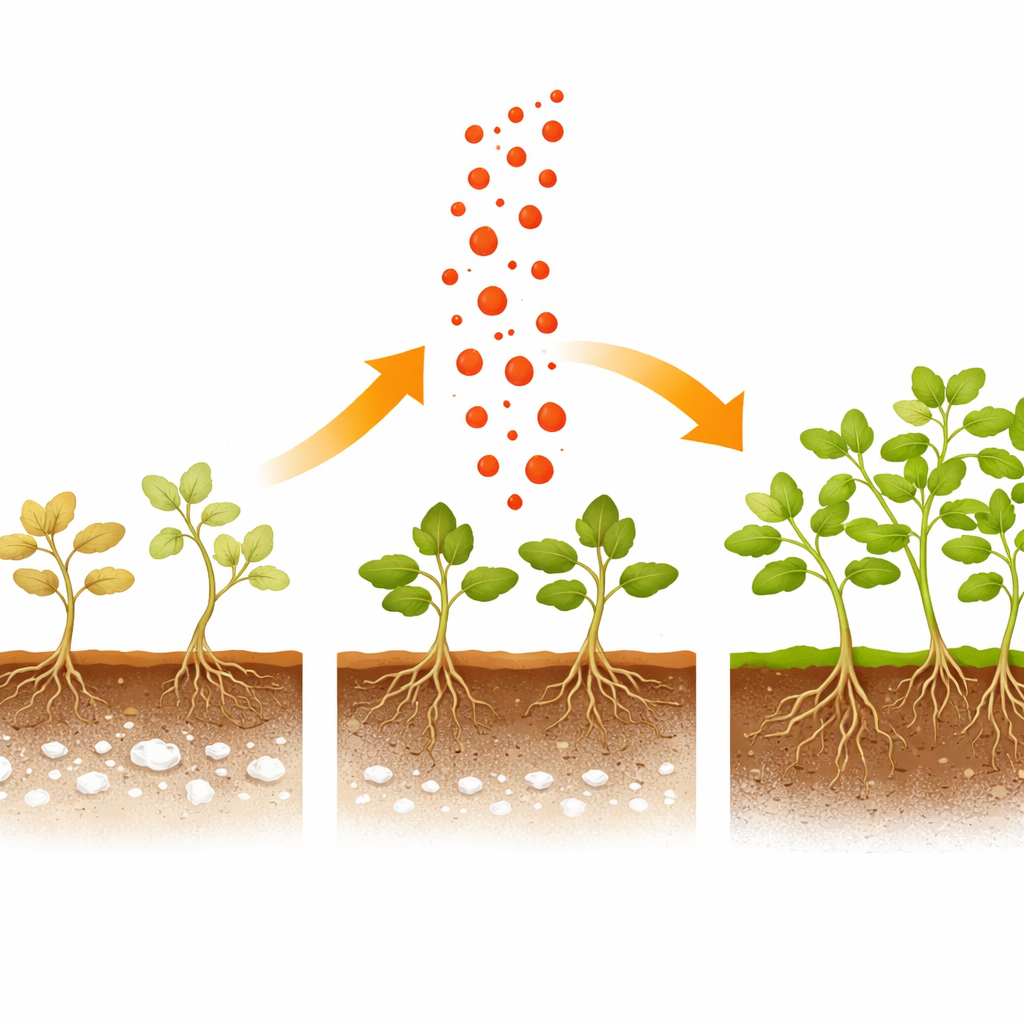
Alfalfa, a high‑protein forage widely used to feed livestock and sometimes eaten by people, is moderately tolerant to harsh environments but still suffers when soil salinity is high. The researchers focused on lycopene, a powerful natural antioxidant best known for its benefits in the human diet. Because salt stress in plants leads to the build‑up of aggressive oxygen‑based molecules that damage cells, the team asked whether lycopene could shield alfalfa seedlings from this internal "rusting" and help them grow better in salty soil. They treated alfalfa seeds with two different amounts of lycopene and then exposed them to salt levels similar to those found in degraded fields.
Testing seeds from sprout to small plant
To turn this idea into hard data, the scientists sprouted almost a thousand alfalfa seeds under controlled conditions. Some seeds grew in plain water, some in salty water, and others received lycopene alone or lycopene combined with salt. Over ten days, the team counted how many seeds germinated, measured root and leaf size with digital calipers, and checked how much water the seedlings could hold in their tissues. They also prepared plant extracts to track signs of internal damage, such as breakdown products from attacked cell membranes and the levels of helpful sulfur‑containing molecules that normally help plants manage oxidative stress.
Finding the sweet spot for lycopene
The results showed that salt alone clearly stunted the young plants: germination dropped, roots were shorter, leaves were smaller and fewer, and the tissues held less water. Many biochemical warning lights were also blinking: markers of membrane damage rose, and useful protective molecules declined. Adding a moderate dose of lycopene changed this story. At this level, seedlings in salty conditions germinated more successfully and developed longer roots and leaves, closer to those of unstressed plants. Damage markers fell, and certain protein‑based defenses recovered, indicating that lycopene was helping the plants neutralize harmful reactive molecules and better regulate metal ions such as iron that can fuel further damage. Interestingly, when the lycopene dose was doubled, its protective effect weakened and even added stress in some measurements, revealing that more of a good thing is not always better.
Peeking at the molecular handshake
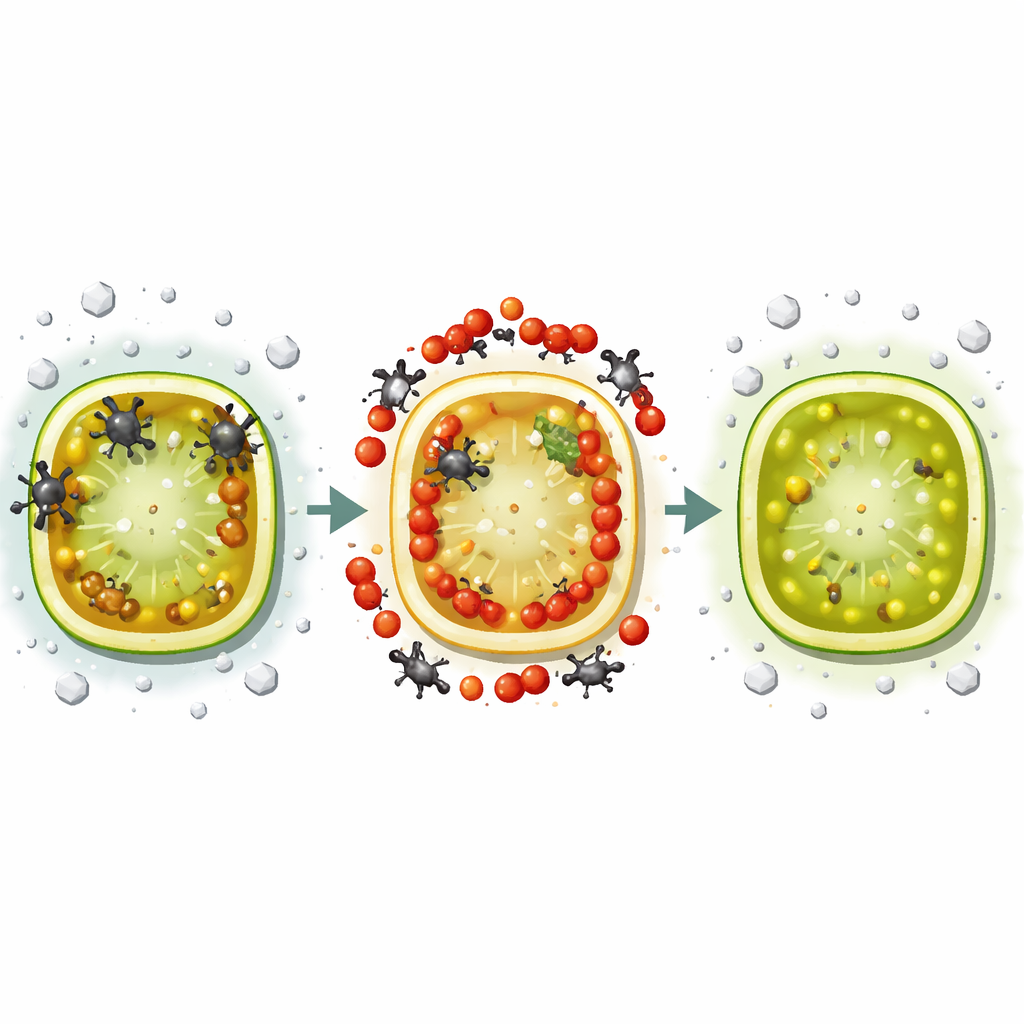
Beyond whole plants and tissues, the researchers used computer simulations to see how lycopene might physically interact with one of alfalfa’s proteins linked to stress responses. Their docking analysis suggested that lycopene can snugly fit into a region of this protein through a web of hydrophobic contacts and a few stabilizing hydrogen bonds. This virtual "handshake" implies that lycopene may do more than simply mop up stray reactive molecules; it could also subtly influence how certain stress‑related proteins behave inside plant cells, reinforcing the plant’s own defense systems.
What this could mean for future crops
Taken together, the study shows that lycopene can act as a dose‑dependent protector for alfalfa seedlings facing salty conditions. At the right level, it helps seeds sprout, keeps roots and leaves growing, preserves water inside tissues, and cuts down on internal oxidative damage. For farmers and breeders, this points to the possibility of using natural pigments like lycopene as seed treatments or additives to help crops endure the advancing problem of soil salinity. Before such approaches can be rolled out widely, though, the authors stress that we need to evaluate long‑term safety, environmental effects, and performance in real fields. Still, this work highlights how a familiar dietary compound from red fruits could one day help keep our green fields productive on increasingly salty soils.
Citation: de Araujo Monteiro, A.A., da Silva Teles, B.R., Kamdem, JP. et al. Protective role of lycopene against salinity-induced oxidative stress in Medicago sativa L. seedlings. Sci Rep 16, 11991 (2026). https://doi.org/10.1038/s41598-026-42699-2
Keywords: soil salinity, alfalfa, lycopene, oxidative stress, seedling growth