Clear Sky Science · en
Evaluating southern pigtail macaques as an immunological model for human antibody responses
Why this monkey story matters to human health
Before any new vaccine or antibody treatment is tried in people, it is usually tested in animals that are close relatives of humans. Southern pigtail macaques are one such workhorse of biomedical research. This study asks a simple but crucial question: when these monkeys make antibodies against the SARS-CoV-2 virus, do they do it in the same way humans do? The answer shapes how much we can trust monkey studies to predict what will happen in people, especially for cutting-edge vaccines designed to steer the immune system very precisely.
A closer look at the monkeys’ antibody toolkit
Antibodies are built from gene segments that can be shuffled and combined in many ways, giving our immune system an enormous menu of possible defenses. The authors first mapped the main antibody gene regions in the genomes of two pigtail macaques. They cataloged hundreds of building blocks for antibody heavy and light chains and found that these monkeys carry more versions of key variable genes than humans do. The layouts of these genes also differed between individual animals, revealing a highly diverse and polymorphic antibody toolkit even within this single species.
Comparing monkey and human responses to the coronavirus spike
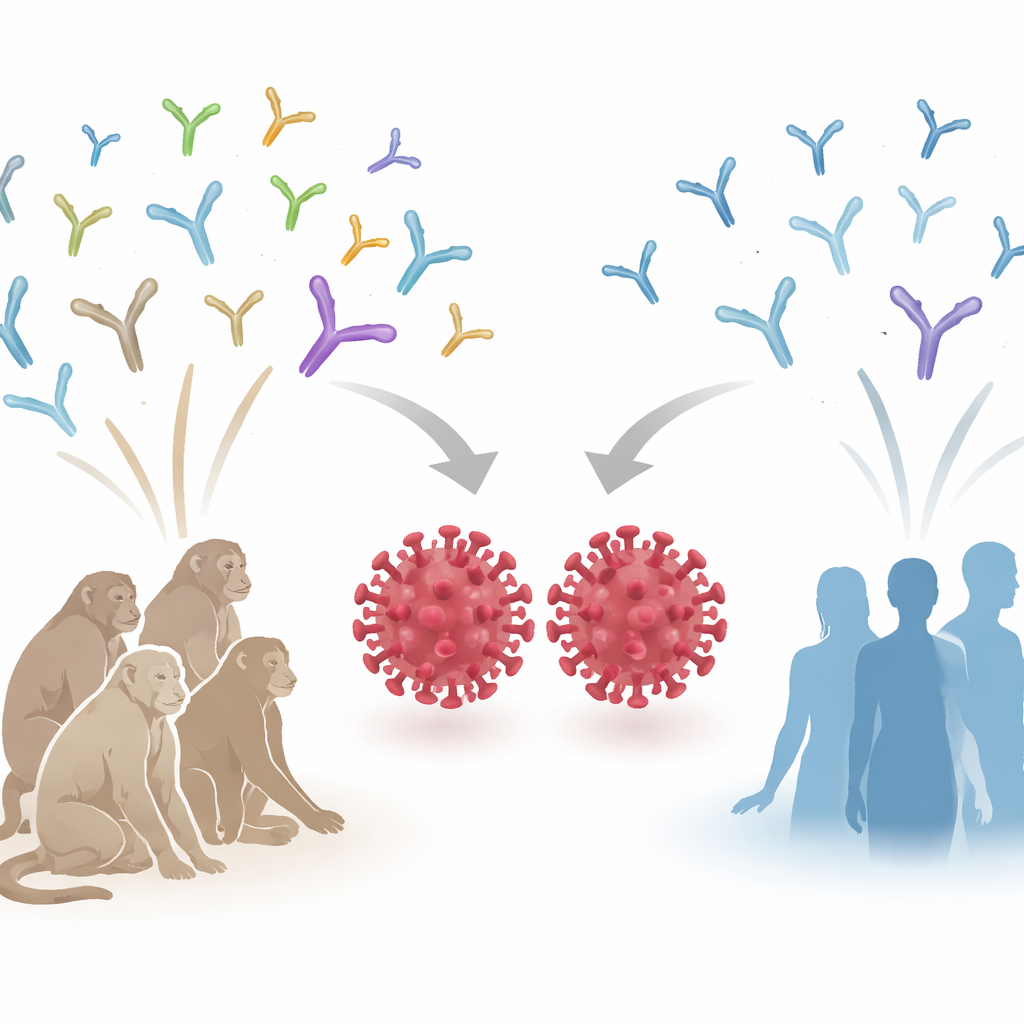
Next, the team directly compared how pigtail macaques and humans respond to the spike protein of SARS-CoV-2, focusing on B cells that recognize the spike or its receptor binding domain, the critical part that latches onto our cells. They isolated individual spike-specific B cells from a vaccinated macaque and from six people who had recovered from COVID-19, then read out the antibody genes used by those cells. The macaque, despite being a single animal, drew on a larger and more varied set of heavy-chain genes than all six humans combined. Yet the overall shape and length of a key antibody region that actually contacts the virus (called CDRH3) were very similar between species, suggesting that both end up building antibodies of comparable overall architecture.
Zooming in on how monkey antibodies behave
To see what these differences mean in practice, the researchers turned some of the macaque antibody blueprints into monoclonal antibodies—purified, single-type antibodies that can be tested in the lab. Sixteen such antibodies bound strongly to the original SARS-CoV-2 spike, and most recognized the receptor binding domain. Several could also latch onto spikes from newer variants such as Omicron BA.2, BA.5, and XBB.1.5, though generally with weaker grip. When tested against live virus in cell culture, many macaque antibodies potently neutralized the early pandemic strain, while only a few retained modest activity against later variants, echoing patterns seen in human antibodies.
Do monkey antibodies target the same viral spots as ours?
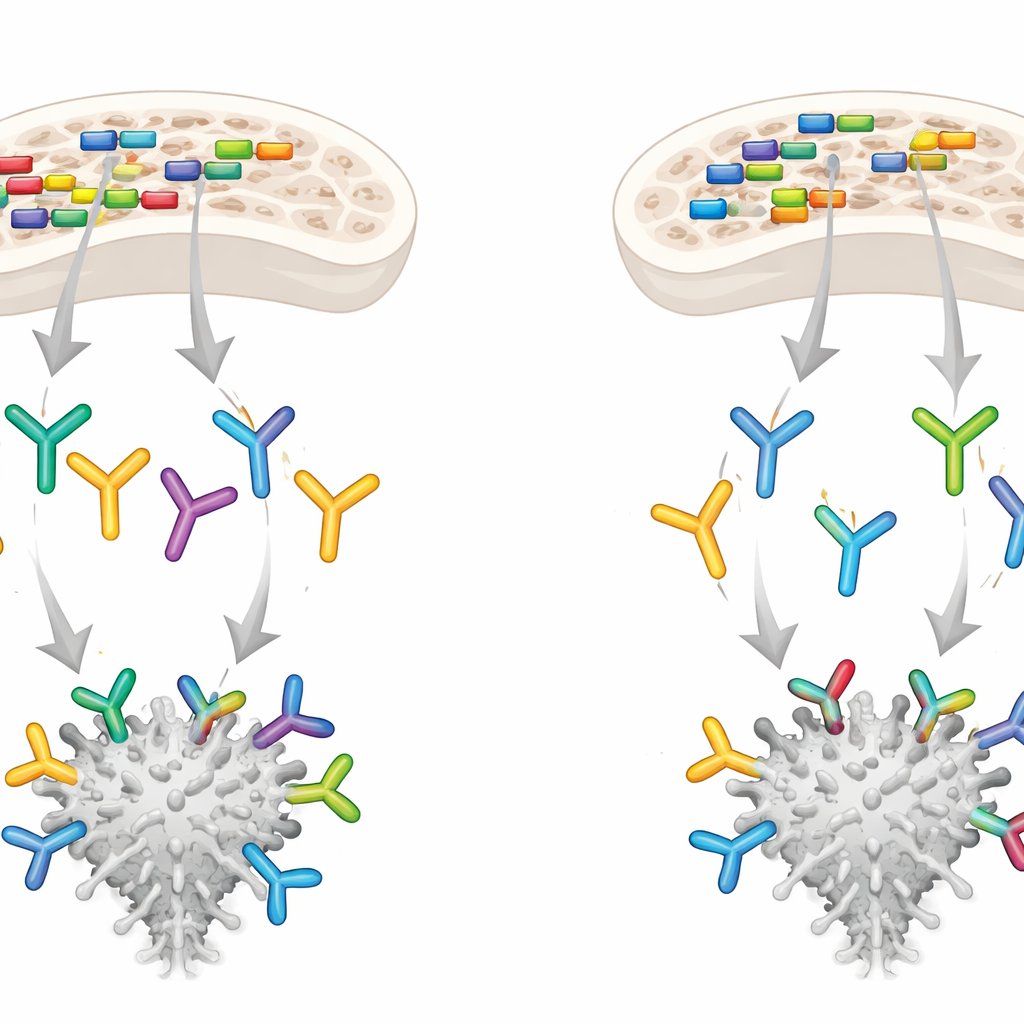
Human antibodies against the receptor binding domain are often grouped into four classes depending on where on the surface they land. Using competition assays with well-characterized human antibodies, the team showed that macaque antibodies fall into the same general classes. Several of the most powerful monkey antibodies blocked the same region that the virus uses to bind its receptor on human cells, while others recognized more hidden surfaces that can sometimes give broader protection across variants. In other words, even though macaques use a broader mix of underlying genes, their antibodies still home in on essentially the same vulnerable patches of the spike as human antibodies do.
What this means for future vaccines and therapies
The study concludes that pigtail macaques mount antibody responses that focus on the same key parts of the SARS-CoV-2 spike as humans, supporting their continued use as a model for testing vaccines and antibody drugs. At the same time, their antibody gene repertoire is larger and more varied, and a single monkey can draw on more distinct gene options than several humans combined. That extra diversity could, in some contexts, make vaccines look more effective in monkeys than they will be in people, especially for new "germline-targeting" strategies that are designed to activate very specific human antibody starting points. Understanding these genetic differences will help researchers interpret monkey data more cautiously and design preclinical studies that translate more reliably to human medicine.
Citation: Zoest, V.P., Lee, W.S., Esterbauer, R. et al. Evaluating southern pigtail macaques as an immunological model for human antibody responses. Sci Rep 16, 13710 (2026). https://doi.org/10.1038/s41598-026-42695-6
Keywords: pigtail macaque, antibody diversity, SARS-CoV-2 spike, vaccine models, immunogenetics