Clear Sky Science · en
Influence of salicylic acid on plant defense, growth and biochemical composition of Salix alba infected with Lymantria obfuscata in Kashmir
Why willow trees and tiny caterpillars matter
In the Kashmir Valley, tall white willow trees do far more than line rivers and frame cricket pitches. Their wood supports a famous bat making industry and provides fuel, fodder and medicine for local communities. Yet these trees are under attack from the Indian gypsy moth, a hungry caterpillar that can strip whole plantations of leaves. This study explores whether a simple plant friendly treatment based on salicylic acid, a relative of the painkiller in aspirin, can help willows defend themselves without relying on chemical insecticides.

A local tree with global value
White willow, known as Salix alba, is not native to Kashmir but has become central to both the landscape and the local economy. It stabilizes riverbanks, shelters wildlife and, most famously, supplies the wood for “Kashmir willow” cricket bats. Because these trees grow near water bodies and often in public or forested areas, spraying them with conventional insecticides is discouraged. When gypsy moth caterpillars arrive in large numbers, they can eat almost every leaf on a tree, weakening growth and jeopardizing livelihoods. Finding a safe, sustainable way to help the trees resist this pest is therefore a pressing concern for growers and forest managers.
A plant friendly helper is put to the test
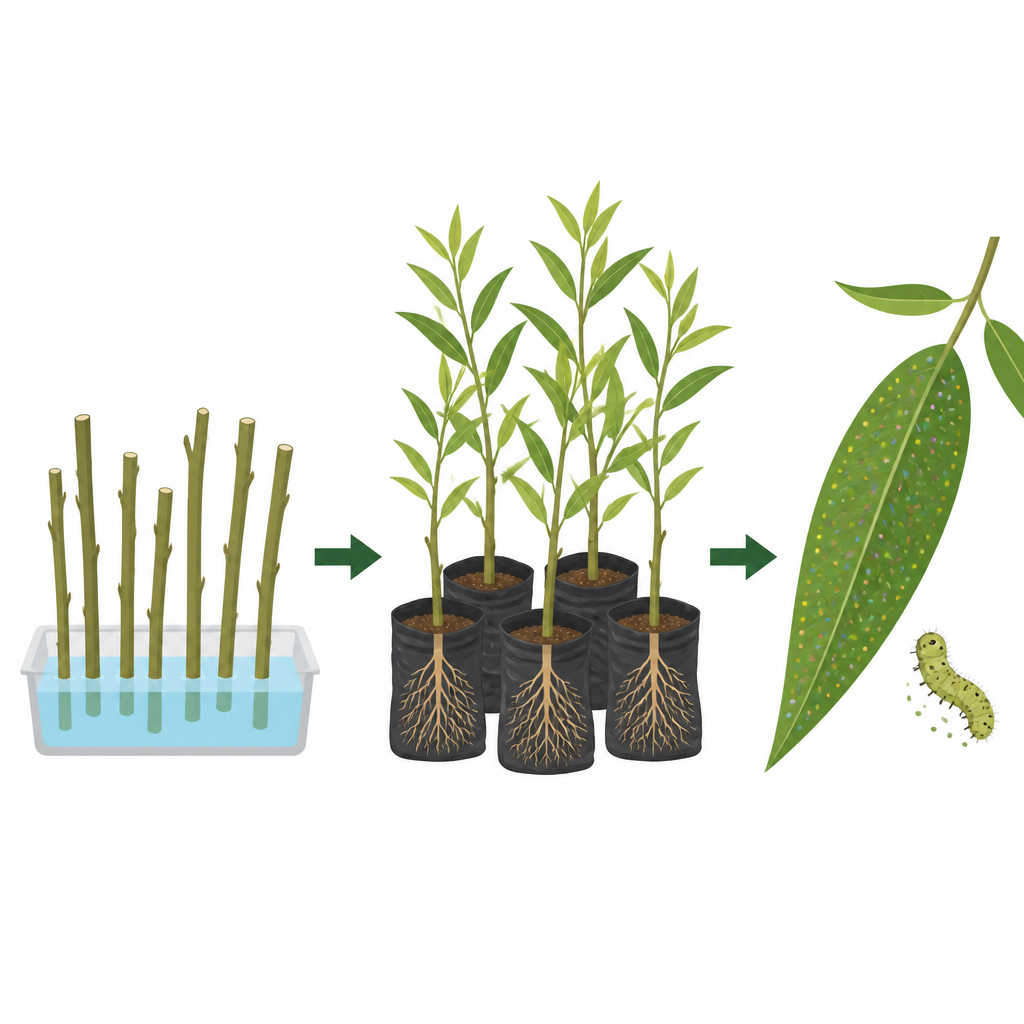
The researchers focused on salicylic acid, a natural compound that plants use as a sort of internal alarm signal when they are attacked. They raised young willow cuttings in a controlled greenhouse and treated them with three different strengths of salicylic acid solution. Some cuttings were sprayed, while others were dipped so the stems could soak up the liquid. After the treatment, they introduced gypsy moth caterpillars and measured how much leaf area was lost, how well the insects grew and how the plants themselves developed above and below ground.
Stronger trees and weaker pests
The results showed a clear pattern. Willows treated with the highest dose of salicylic acid, especially those dipped rather than sprayed, lost far fewer leaves to caterpillars than untreated plants. The insects that fed on these treated cuttings grew more slowly and reached lower weights as larvae and as adults. At the same time, the treated willows actually grew better: they had larger leaves, taller stems and longer roots compared with the controls. Chemical tests revealed that these plants built up higher levels of natural defense compounds such as phenols, flavonoids and tannins, substances known to make leaves less appealing or more difficult for insects to digest.
Inside the leaf’s hidden shield
To see what was happening inside the plants, the team measured the amount of salicylic acid within the leaves using gas chromatography–mass spectrometry, a sensitive laboratory technique. They found that dipped cuttings treated with the strongest solution accumulated much more of this signal compound than untreated trees. This internal build up was closely linked with tougher leaves, lower insect damage and healthier growth. Statistical analysis confirmed that higher levels of these natural chemicals went hand in hand with lower defoliation and reduced insect weight, suggesting that the trees were successfully turning on their own defense machinery.
What this means for willow growers
For a non specialist reader, the takeaway is straightforward. By briefly soaking young willow cuttings in a modest solution of salicylic acid before planting, it may be possible to help the trees protect themselves from a serious leaf eating insect while also improving their growth. Rather than killing the pest outright with strong insecticides, this approach nudges the plant’s own chemistry so that the caterpillars do poorly and cause less harm. In Kashmir, where willow trees underpin both river landscapes and the cricket bat trade, such a gentle boost to natural defenses could offer a practical, environmentally friendly tool for long term pest management.
Citation: Wagay, O.A., Mugloo, J.A., Hussain, B. et al. Influence of salicylic acid on plant defense, growth and biochemical composition of Salix alba infected with Lymantria obfuscata in Kashmir. Sci Rep 16, 14848 (2026). https://doi.org/10.1038/s41598-026-42685-8
Keywords: salicylic acid, Kashmir willow, plant defense, gypsy moth, sustainable pest control