Clear Sky Science · en
Advanced alginate- nutriosomes for enhanced oral delivery of fermented Echium amoenum polyphenols
Why this flower and your gut are connected
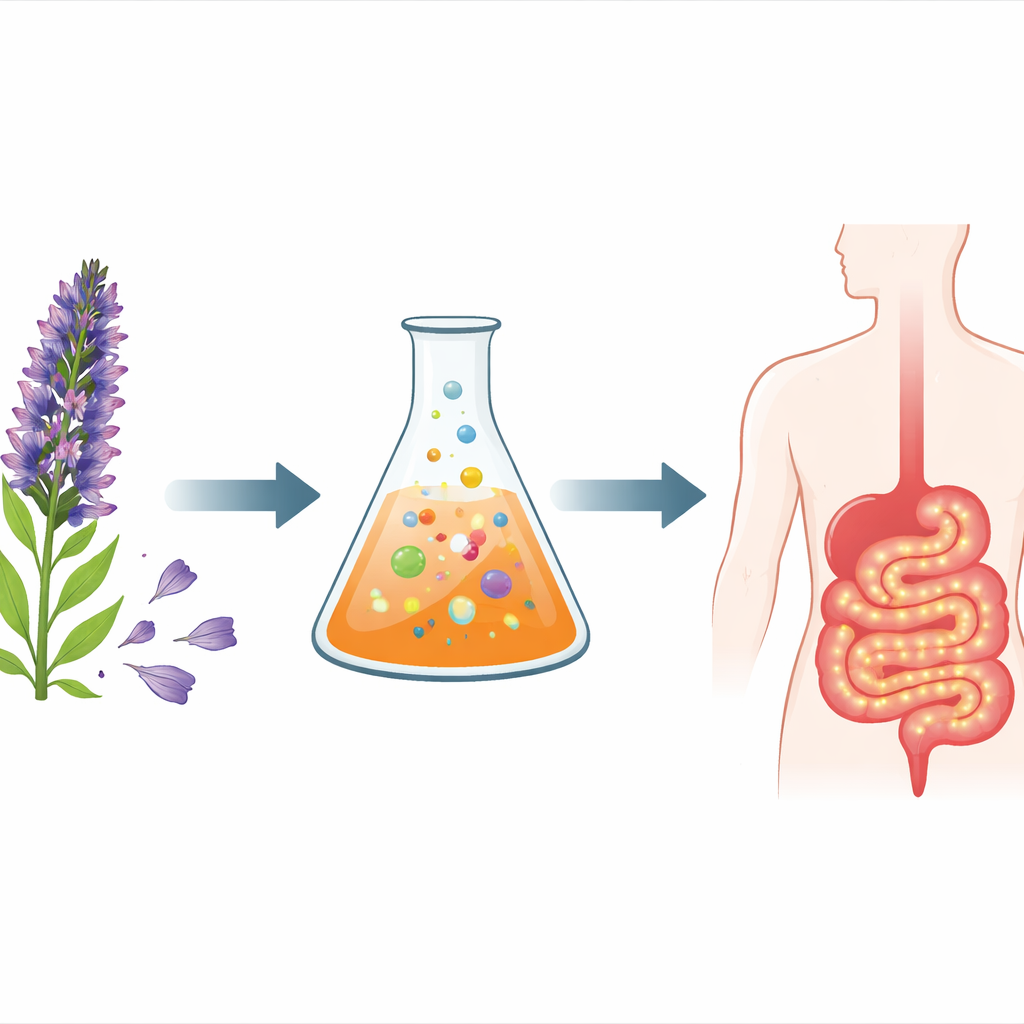
A common tea flower from Iran, Echium amoenum, has long been used to calm nerves and relieve coughs. Scientists now know its petals are packed with powerful natural antioxidants that may help protect our cells. The catch is that when we drink them, our digestive system quickly breaks many of these fragile compounds down. This study shows how careful fermentation and tiny fat-and-fiber bubbles can work together to steer more of these plant molecules safely through the stomach and into the intestine, where they may better support gut and overall health.
From herbal tea to high-powered extract
The researchers started with dried petals of Echium amoenum, a traditional medicinal plant rich in health‑promoting plant chemicals known as polyphenols. They mixed the petals with water and added a friendly bacterium, Lactiplantibacillus plantarum, similar to those found in fermented foods like yogurt. During a day of gentle fermentation, the microbes nibbled at the plant cell walls, freeing more of the “locked away” polyphenols and boosting the extract’s overall antioxidant strength. Tests confirmed that the fermented extract held high levels of rosmarinic acid, a key protective molecule, and showed strong ability to neutralize harmful free radicals in the lab.
Building tiny protective bubbles
Good ingredients alone are not enough if they are destroyed in the stomach. To shield the fragile plant compounds, the team enclosed the fermented extract inside microscopic bubbles built from natural materials. The basic bubble, called a liposome, is made from the same type of fat molecules that form our cell membranes. The scientists then enhanced these bubbles by adding Nutriose, a soluble dietary fiber, creating “nutriosomes,” and finally coated them with alginate, a gentle gel‑forming fiber from brown seaweed. These three versions—simple liposomes, nutriosomes, and alginate‑nutriosomes—were all very small (around one‑thousandth the width of a human hair), carried a strong negative surface charge that helps them repel each other, and were able to trap more than 90 percent of the plant antioxidants inside.
Surviving the journey through the gut
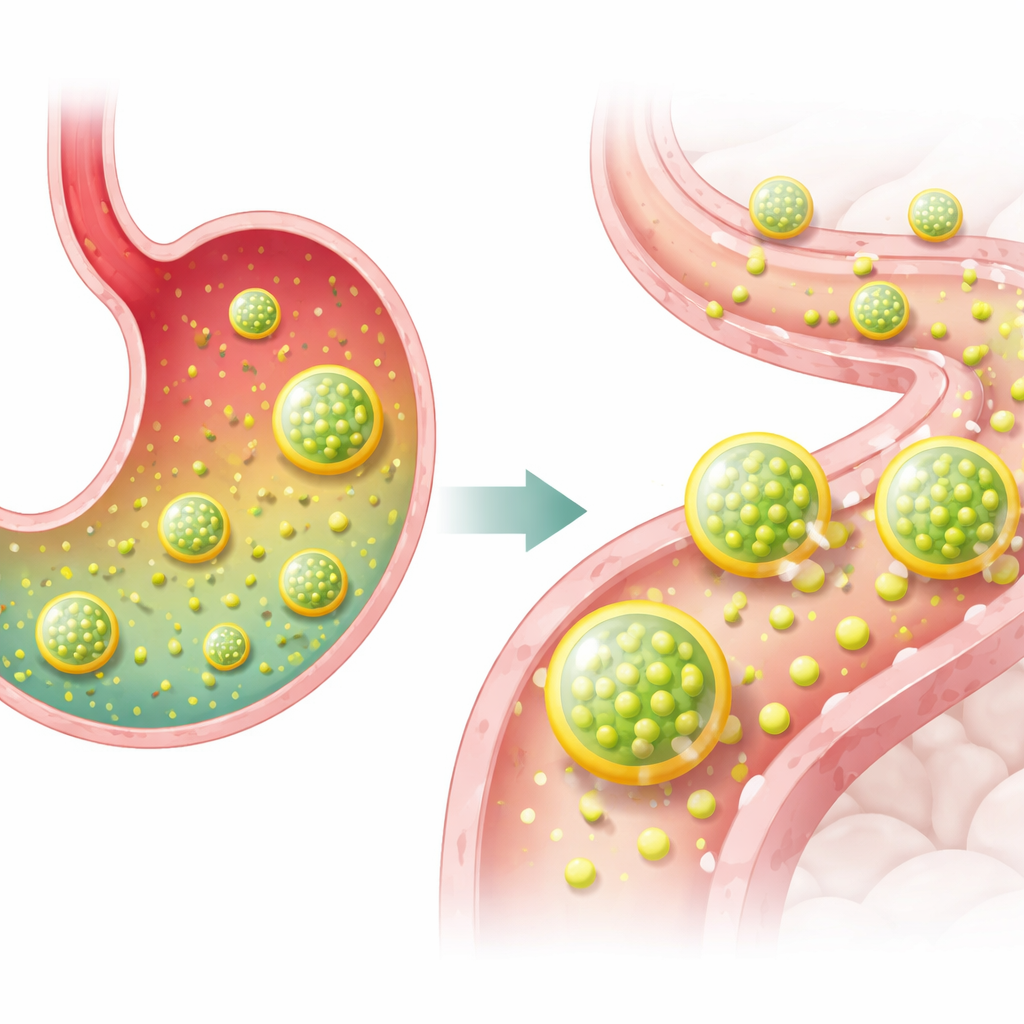
The next question was whether these bubbles could withstand the changing conditions of the mouth, stomach, and intestine. In simulated saliva, stomach acid, and intestinal fluid, all three types remained intact, but the alginate‑nutriosomes were the most stable, changing the least in size and uniformity. Over two days in a laboratory test, the bubbles released their cargo slowly rather than dumping it all at once. Again, the alginate‑nutriosomes stood out, releasing the plant compounds more gradually, which suggests they could deliver more antioxidants to the lower intestine instead of losing them in the harsh, acidic upper gut.
Helping gut cells under stress
To see how these systems might affect living tissue, the team exposed human intestinal cell models (Caco‑2 cells) to the fermented extract, either free in liquid or packed inside the different bubbles. At realistic doses, the free extract was generally safe but nudged cell survival slightly downward. When the same extract was delivered inside the vesicles, cell survival improved, and cells treated with alginate‑nutriosomes did best of all, with signs of increased growth. Under a burst of oxidative stress caused by hydrogen peroxide—a common way to mimic cell damage—the protective effect became even clearer: free extract offered little help, while all three bubble‑based formulations shielded the cells, and alginate‑nutriosomes preserved survival to nearly normal levels.
What this could mean for future health products
In simple terms, the study shows that pairing fermentation with smart, food‑grade packaging at the microscopic scale can turn a traditional herbal tea into a more potent, targeted gut‑friendly supplement. Fermentation makes more of the plant’s protective molecules available, and alginate‑coated fiber‑fat bubbles help ferry them safely through the digestive system, releasing them slowly where they can better protect intestinal cells from damage. While further animal and human studies are needed, alginate‑nutriosomes emerge as a promising way to design next‑generation nutraceuticals and functional foods built from familiar natural ingredients.
Citation: Khosroshahi, E.D., Rached, R.A., Serpe, A. et al. Advanced alginate- nutriosomes for enhanced oral delivery of fermented Echium amoenum polyphenols. Sci Rep 16, 12567 (2026). https://doi.org/10.1038/s41598-026-42684-9
Keywords: medicinal plants, polyphenols, fermentation, oral nanocarriers, gut health