Clear Sky Science · en
Rapid and specific detection of Peronospora belbahrii in basil (Ocimum basilicum L.) using a LAMP assay
Why basil lovers should care
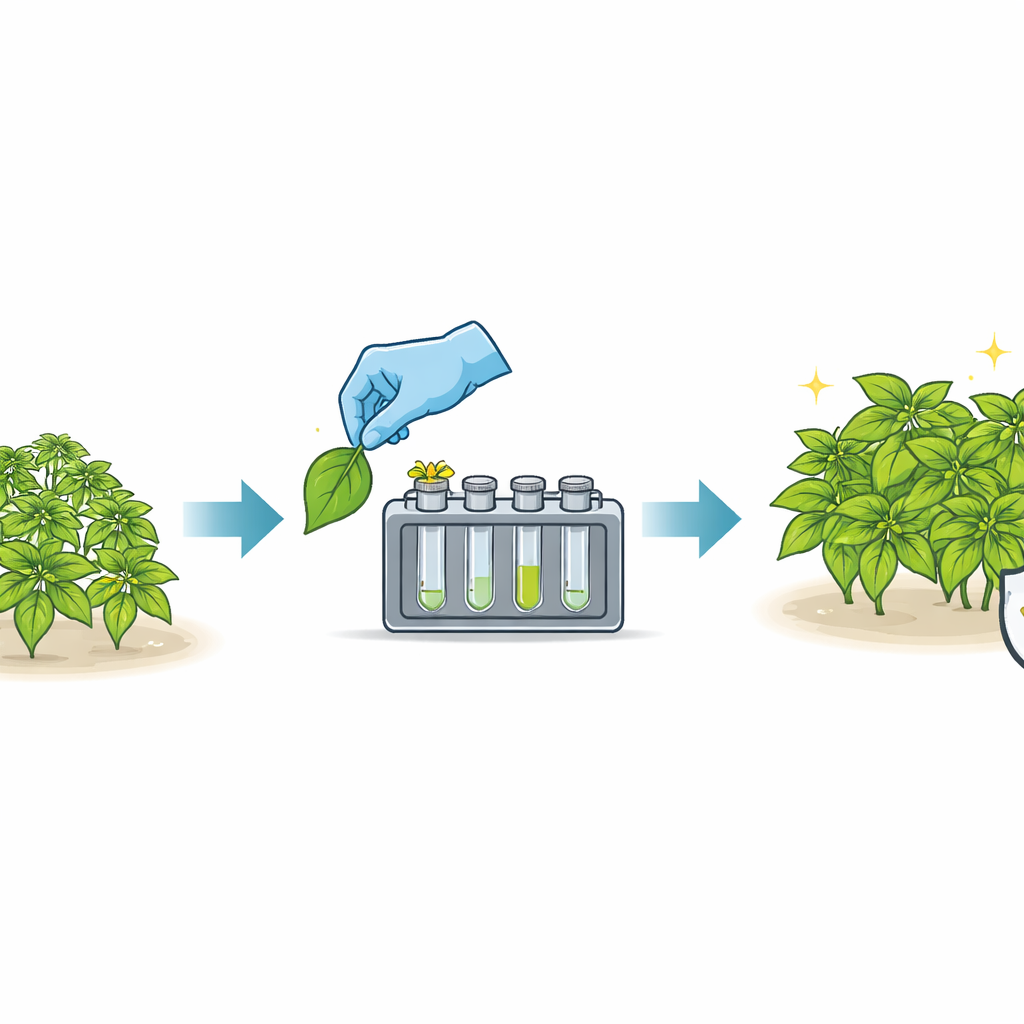
Basil is a kitchen staple worldwide, but a microscopic foe called downy mildew can wipe out entire fields in just days, sending prices up and fresh leaves off the shelves. The culprit, Peronospora belbahrii, is notoriously hard to spot early, and by the time yellow patches and gray fuzz appear on leaves, much of the damage is already done. This study introduces a simple, rapid test that can detect the disease long before it becomes visible, giving growers a chance to save their crops and ensure a steady supply of the herb many of us rely on.
A fast-spreading threat to basil fields
Basil downy mildew has become one of the most destructive diseases of sweet basil around the globe. It thrives in warm, humid conditions, where its spores land on leaves, germinate overnight, and quickly invade plant tissue. Within about ten days, entire plantings can collapse, leading to significant yield and quality losses and economic damage estimated in the tens of millions of dollars per year. Because the pathogen lives only on living plants and cannot be grown easily in the laboratory, traditional identification methods rely on visible symptoms and microscopic inspection, which are slow, require expertise, and often fail at the earliest stages of infection.
Why current lab tools are not enough
Molecular tests that look directly for the pathogen’s genetic material already exist, but most of them are based on the polymerase chain reaction (PCR), a powerful technique that needs precise temperature cycling, expensive instruments, and relatively large amounts of DNA. For growers and inspectors in the field, these requirements are a major barrier. Early in infection, there may be too little pathogen DNA for PCR to pick up reliably, and samples often have to be shipped to specialized labs, wasting valuable time while the disease silently spreads. The authors of this paper argue that basil production needs a portable, easy-to-use method that remains highly sensitive and specific but works with minimal equipment and tiny traces of pathogen DNA.
A new simple test built around a smart DNA trick
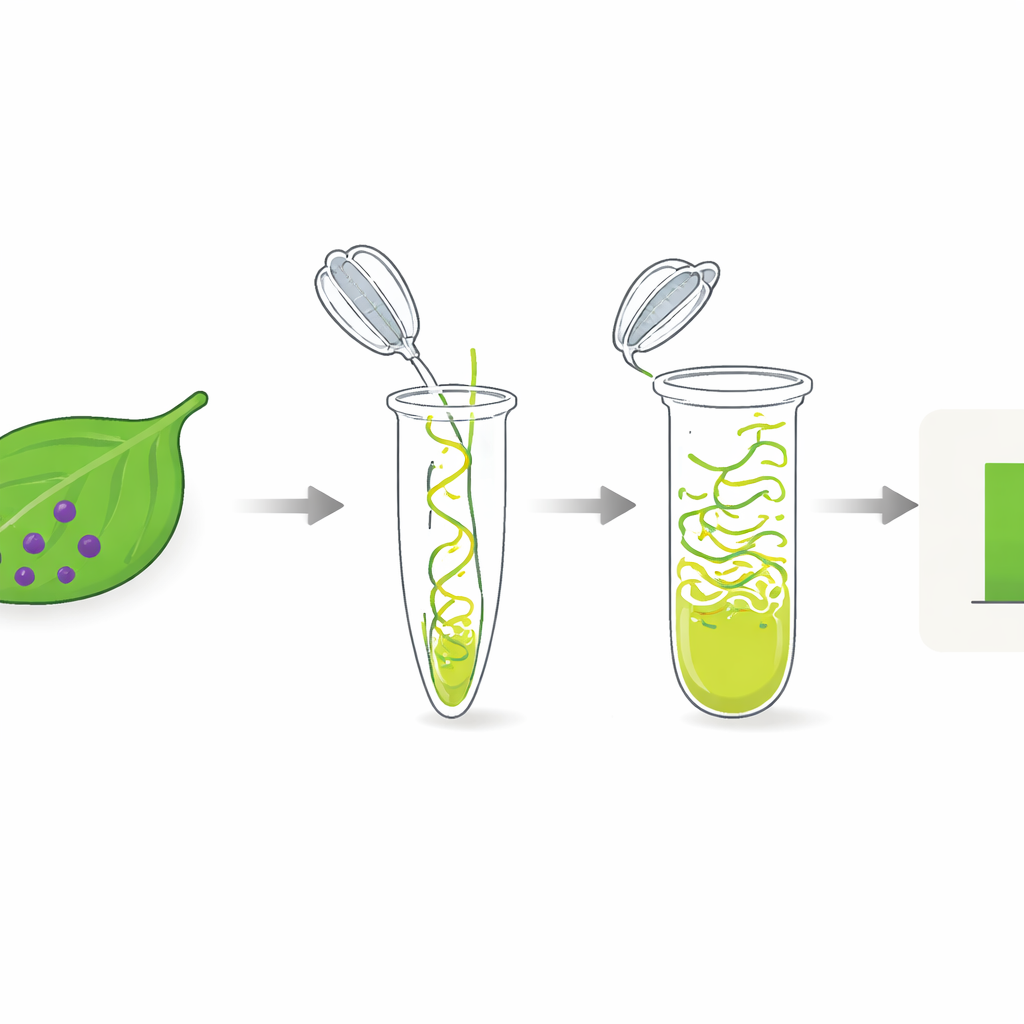
The team focused on Loop-Mediated Isothermal Amplification, or LAMP, a method that amplifies DNA at a constant temperature using a specialized enzyme. Instead of cycling through hot and cold phases like PCR, LAMP runs in a single warm step, making it ideal for compact devices or even simple heaters. The researchers first combed through the limited genome data available for Peronospora belbahrii and closely related species, searching for a short DNA fragment unique to this basil-infecting pathogen. They identified a conserved gene region that appears only in P. belbahrii and designed three sets of short DNA primers, finally selecting one panel—called PbLAMP-2—that worked best in their tests.
How well the new test performs
Using spores collected from diseased basil leaves and synthetic DNA standards, the authors carefully tuned the reaction temperature and duration. They found that a 60-minute reaction at 65 °C gave the clearest results. Under these conditions, the LAMP assay could detect DNA at levels equivalent to a single theoretical copy of the target sequence—at least a thousand times more sensitive than conventional PCR in their comparisons. Just as importantly, the test proved highly specific: it gave no signal with DNA from other common basil pathogens, including several Fusarium species and Macrophomina phaseolina, while correctly identifying P. belbahrii in naturally infected basil tissue. Remarkably, the assay detected the pathogen in leaves three days before visible spore growth appeared, showing its power as an early warning tool.
What this means for growers and gardens
Together, these results show that the new LAMP-based biosensor is a practical, field-ready way to monitor basil health. Because the reaction can be read simply by a color change in a small tube and does not require sophisticated machines, it could be integrated into portable devices for use in nurseries, greenhouses, and farms. Early detection allows growers to remove infected plants, adjust humidity, or apply treatments before an outbreak explodes, reducing crop losses and reliance on blanket pesticide use. The authors suggest that the same strategy—using genome searches to design highly specific LAMP tests—can be extended to other downy mildew diseases that threaten high-value crops. For consumers, this kind of quiet molecular surveillance behind the scenes helps keep fresh basil abundant, affordable, and on our plates.
Citation: Aragón-Sánchez, E., Romero-Bastidas, M., Meza, B. et al. Rapid and specific detection of Peronospora belbahrii in basil (Ocimum basilicum L.) using a LAMP assay. Sci Rep 16, 12944 (2026). https://doi.org/10.1038/s41598-026-42660-3
Keywords: basil downy mildew, plant disease diagnosis, LAMP assay, oomycete detection, crop protection