Clear Sky Science · en
ORF3 protein of porcine circovirus type 2 induced RIPK3 phosphorylation-driven autophagy to promote viral replication
Why this tiny pig virus matters
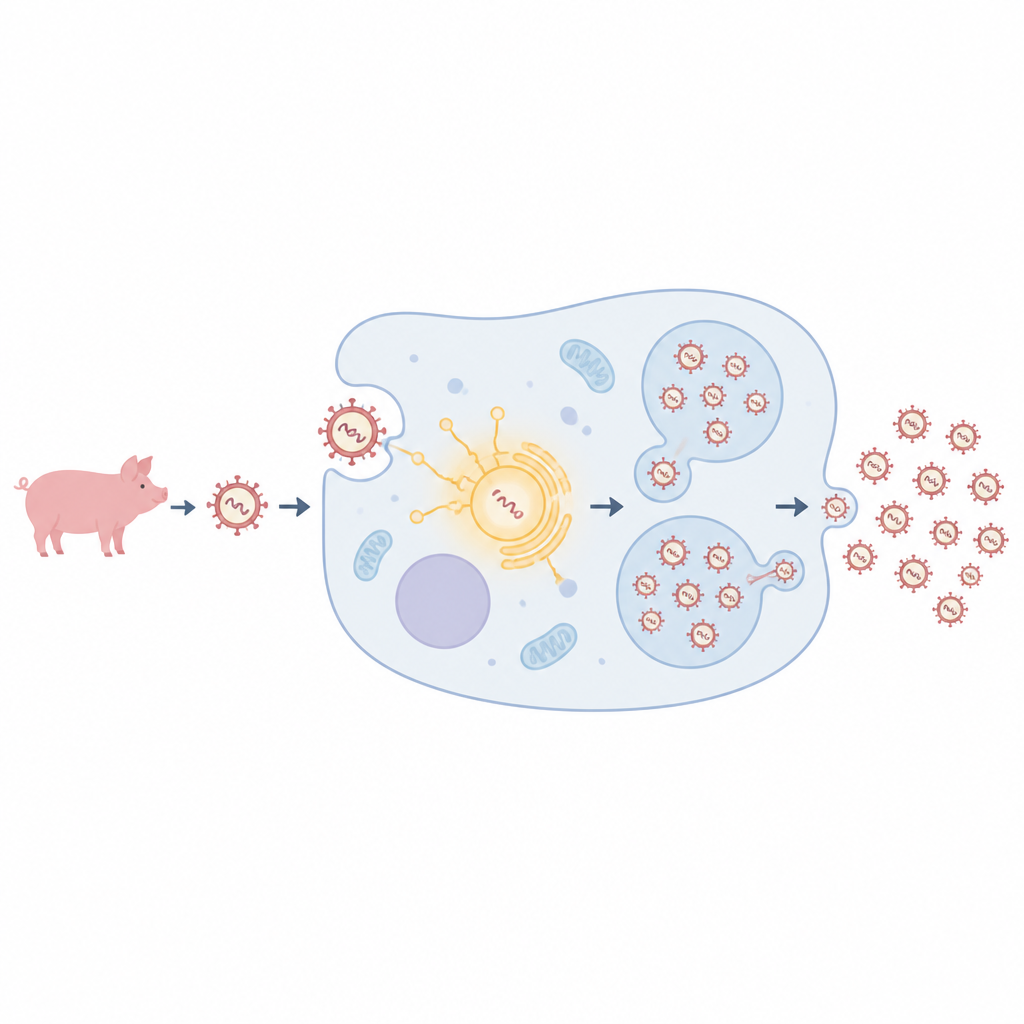
Porcine circovirus type 2 is a very small virus that causes serious disease in pigs, leading to weight loss, breathing problems, and organ damage. These illnesses create major economic losses for farmers and can destabilize pork production worldwide. This study looks closely at how the virus cleverly rewires the inner workings of pig cells, turning a normal cell clean up system into a tool that helps the virus make more copies of itself. Understanding this trick could guide new ways to control infection on farms and reduce the need to rely only on vaccines.
A virus that bends cell defenses to its will
The researchers focused on a virus called porcine circovirus type 2, or PCV2, which is a leading cause of a group of pig illnesses known collectively as porcine circovirus associated diseases. PCV2 carries a small DNA genome and makes several proteins, including ORF1 and ORF2, which help it copy its genetic material and build its outer shell, and ORF3, a protein already known to damage immune cells. What remained unclear was how ORF3 changes host cell signaling in a way that boosts virus growth. The team wanted to learn whether ORF3 taps into a host protein called RIPK3, a key controller of cell death and inflammation, and how this interaction might change the balance between cell survival, self cleaning, and virus production.
A death switch used for a different purpose
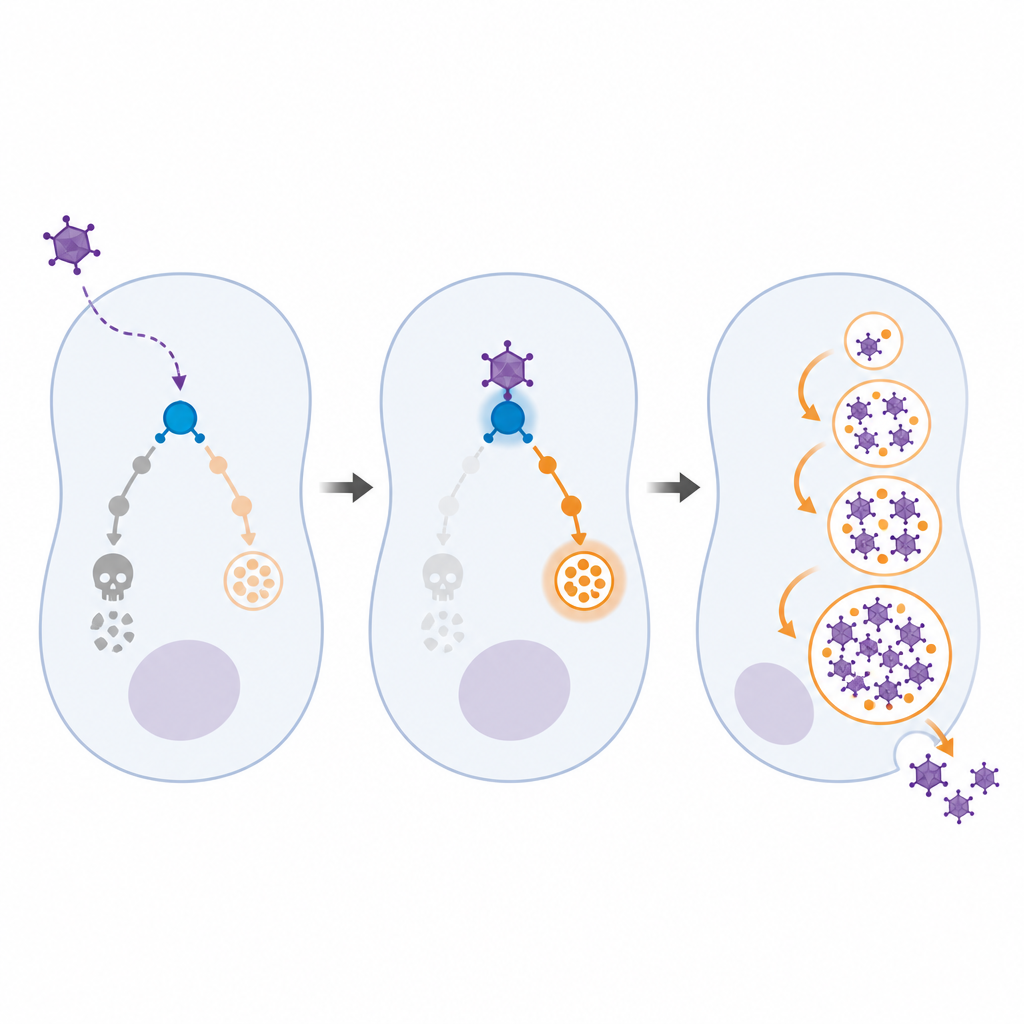
RIPK3 normally helps drive a dramatic form of cell death that can alert the immune system. It does this by becoming chemically switched on and then activating another protein that punches holes in the cell membrane. In pig kidney cells infected with PCV2, the scientists found that total RIPK3 levels actually dropped, but the remaining RIPK3 molecules were strongly switched on. At the same time, the usual downstream executioner of this death pathway was not activated. When the team blocked RIPK3 activity with a drug or reduced its amount using genetic tools, the virus made less of its key Rep protein and produced less viral DNA. These results showed that PCV2 depends on active RIPK3, not to kill cells, but to quietly support its own replication.
Turning cell cleanup into a virus factory
Cells use a recycling process called autophagy to break down worn out parts and recover resources. Many viruses have learned to tap into this system to build their components or hide from immune sensors. In this study, PCV2 infection increased the level of LC3 II, a common marker for active autophagy, showing that the recycling process was switched on. The researchers then asked which viral protein was responsible for flipping the RIPK3 switch. When they expressed the virus proteins one by one, only ORF3 caused strong activation of RIPK3, while the shell protein and the replication protein did not. ORF3 alone was also sufficient to boost autophagy markers. When RIPK3 was reduced, this virus and ORF3 driven autophagy fell, indicating that RIPK3 is the link between the ORF3 signal and the recycling machinery.
Proof that recycling helps the virus thrive
To confirm that this boosted recycling truly helps PCV2 multiply, the team interfered with a core autophagy helper protein called ATG7, which is needed to build the membrane bubbles that carry material to be degraded. Cells with reduced ATG7 showed lower levels of the viral Rep protein and lower viral DNA, both with and without the RIPK3 blocking drug. This meant that when autophagy was crippled, the virus lost a major advantage, even if it could still try to turn on RIPK3. Together, these experiments painted a clear sequence: ORF3 activates RIPK3, active RIPK3 drives autophagy, and the resulting recycling rich environment makes it easier for PCV2 to reproduce.
What this means for pig health
For a general reader, the main takeaway is that this pig virus has evolved to rewire a cell death switch into a cell recycling boost that favors the virus. Instead of triggering a fiery, protective kind of cell death, PCV2 uses its ORF3 protein to push RIPK3 into a state that sparks autophagy, turning the cell into a more efficient virus factory. Blocking either RIPK3 activity or the autophagy pathway sharply reduces virus growth in cells. This ORF3–RIPK3–autophagy chain offers a new set of targets for drugs or breeding strategies aimed at making pigs less hospitable to PCV2, potentially easing disease burden and improving herd health.
Citation: Guo, Z., Chen, J., Li, Y. et al. ORF3 protein of porcine circovirus type 2 induced RIPK3 phosphorylation-driven autophagy to promote viral replication. Sci Rep 16, 15928 (2026). https://doi.org/10.1038/s41598-026-42658-x
Keywords: porcine circovirus type 2, RIPK3, autophagy, ORF3 protein, swine viral disease