Clear Sky Science · en
Controlled hot pressing for functional upcycling of waste polyethylene materials
Turning Throwaway Bags into Useful Sheets
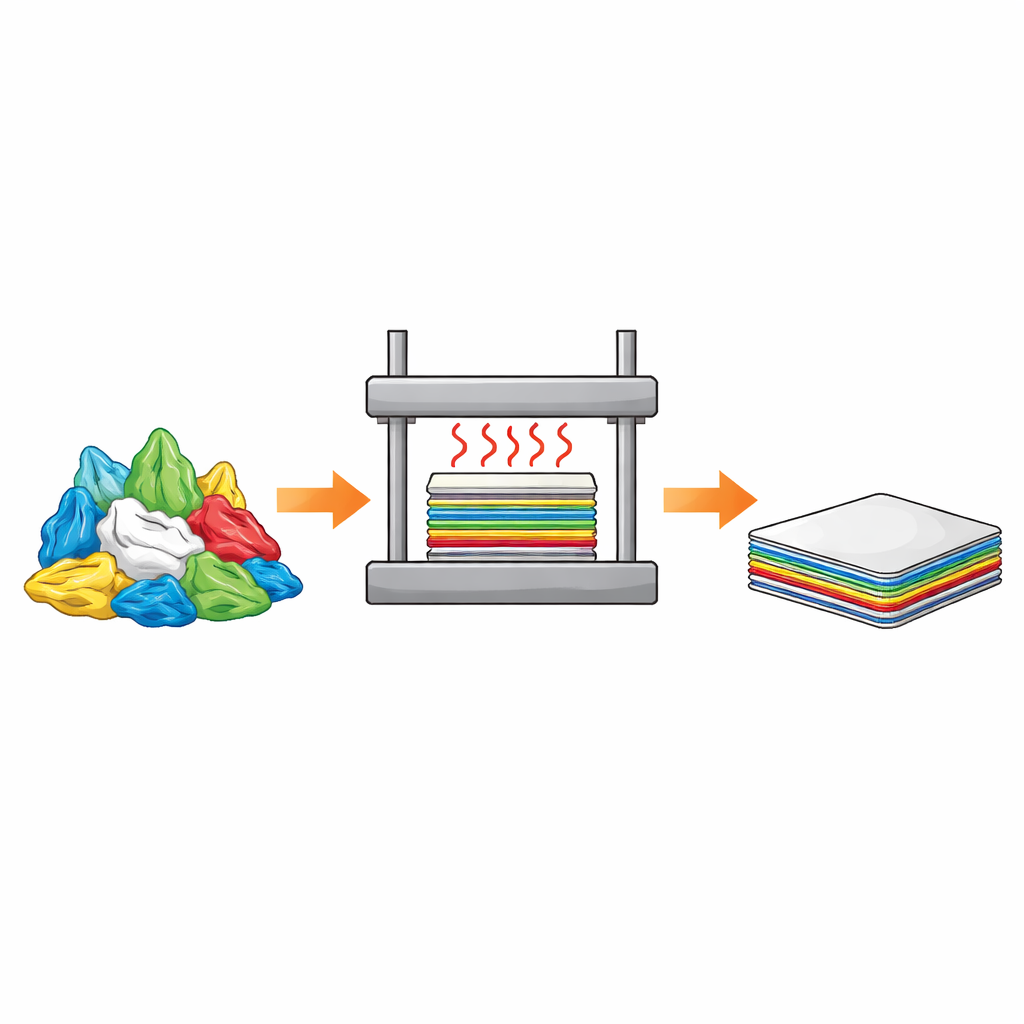
Most of us handle plastic bags every day, then toss them after a single use. These thin films add up to a mounting environmental burden, yet are often too flimsy or dirty to recycle through conventional routes. This study explores a surprisingly simple idea: instead of melting waste bags down into pellets, what if we just flatten and fuse them into sturdy plastic sheets using heat and pressure? The researchers show that a basic hot press can transform discarded polyethylene bags into smooth, water-repellent laminates, offering a low-energy way to give this common waste a second life.
Why Everyday Plastics Are Hard to Reuse
Polyethylene, the plastic used in most shopping and courier bags, is popular because it is light, tough, and resistant to weather. Those same traits make it slow to break down in the environment and challenging to recycle cleanly. Industrial recycling lines usually shred, melt, pelletize, and re-extrude the material, exposing it to multiple rounds of high heat that can gradually damage its structure. Mixed waste streams, inconsistent processing, and add-on coatings further complicate quality control. As a result, much plastic film waste ends up in low-value products or is not recycled at all. The authors argue that skipping the pellet-making steps and directly consolidating films into sheets could simplify the process and improve material consistency.
Pressing Waste into New Form
The team collected used bags from delivery stations, parks, and beaches, sorted them into low-density polyethylene (LDPE), high-density polyethylene (HDPE), and polypropylene-based composites, then cleaned and stacked the films. Using a flat hot press—essentially two heated plates that clamp together—they systematically varied temperature, pressure, pressing time, and starting thickness. They found that LDPE, the soft, crinkly material familiar from many shopping bags, formed continuous, flat sheets at relatively low temperatures around 120–130 °C and modest pressure. HDPE also consolidated, but needed slightly higher temperatures. In contrast, polypropylene-containing films did not fuse into continuous laminates within the same temperature range, reflecting their different melting behavior and compatibility.
How the Surface Quietly Transforms
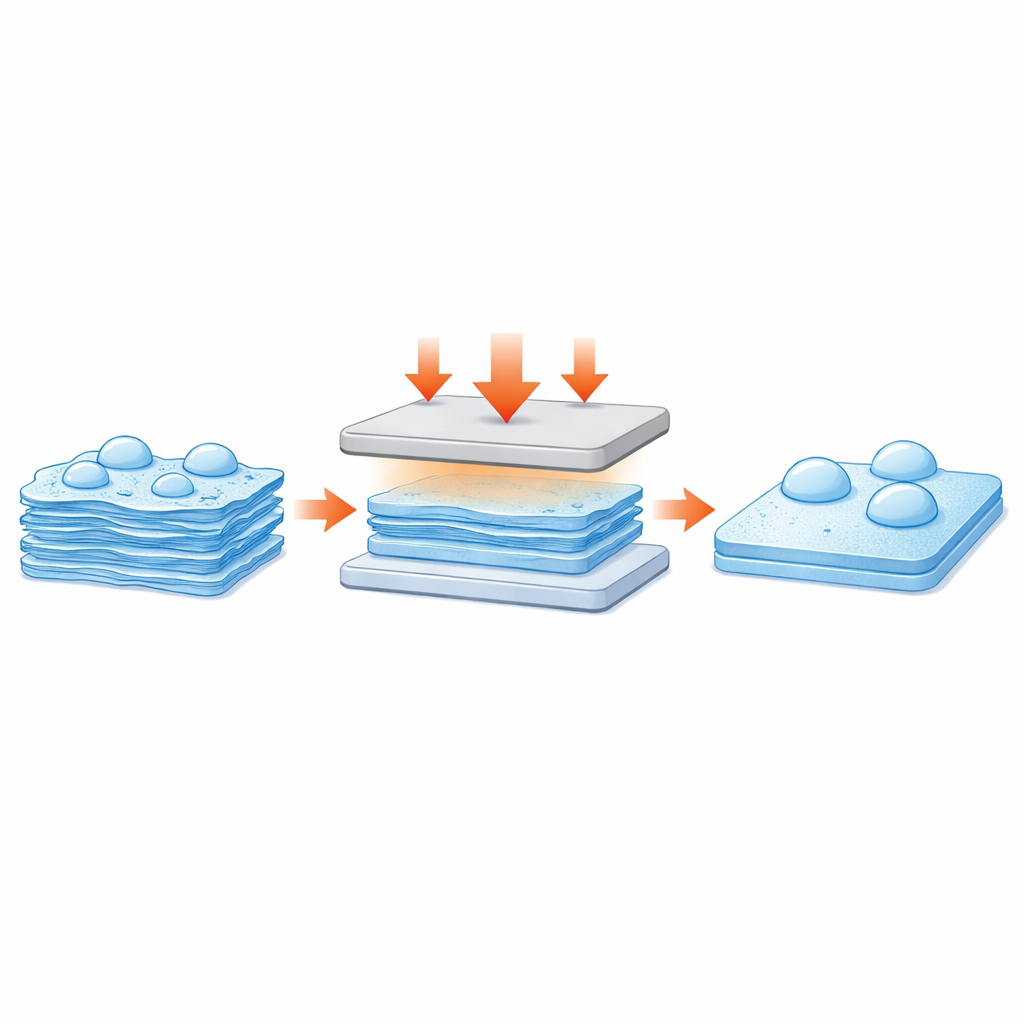
Beyond simply making solid sheets, the hot pressing changed the way the plastic surfaces interacted with water and other liquids. The researchers measured the contact angle of water droplets on the plastic before and after pressing. While the numerical increase was modest, droplets sat a bit more upright on the pressed sheets, signifying lower wettability. Friction tests showed a much larger shift: the surfaces became significantly smoother to the touch, with the resistance to sliding dropping by roughly half or more. Microscopic images revealed that pressing created a more continuous, slightly roughened microtexture, which can enhance apparent water repellence without any added coatings. At the same time, elemental mapping confirmed that the overall chemical makeup at the surface remained essentially unchanged, suggesting that the improvements stem from physical reshaping rather than new substances.
From Waste Piles to Practical Panels
To see whether these upcycled laminates might hold together in real use, the authors performed simple peeling and tear tests on stacks combining LDPE and HDPE layers. The specimens resisted abrupt delamination under the tested conditions, indicating that the fused layers behaved as a single sheet during loading, even though a full structural assessment was beyond the scope of this work. The pressed materials also showed resistance to staining: droplets of tea, milk, and cooking oil beaded on the surface, left little residue, and could be wiped away easily. These traits point toward practical uses where low wettability and easy cleaning matter, such as liners, table mats, outdoor panels, or non-load-bearing building elements made directly from local plastic film waste.
Simple Tools for a More Circular Future
In plain terms, this study shows that a heat press—equipment already common in small workshops, makerspaces, and some schools—can turn piles of discarded polyethylene bags into functional, smoother, and somewhat more water-repellent sheets without extra chemicals. By tuning temperature and pressure, waste LDPE and HDPE can be reliably flattened and fused, offering a straightforward upcycling route that avoids the complexity of conventional recycling or chemical processing. While more work is needed to fully characterize long-term durability and performance in demanding applications, the approach demonstrates how modest technology and careful parameter control can help close the loop on everyday plastics and support more circular, locally managed material flows.
Citation: Cheng, D., Yan, WJ. Controlled hot pressing for functional upcycling of waste polyethylene materials. Sci Rep 16, 12003 (2026). https://doi.org/10.1038/s41598-026-42655-0
Keywords: plastic upcycling, polyethylene film, hot pressing, recycled laminates, circular materials