Clear Sky Science · en
Explainable deep learning for early diagnosis of chronic kidney disease from CT images in Bangladeshi patients
Spotting Silent Kidney Trouble Sooner
Chronic kidney disease often creeps in without obvious warning signs until the kidneys are badly damaged. In Bangladesh and many other countries, doctors face rising numbers of patients while working with limited time, equipment, and specialists. This study explores how computer analysis of CT scans can help doctors spot early kidney problems more quickly and consistently, while also showing clearly what the computer has found inside the image.
Why Kidney Health Matters
The kidneys act as the body’s natural filters, clearing waste and balancing water and salts in our blood. When they slowly lose this ability, people develop chronic kidney disease, which can progress to complete kidney failure. Worldwide, kidney disease affects around one in ten people and causes more than a million deaths each year. In Bangladesh, thousands die annually because their disease is discovered too late or because advanced treatment is out of reach. Earlier, more reliable detection from routine scans could help doctors start treatment sooner and prevent some patients from reaching this life-threatening stage.
Turning CT Scans into Clear Kidney Outlines
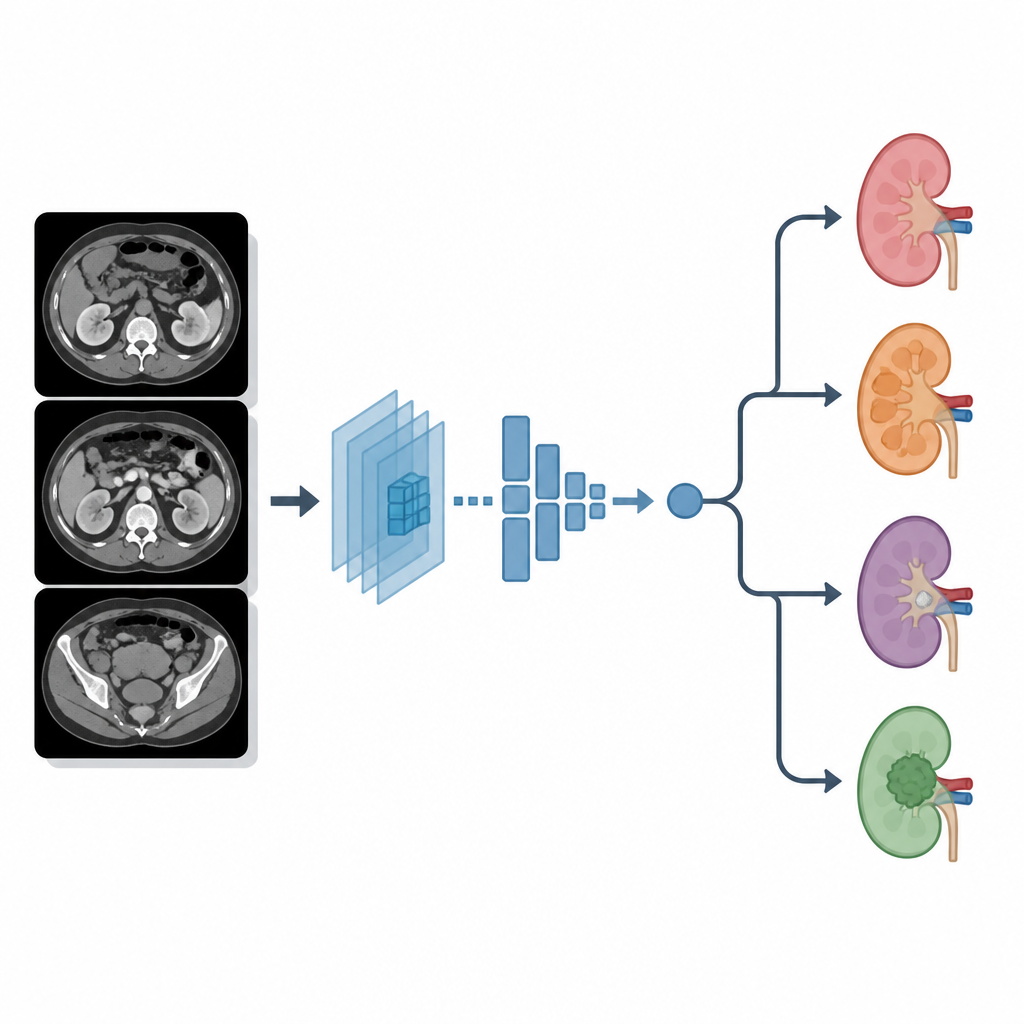
CT scans already show doctors detailed cross sections of the body, but reading each image by eye is time consuming and can be challenging when features are faint. The researchers built a computer program that first finds and outlines the kidneys in each scan, a task known as segmentation. They improved a well-known image model so it could better follow the subtle edges of the kidney, even when the organ shape is irregular or contrast is low. On hundreds of labeled scans, this model matched expert-drawn kidney shapes with very high agreement, meaning it can reliably separate the kidneys from surrounding tissues and focus attention where it matters.
Sorting Kidney Images into Disease Types
Once the kidneys are isolated, the next step is to decide whether they look healthy or show signs of common problems such as cysts, stones, or tumors. For this, the team designed a compact classification tool called Kid-Net. It learns patterns from thousands of CT images taken in Bangladeshi hospitals, including both normal and diseased kidneys. Despite being smaller and faster than many existing systems, Kid-Net correctly distinguished between the four conditions in almost all cases during testing and cross-checking. This balance between accuracy and speed makes the method more practical for busy clinics and hospitals that may not have powerful computers.
Making Computer Decisions Visible to Doctors
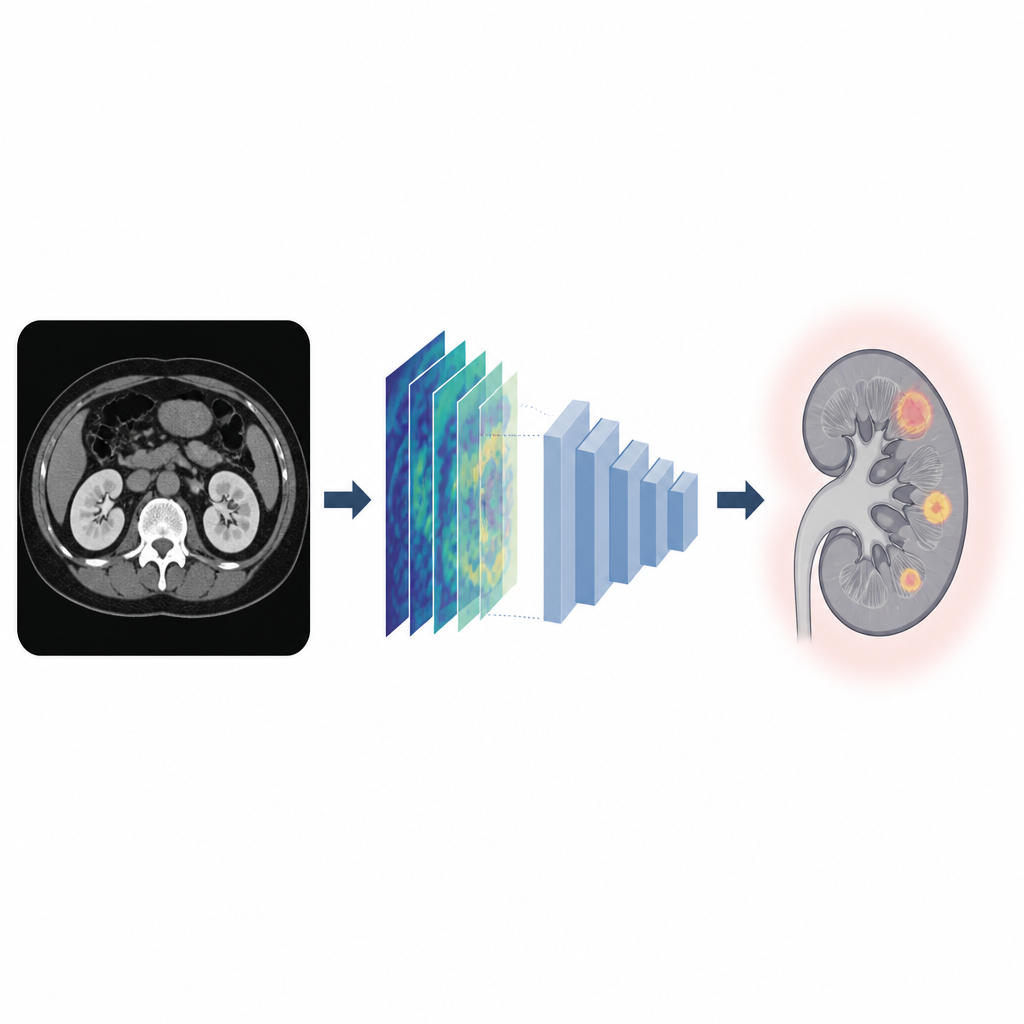
Many powerful computer models act like black boxes, offering answers without showing how they reached them. To build trust and support careful medical judgment, the authors added an explanation step using a technique that produces heat-like maps over the CT image. These colored maps highlight the exact regions that influenced the computer’s decision, such as a bright spot at the site of a stone or an area of abnormal tissue suggesting a tumor. This helps doctors see whether the system is focusing on meaningful kidney structures rather than irrelevant background, and encourages them to use the tool as a partner rather than a replacement.
From Research Tool to Clinic Helper
Together, the improved kidney outlining, smart disease sorting, and visual explanations form a single pipeline the authors call KidVision. In a future clinic, a CT scan could be fed through this pipeline to automatically sketch the kidneys, flag likely cysts, stones, or tumors, and overlay a visual guide for the radiologist. While the study mainly uses data from Bangladeshi patients and still needs testing across more hospitals and scan types, it shows that such a system can be both accurate and understandable. For patients, that could mean earlier detection of kidney trouble and clearer conversations about what their images actually show.
Citation: Jahan, F., Reza, A.S., Morol, M. et al. Explainable deep learning for early diagnosis of chronic kidney disease from CT images in Bangladeshi patients. Sci Rep 16, 14819 (2026). https://doi.org/10.1038/s41598-026-42654-1
Keywords: chronic kidney disease, CT imaging, deep learning, medical AI, Bangladesh