Clear Sky Science · en
Cold microwave plasma jets for wound healing: antimicrobial efficacy, mechanisms and changes in microbial cells
Why zapping wounds with cold gas matters
Open wounds are often slow to heal because they become home to stubborn germs, some of which no longer respond to antibiotics. Doctors urgently need new ways to clean these wounds without harming the surrounding skin. This study investigates a surprising helper: "cold" microwave plasma jets – streams of energized gas that feel only mildly warm but are packed with reactive molecules that can kill microbes. The researchers tested how well these jets disinfect common wound‑related microbes and what happens to the microbial cells under this unusual treatment.
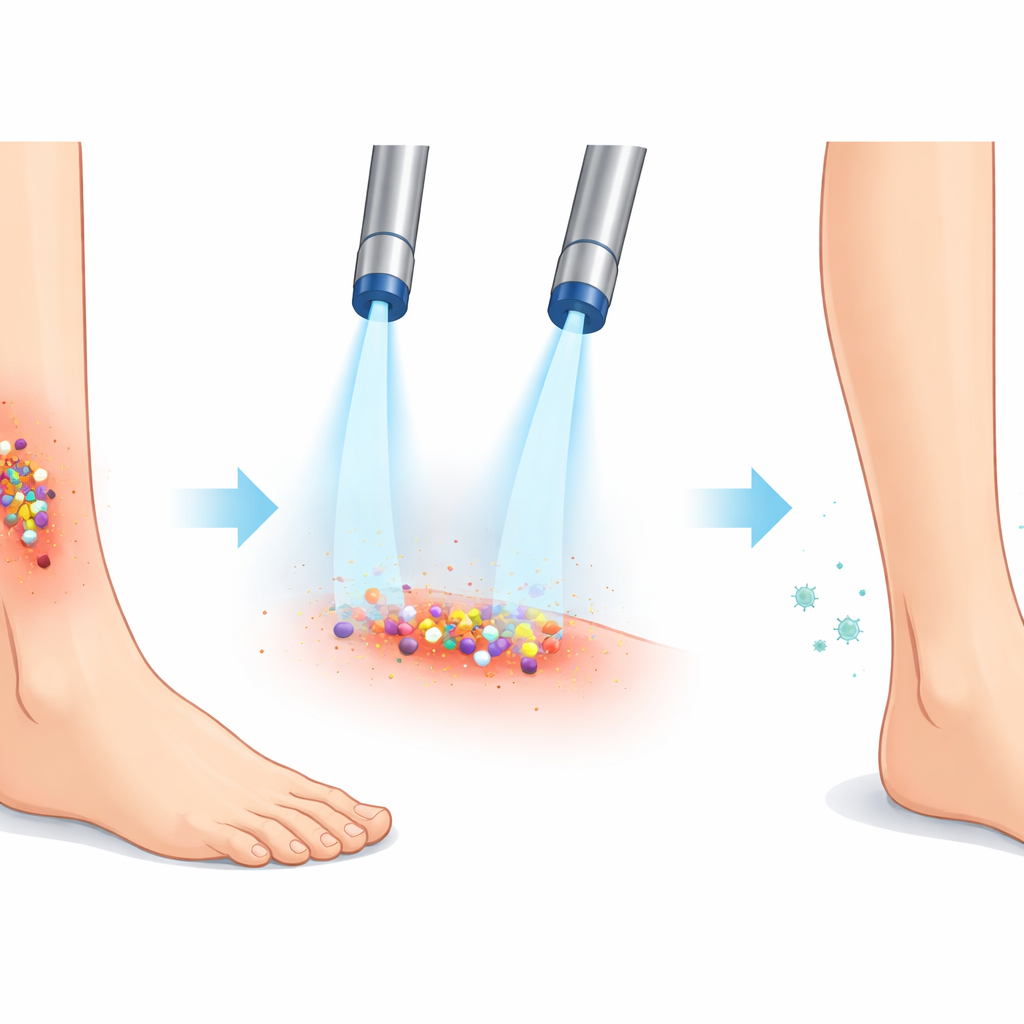
A new way to clean hard‑to‑heal wounds
Cold atmospheric plasma is a partially ionized gas at room‑like temperatures, so it does not burn tissue. When generated from argon gas by microwave power, it produces a cocktail of short‑lived reactive oxygen and nitrogen species (collectively called RONS), along with light and charged particles. Earlier medical devices have mostly used other electrical setups; here, the team focused on two microwave jets, named Surfayok and Surfatron. They tested these jets against four microbes linked to skin and chronic wounds: the bacteria Escherichia coli, Staphylococcus epidermidis and Cutibacterium acnes, and the yeast Nakaseomyces glabratus. The key question was whether these sources could reliably kill microbes fast enough while remaining gentle enough for living tissue.
How the plasma treatment was put to the test
Microbes were spread on agar plates that mimic a moist wound surface. The plasma jets were applied either in a static mode, where the plume stayed fixed over one spot, or in a scanning mode, where the jet swept across the whole plate like a paintbrush. Treatment times ranged from half a minute to several minutes, and the team compared open exposure to air with a partially enclosed setup under a plastic lid. They also created agar plates containing special dyes that change color when attacked by certain reactive molecules. By pairing these "chemical sensor" plates with standard microbial tests, they could link visible color patterns to where the plasma’s reactive species were actually hitting the surface.
Reacting molecules, not light, do the real work
Both microwave jets significantly reduced microbial growth, with clear zones where colonies failed to grow appearing after as little as 30 seconds. The Surfayok jet, especially in scanning mode, was the most versatile, effectively treating larger areas and performing well even in more confined spaces. The color‑changing biopolymers revealed that different jets produced different mixes and spread patterns of reactive molecules, including ozone and various nitrogen‑containing species. Crucially, when a UV‑transparent glass plate was used to block particles and chemicals while allowing ultraviolet light through, there was little or no effect on microbes or dyes. This showed that the germ‑killing power comes mainly from the reactive molecules created in the plasma, not from ultraviolet radiation or heat.
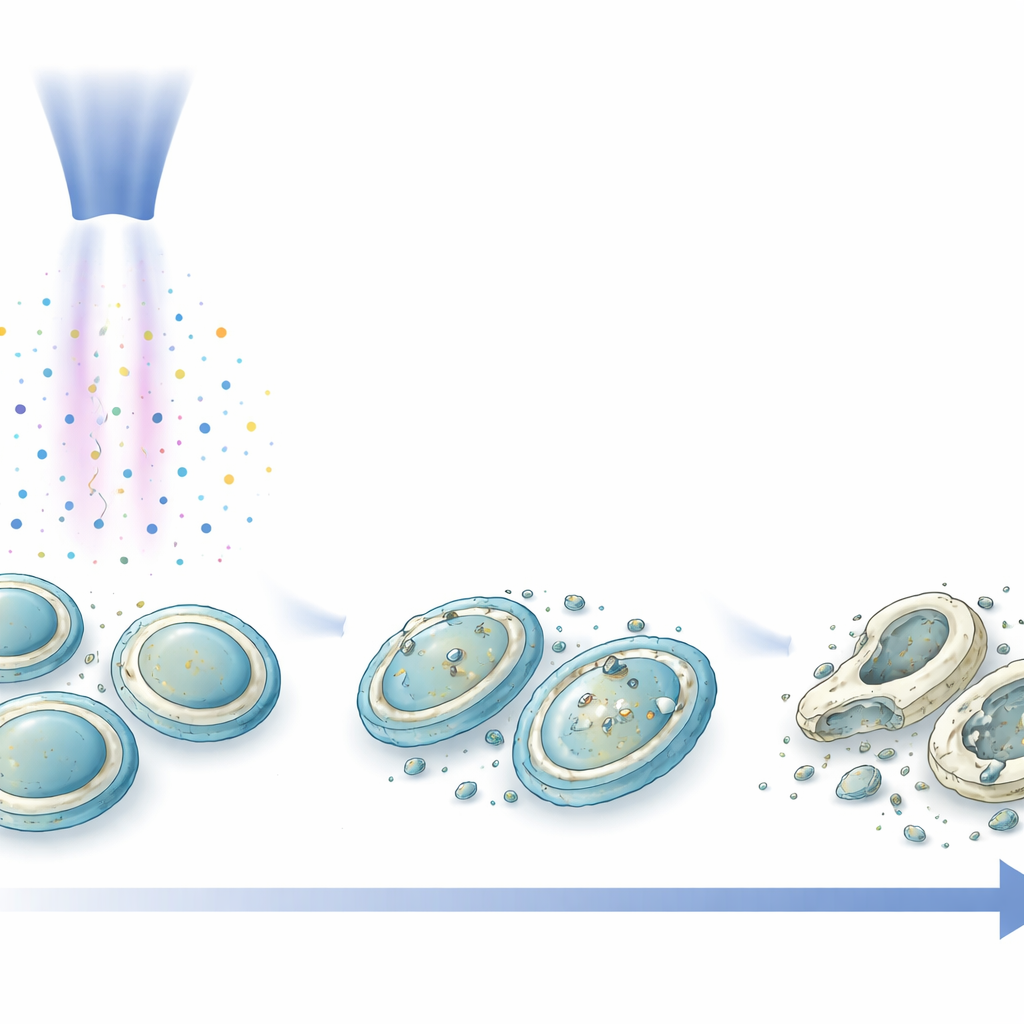
What happens inside a microbe under plasma
To see the damage up close, the researchers used scanning and transmission electron microscopes to image the yeast N. glabratus after different treatment times. They observed a stepwise progression: early on, cells shrank slightly and their surfaces became rougher. With longer exposure, the sturdy cell wall thinned and developed small holes, the inner membrane pulled away from the wall, and the cell’s contents began to clump and leak out. Inside, large storage structures called vacuoles swelled, and numerous tiny vesicles budded off, likely part of the cell’s attempt to cope with oxidative stress. After several minutes, many cells were reduced to hollow "ghosts" – empty shells surrounded by spilled, aggregated material, evidence that the microbes had been fatally compromised.
From lab plates to future bedside tools
Overall, the study shows that low‑power microwave plasma jets can quickly inactivate a broad range of wound‑related microbes without relying on heat or harsh chemicals. Their main weapons are bursts of reactive molecules that erode microbial walls, disrupt membranes, and ultimately cause the cells to collapse and leak. The Surfayok jet, used in a sweeping motion, appears especially promising for treating larger or irregular wound surfaces while keeping temperatures safe for skin. While more work is needed to confirm long‑term safety in human tissue, these findings support the idea that compact, handheld plasma devices could one day join the clinical toolkit as a fast, non‑antibiotic way to clean and help heal difficult wounds.
Citation: Trebulová, K., Loupová, V., Chobotská, B. et al. Cold microwave plasma jets for wound healing: antimicrobial efficacy, mechanisms and changes in microbial cells. Sci Rep 16, 12339 (2026). https://doi.org/10.1038/s41598-026-42650-5
Keywords: wound healing, cold plasma therapy, antimicrobial resistance, microwave plasma jets, reactive oxygen species