Clear Sky Science · en
A proof of concept study on the diagnostic utility of in vivo expressed mycobacterial transcripts in tuberculous pleuritis
Why this matters for people with chest infections
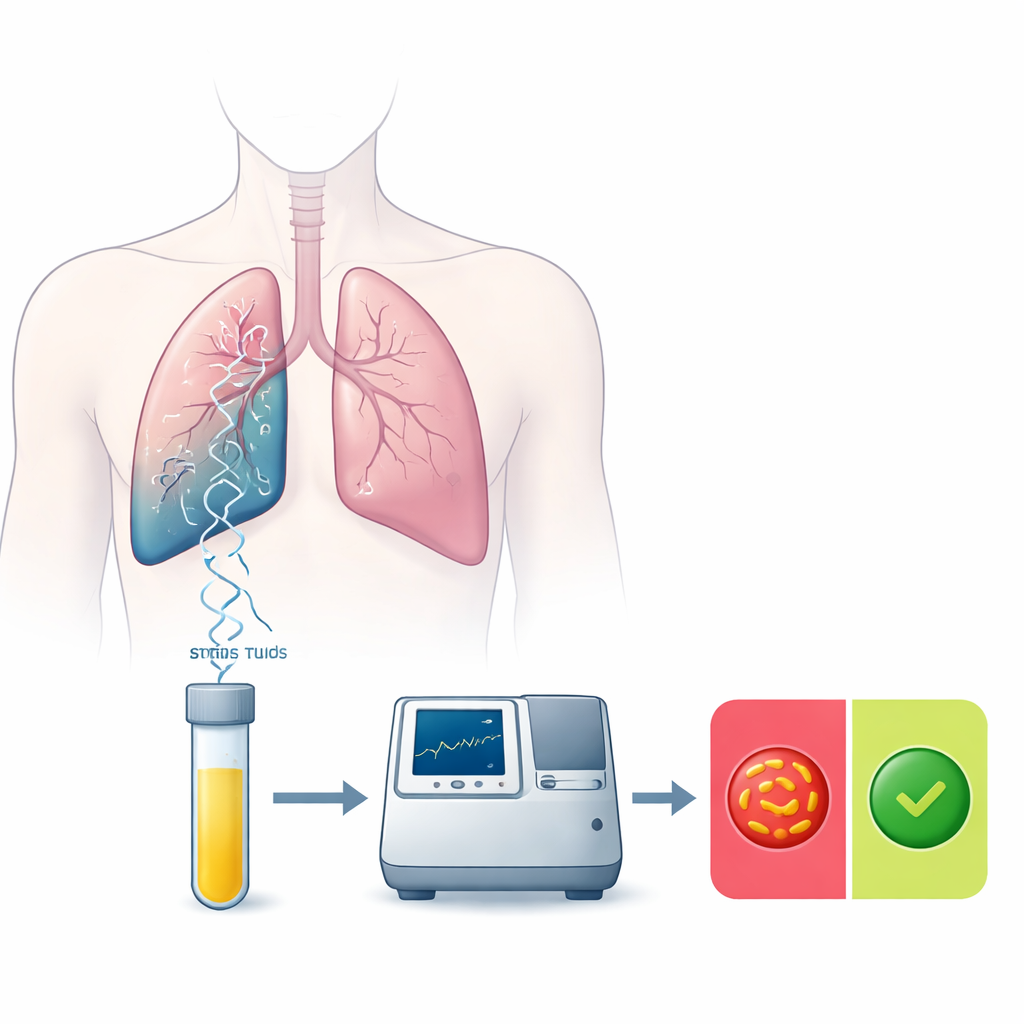
Tuberculosis is usually thought of as a lung disease, but it can also inflame the thin lining around the lungs, filling the chest with fluid and causing pain and breathlessness. Diagnosing this form, called tuberculous pleuritis, often requires taking a piece of tissue from inside the chest—a stressful and invasive procedure. This study explores whether traces of the tuberculosis germ’s genetic messages in chest fluid could offer a simpler, more accurate way to detect the disease.
The challenge of spotting TB in chest fluid
When tuberculosis reaches the pleural space, the number of bacteria in the fluid is usually very low. Standard tests that look for whole bacteria under the microscope or try to grow them in the lab often miss the infection. More modern tests, including ones that detect bacterial DNA or measure immune chemicals like interferon gamma and adenosine deaminase, can help but still give many unclear or false results. Crucially, DNA-based tests cannot distinguish between live and dead germs, which means people who were treated for tuberculosis in the past may still test positive even if they are now cured.
Listening to the germ’s live messages
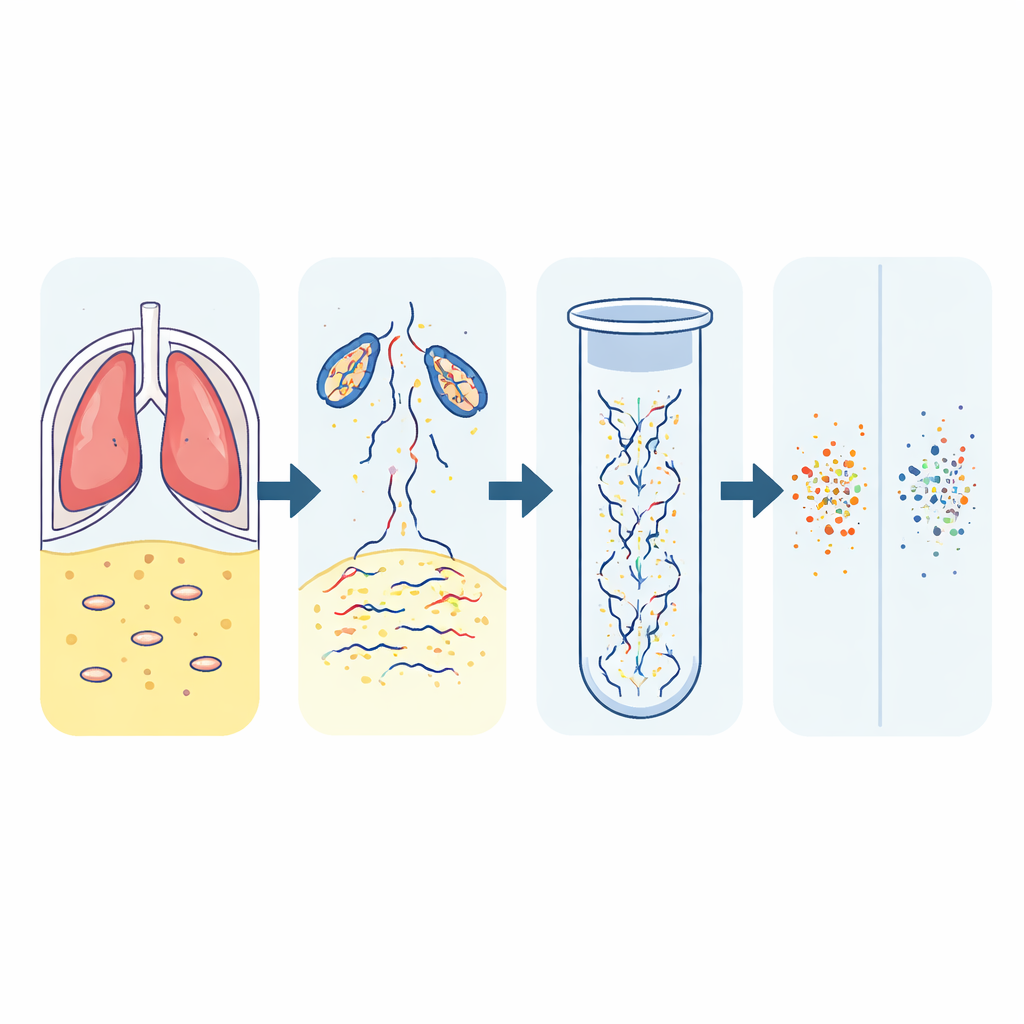
The researchers reasoned that instead of looking for dead remnants, doctors might do better by listening for the live germ’s “voice”—its RNA messages. RNA molecules are short-lived instruction strands that bacteria produce while they are actively growing and adapting inside the body. The team collected small tissue samples (biopsies) from the pleural lining of patients with confirmed tuberculous pleuritis and compared the pattern of tuberculosis RNA in these samples with that of the same strain grown in the lab. Using a whole-genome microarray, they found 1,856 genes whose activity was different in the patients, with far more genes turned up than turned down. Many of the highly active genes were involved in breaking down fats and cholesterol and in families of proteins linked to how the germ clings to and evades the human immune system.
From long gene lists to practical test targets
From this large catalog of gene activity, the team selected ten genes to double-check using a more precise method called real-time PCR on biopsy samples. Six of these confirmed the original pattern, including three that were especially strongly switched on. Two of the most active genes, known by their laboratory codes Rv1586c and Rv2819c, were chosen as the best candidates for a simple diagnostic test. The idea was that if these RNA messages could also be detected directly in pleural fluid, they might serve as a reliable sign that live tuberculosis bacteria were present at the site of disease.
Testing the new RNA signal in real patients
The investigators then moved from tissue to fluid. They studied pleural fluid from 216 people with suspected tuberculous pleuritis, dividing them into true TB cases and non-TB cases using a combination of clinical judgment, imaging, standard lab tests, and response to treatment. In an initial development group, each of the two RNA markers on its own correctly identified 60–70 percent of TB cases while remaining negative in most non-TB patients. When they counted a sample as positive if either RNA signal was present, sensitivity improved to 90 percent with only a small drop in specificity. In a larger, blinded validation group, this “either-or” rule allowed the RNA test to detect about 80 percent of true TB cases and correctly reassure over 93 percent of non-TB patients, performing better than existing pleural fluid tests in terms of sensitivity.
What this could mean for future care
This proof-of-concept work shows that live tuberculosis bacteria in the pleural space leave a distinctive RNA fingerprint, and that two of these RNA messages can be detected in chest fluid with reasonable accuracy. For patients, this approach could reduce the need for invasive biopsies and offer a test that focuses on live germs rather than leftover DNA. The study is still an early step, based on a limited number of discovery samples, and the markers will need to be checked in wider groups of patients, including those with other infections and cancers. But it points toward a future in which a simple fluid test, guided by the germ’s own active signals, could help doctors diagnose this serious form of tuberculosis more quickly and safely.
Citation: Kaur, P., Sharma, S., Abhishek, S. et al. A proof of concept study on the diagnostic utility of in vivo expressed mycobacterial transcripts in tuberculous pleuritis. Sci Rep 16, 12478 (2026). https://doi.org/10.1038/s41598-026-42637-2
Keywords: tuberculous pleuritis, tuberculosis diagnosis, RNA biomarkers, pleural effusion, molecular testing