Clear Sky Science · en
Soil chemical and biological responses to a sparse, early-stage black-legged kittiwake (Rissa tridactyla) colony in the Arctic mining settlement Pyramiden (Svalbard)
Birds Turning a Ghost Town into a Hotspot
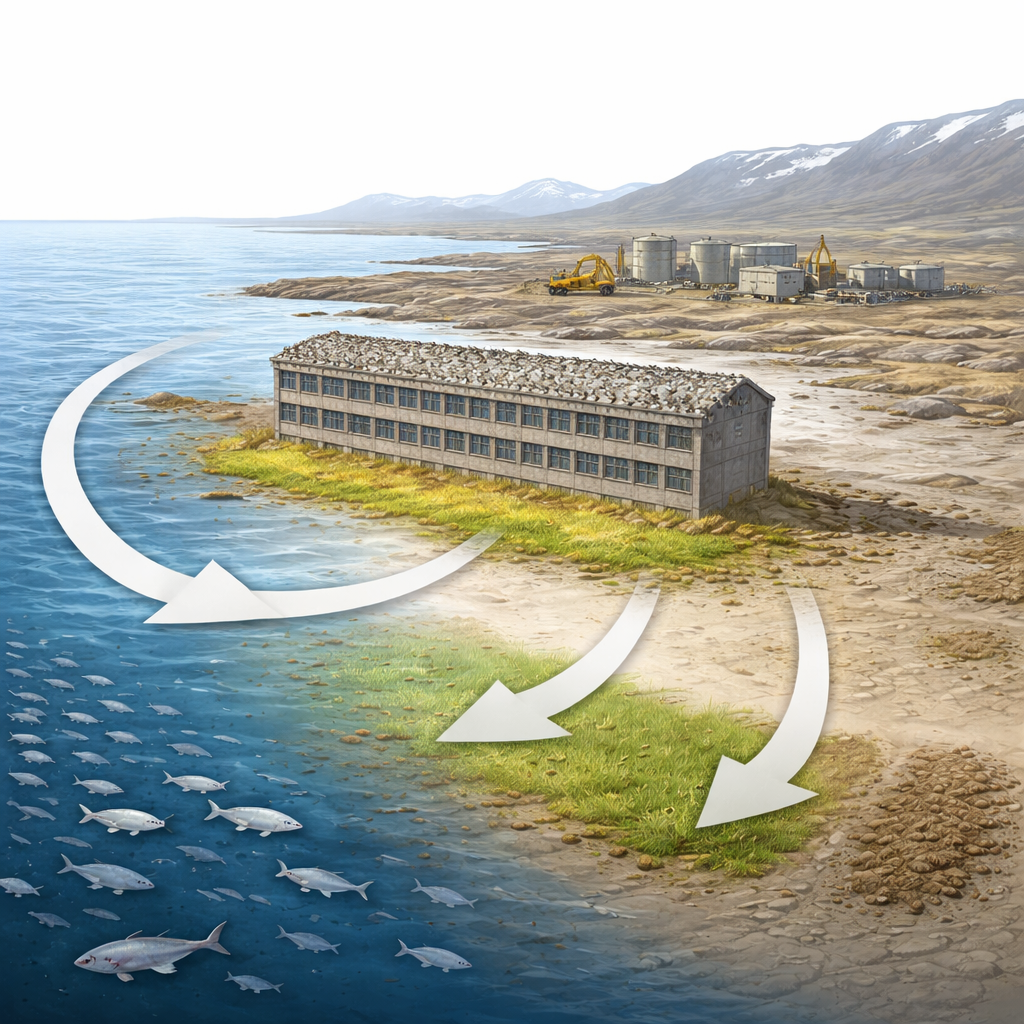
In the high Arctic mining settlement of Pyramiden, an abandoned Soviet-era town on Svalbard, hundreds of black-legged kittiwakes have taken over the windowsills of a long empty apartment block. Their presence is more than a curiosity for tourists: the birds’ droppings are quietly transforming the soil beneath them. This study explores how a relatively small, young seabird colony can reshape the chemistry and tiny animal life of nearby ground in one of the planet’s harshest environments.
Why Arctic Soils Need a Helping Hand
Arctic land is normally poor in nutrients and life. Long, dark winters, frozen ground and little direct pollution keep productivity low and food webs simple. Yet seabirds act as natural cargo ships, flying nutrients and contaminants from the ocean onto land through their guano. Around Svalbard, millions of seabirds enrich patches of tundra, turning them into green, biologically rich oases. Pyramiden is different: here, a colony of about 380 kittiwake nests sits on a man-made building, within a landscape already marked by past coal mining and low-level contamination. The researchers wanted to know how far this new colony’s influence reaches and how it interacts with the town’s human legacy.
Measuring Change from the Wall Outward
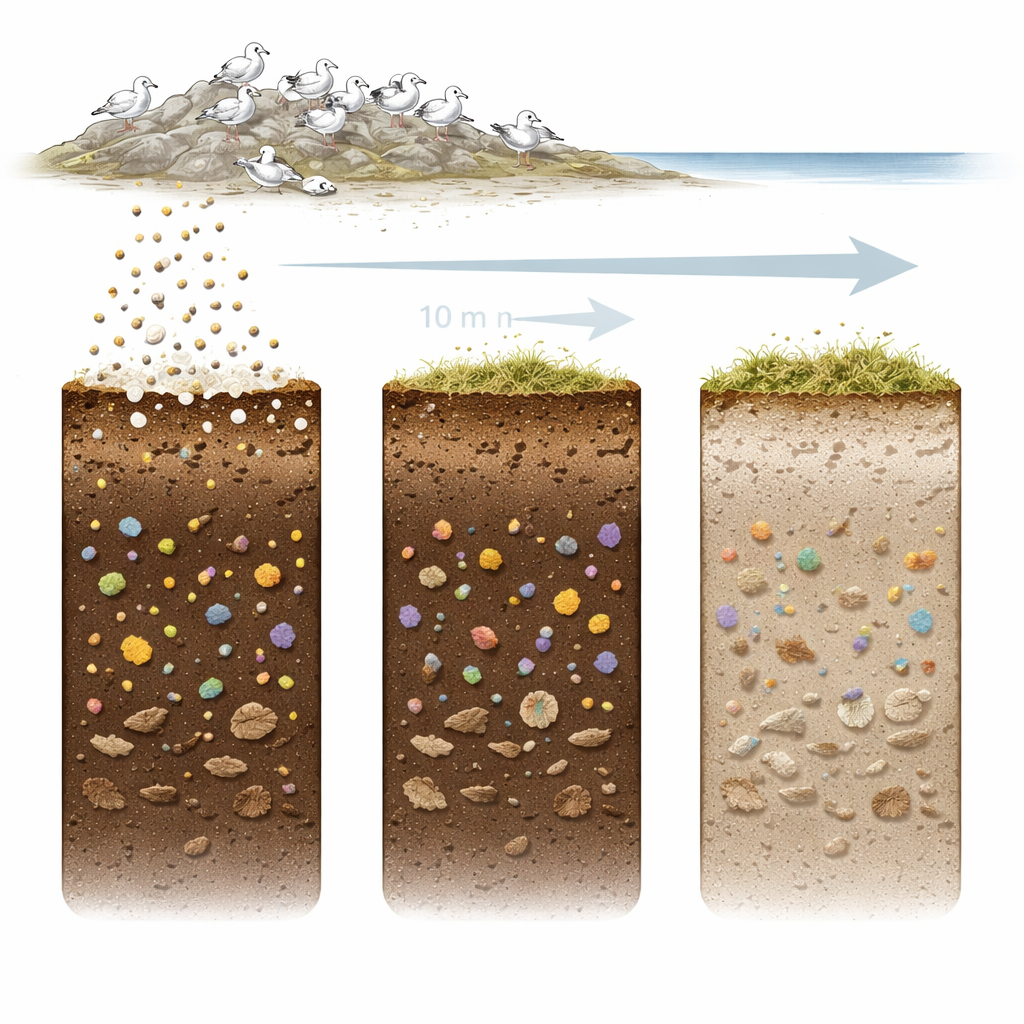
To answer these questions, the team sampled soil along three straight lines extending away from the kittiwake building. At each line they collected soil right next to the wall, and again 10 and 20 meters away. They examined the soil’s acidity, carbon, nitrogen, phosphorus and many trace metals, and compared these measurements with typical values from nearby tundra. At the same locations they painstakingly extracted three groups of tiny invertebrates—mites, springtails and water bears (tardigrades)—to see how these animals responded to the changing conditions. Statistical tools then helped them tease apart how much of the variation in soil life could be traced to distance from the birds, and how much to specific chemical factors.
Sharp but Local Shifts in the Ground
The ground directly beneath the colony proved to be a chemical hotspot. Here the soil was more acidic and contained far more organic matter, nitrogen and phosphorus than soil only a short distance away, in some cases many times higher than in untouched tundra. This enriched patch also held elevated levels of metals such as cadmium, copper, chromium, lead, zinc and arsenic, partly locked up in the organic-rich surface. Just 10 meters from the building, most nutrient and metal levels had already dropped towards background values, and by 20 meters they were largely indistinguishable from ordinary Arctic soil. The flat terrain and very low rainfall in Pyramiden seem to trap most bird-derived material right under the nests, preventing it from washing laterally across the landscape.
Tiny Creatures, Mixed Responses
The soil’s miniature residents did not all react the same way. Some mites, including mobile predators and specialized hitchhiking forms, were most abundant in the guano-rich zone beneath the colony, perhaps tracking prey or microbes that thrive in the nutrient pulse. Other mite groups peaked at intermediate distances, while a spectacular population of one tiny prostigmatic mite reached extremely high numbers in the most distant, relatively undisturbed soil. Springtails, important decomposers in Arctic moss and litter, tended to be more numerous near the colony, but the differences were not strong enough to be statistically firm. By contrast, tardigrades were scarce and less diverse under the colony and became more abundant and species‑rich farther away. The authors suggest that soil acidification, rather than nutrients alone, may make life harder for these famously hardy “water bears.”
What This Arctic Experiment Tells Us
By comparing soil chemistry and invertebrate communities along these short transects, the researchers found that simple distance from the bird colony captures most of the ecological story. Moving away from the building means moving along a steep gradient in guano input, acidity and metal load, and the tiny soil animals rearrange themselves along this gradient in taxon‑specific ways. For a general reader, the key message is that even a modest seabird colony perched on a disused human structure can create a powerful but very localized hotspot of change—concentrating marine nutrients and pollutants in a narrow band of soil, reshuffling who lives there, and yet leaving the wider Arctic landscape largely untouched just a few steps away.
Citation: Klimaszyk, P., Magowski, W., Kaczmarek, Ł. et al. Soil chemical and biological responses to a sparse, early-stage black-legged kittiwake (Rissa tridactyla) colony in the Arctic mining settlement Pyramiden (Svalbard). Sci Rep 16, 11648 (2026). https://doi.org/10.1038/s41598-026-42627-4
Keywords: Arctic seabirds, soil chemistry, kittiwake colony, soil invertebrates, Svalbard