Clear Sky Science · en
Smart wastewater management in hydro-technical systems using digital twin technology
Why Smarter Sewers Matter
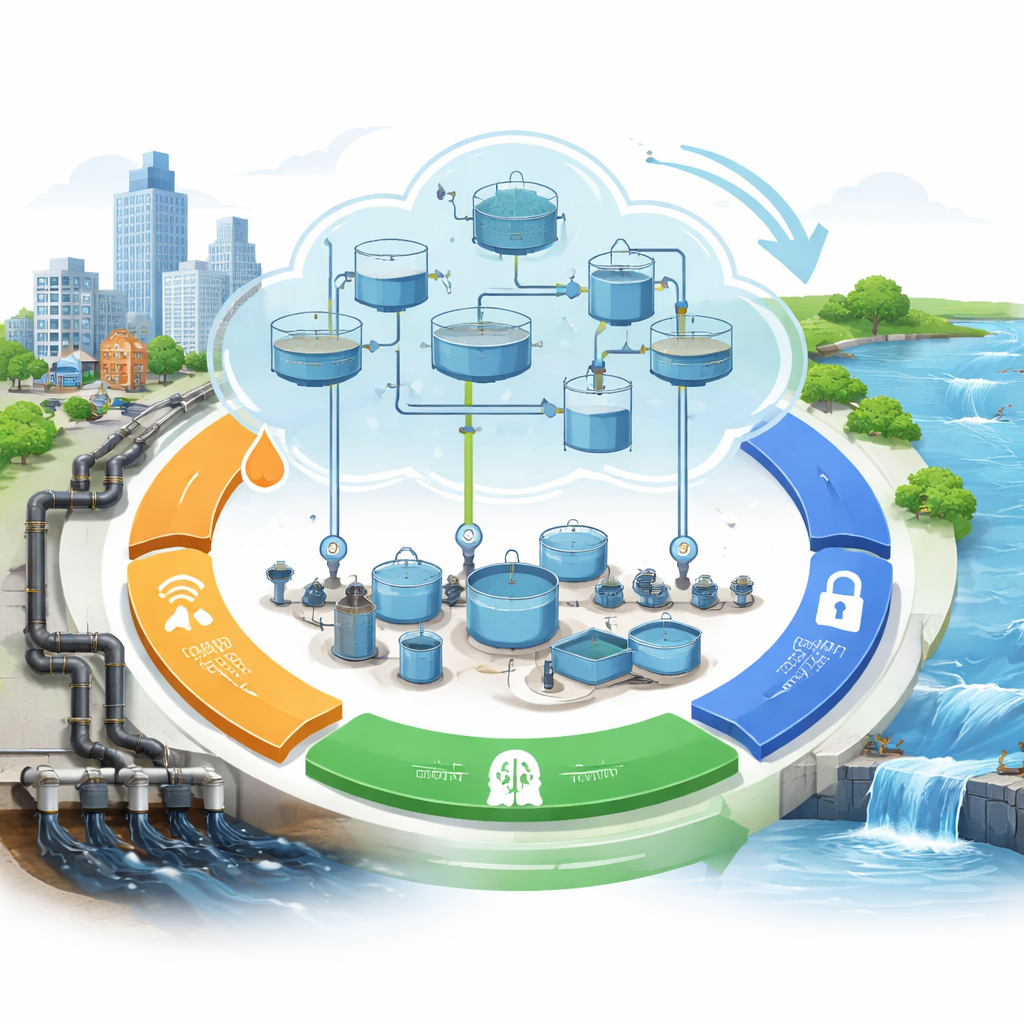
Flush a toilet, drain a sink, or weather a heavy storm, and an unseen network of pipes and treatment plants jumps into action. As cities grow and weather patterns become less predictable, these wastewater systems are pushed closer to their limits, risking floods of untreated water, higher energy bills, and damage to rivers and lakes. This study explores how a new combination of virtual models, smart sensors, and secure data sharing can turn traditional sewers into intelligent, self-aware infrastructures that anticipate problems before they spill over into the environment.
Bringing the Underground Network to Life
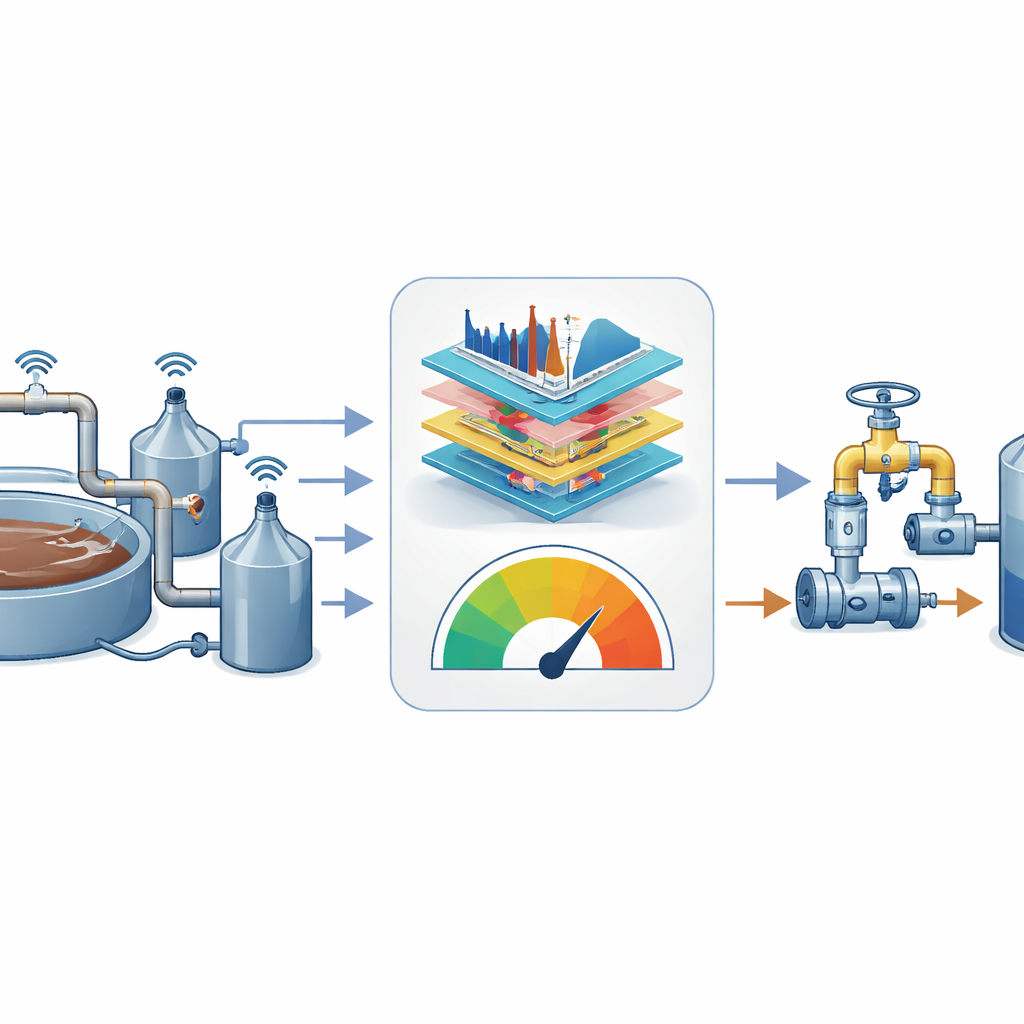
At the heart of the work is a concept called a “digital twin” – a live, virtual copy of the physical wastewater network. Sensors installed in pipes, tanks, and treatment units measure flow, water levels, temperature, and other conditions in real time. These readings stream into computer models that mimic how water moves and how treatment units respond, creating a constantly updated picture of the system’s health. Unlike static engineering diagrams, this twin is designed to run alongside the real network, reflecting changes as they happen and supporting day-to-day operational decisions.
Mixing Physics, Data, and Fuzzy Logic
The digital twin in this study blends classical engineering with modern artificial intelligence. A hydraulic simulator known as EPANET reproduces how water flows through pipes and how levels rise in storage basins under different conditions, including surges from storms or industrial discharges. On top of this, the authors add a neuro‑fuzzy model, a kind of intelligent rule system that can learn from data while still expressing its reasoning in human‑readable terms such as “high inflow plus high water level means high risk.” This model condenses many variables into a single Wastewater Risk Index, a score that signals whether the system is operating comfortably or edging toward overload or pollution events.
Keeping Virtual and Real Systems in Sync
To be useful in the control room, the twin’s predictions must closely track reality. The paper lays out mathematical routines that align sensor data arriving at different speeds—say, every 15 minutes for flow readings and every 30 minutes for weather measurements—onto a common timeline. The virtual model is regularly compared with what sensors actually report, and any growing mismatch is corrected before it drifts too far. This creates a closed loop: the physical system feeds the twin with fresh data, the twin forecasts risks and suggests responses, and those responses feed back into plant operations, which in turn generate new data for the twin.
Adding Trust with a Shared Digital Ledger
Because wastewater plants involve multiple stakeholders—operators, city authorities, and regulators—the authors also address who can trust the twin’s alerts and historical records. They use a consortium blockchain, a shared digital ledger that stores compact, tamper‑evident summaries of key events such as high‑risk warnings. Rather than clogging this ledger with raw sensor data, the system stores cryptographic fingerprints and essential metadata, so that later audits can confirm that an alert was based on specific, unaltered measurements. Importantly, these security steps run in parallel with, not in front of, the real‑time control logic, so they do not slow down urgent operational decisions.
How Well the Smart System Performs
The researchers tested their framework using more than 80,000 real measurements from wastewater treatment plants and national weather stations in Kazakhstan. They evaluated how quickly the twin could process incoming data into actionable insights, how closely the virtual states matched the physical ones over time, and how accurately the system flagged abnormal operating conditions. In these trials, the time from data capture to recommended action was on the order of 10 seconds, which is fast enough for supervisory control decisions. The twin’s risk predictions outperformed traditional rule‑based simulators and several common machine‑learning methods, achieving high precision and sensitivity while keeping false alarms low. Forecasts of future plant behavior showed strong agreement with observed patterns, even under the natural variability of real‑world inflows and weather.
What This Means for Everyday Life
For non‑specialists, the main takeaway is that wastewater systems can move from reactive to proactive management. By maintaining a live virtual copy of the network, learning how it behaves under stress, and securing its digital records, utilities can spot rising risks earlier, balance loads across treatment units, and document their actions transparently. Put simply, the study shows that pairing digital twins with intelligent risk scoring and secure logging can help cities keep sewage out of streets and waterways, use resources more efficiently, and better withstand the shocks of storms and growth without needing to rebuild everything from scratch.
Citation: Ahanger, T.A., Abdibayev, Z., Sagnayeva, S. et al. Smart wastewater management in hydro-technical systems using digital twin technology. Sci Rep 16, 12497 (2026). https://doi.org/10.1038/s41598-026-42626-5
Keywords: digital twin, smart wastewater, urban water infrastructure, IoT sensing, predictive maintenance