Clear Sky Science · en
Microstructure and mechanical properties of (Mg, Ce)-modified Al-7.5Si-15Cu-5Zn brazing joints on 5083 aluminum alloy
Stronger Fixes for Everyday Metals
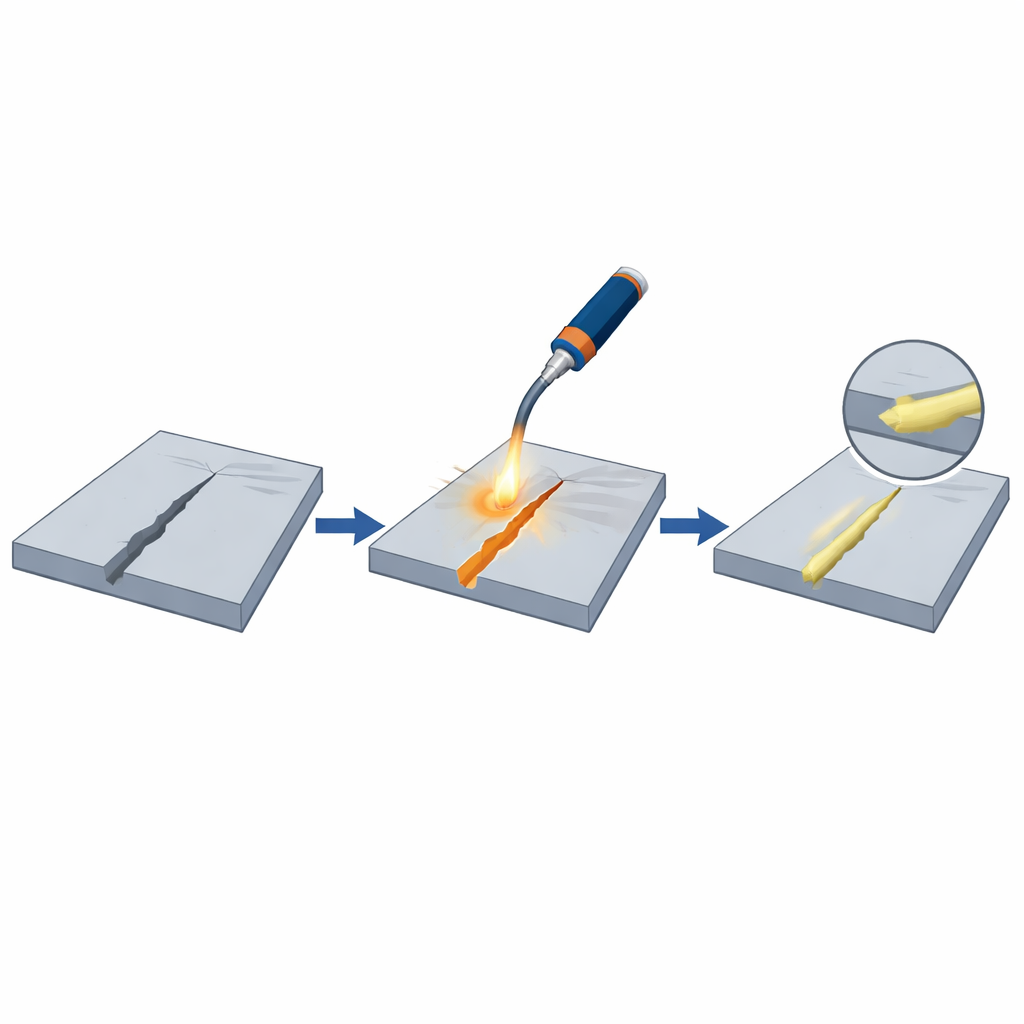
From cars and ships to airplanes and high-speed trains, many of the machines we rely on are built from lightweight aluminum alloys. When these parts crack, repairing them without weakening the metal is a major challenge. This study explores a way to create tougher, more reliable repair joints in a common aluminum alloy by fine‑tuning the recipe of the metallic filler used in a process called brazing.
Why Repairing Aluminum Is So Tricky
Aluminum is prized for being light and resistant to rust, but those same traits make it hard to weld and repair. Traditional welding can melt and distort the base metal, changing its properties in unwanted ways. Brazing offers a gentler alternative: a softer filler metal is melted to bridge cracks or gaps while the main aluminum part stays solid. The catch is that the filler alloy itself must flow easily into tight spaces, bond firmly, and then solidify into a strong, durable joint. If the internal structure of the filler metal is coarse or full of brittle particles and tiny pores, the repaired area can fail long before the rest of the part.
Tuning the Filler Metal Recipe
The researchers focused on a specific filler alloy based on aluminum, silicon, copper, and zinc, designed to melt at a relatively low temperature. They then added two extra ingredients in tiny amounts: magnesium (Mg) and the rare‑earth element cerium (Ce). By varying the Ce level while keeping Mg fixed, they watched how the internal grain pattern, particles, and pores inside both the filler and the brazed joint changed. At the same time, they measured how strong, hard, and stretchable the joints became, and used quantum‑level computer calculations to predict which recipe should give the best performance.
What Happens Inside the Joint
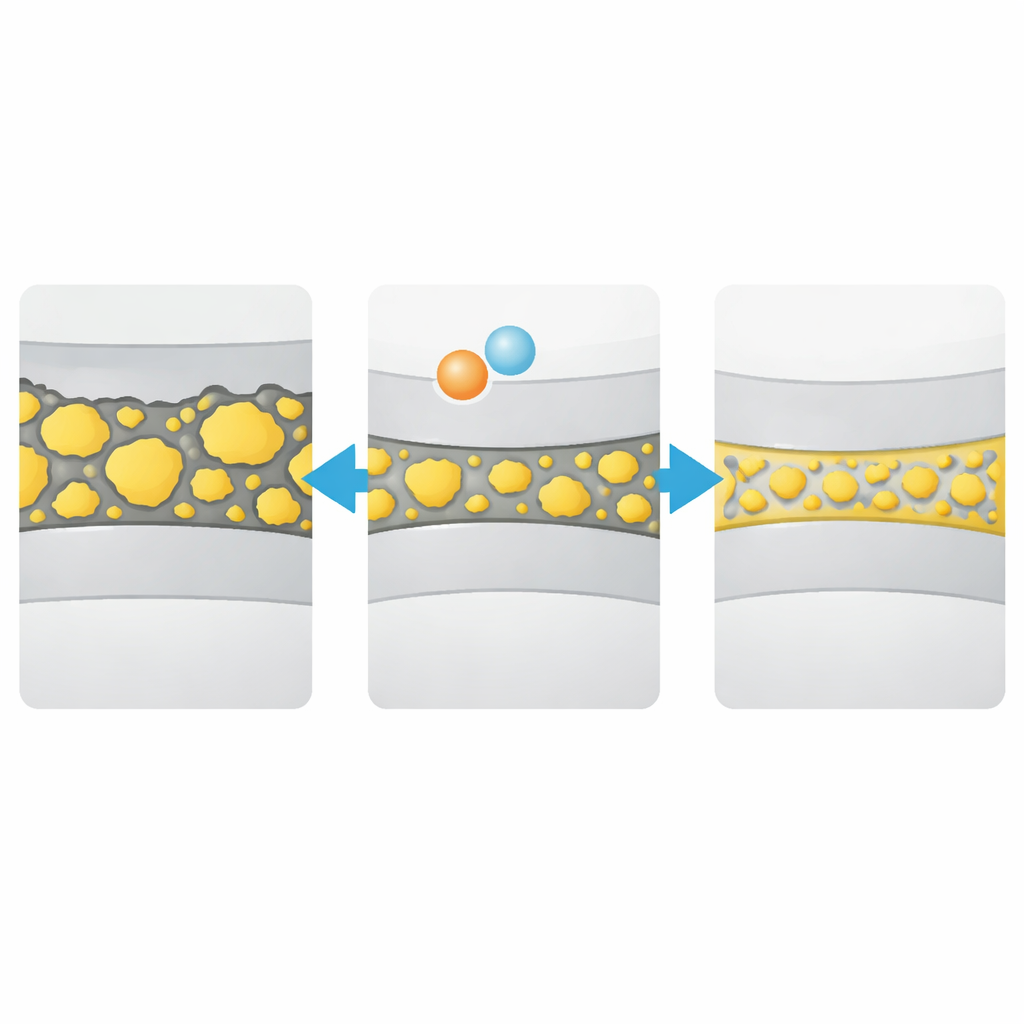
Under the microscope, the base filler metal shows large, blocky silicon particles and wide regions of a brittle copper‑rich compound. These features tend to concentrate stress and act as starting points for cracks. When Mg is added, the particles become smaller and more evenly spread, and the structure becomes more uniform, although some extra gas‑related pores appear. Introducing small amounts of Ce refines things further: particles shrink again, the narrow mixed‑phase regions break up into finer pieces, and troublesome pores at the joint boundary largely disappear. At an intermediate Ce level—about two‑tenths of one percent by weight—the joint interface becomes thin, smooth, and relatively free of sharp, needle‑like phases that can trigger failure.
From Atomic Models to Real‑World Strength
The team used first‑principles calculations, which start from the behavior of electrons in the alloy, to estimate how stiff, strong, and ductile each composition should be. These simulations indicated that the version containing 0.5 percent Mg and 0.2 percent Ce would offer the best balance of strength and toughness. Mechanical tests on real brazed joints confirmed this prediction. Compared with the original filler metal, the optimized alloy raised tensile strength by about 42 percent and improved how much the joint could stretch before breaking by nearly half. Hardness also increased, especially near the joint interface, reflecting the refined and well‑bonded structure.
What This Means for Future Metal Repairs
In simple terms, the study shows that very small tweaks to the chemistry of a brazing filler can lead to much stronger, more reliable repairs in aluminum parts. By shrinking harmful particles, thinning the boundary region, and eliminating microscopic pores, the Mg‑ and Ce‑modified alloy creates joints that better resist cracking under load. For industries that depend on lightweight aluminum structures—such as transportation, energy, and aerospace—this approach points toward safer, longer‑lasting repairs without redesigning entire components.
Citation: Wang, Y., Zhuo, Y., Sun, Z. et al. Microstructure and mechanical properties of (Mg, Ce)-modified Al-7.5Si-15Cu-5Zn brazing joints on 5083 aluminum alloy. Sci Rep 16, 12142 (2026). https://doi.org/10.1038/s41598-026-42614-9
Keywords: aluminum brazing, lightweight alloys, metal repair, microstructure, rare earth additives