Clear Sky Science · en
Metagenomic and gene expression patterns in declining commercial honey bee colonies
Why Sick Bees Matter to Us
Honey bees do far more than make honey; they pollinate many of the fruits, nuts, and vegetables that stock our grocery stores. Yet in the United States, commercial beekeepers continue to lose large numbers of colonies, especially over winter. This study looks inside bee colonies at the level of viruses and gene activity to understand what separates thriving colonies from those on the brink of collapse. By pairing broad surveys of bee viruses with measurements of how bees’ own genes respond, the researchers aim to build better early-warning tools for beekeepers and protect a cornerstone of modern agriculture.
Looking Inside Strong and Weak Hives
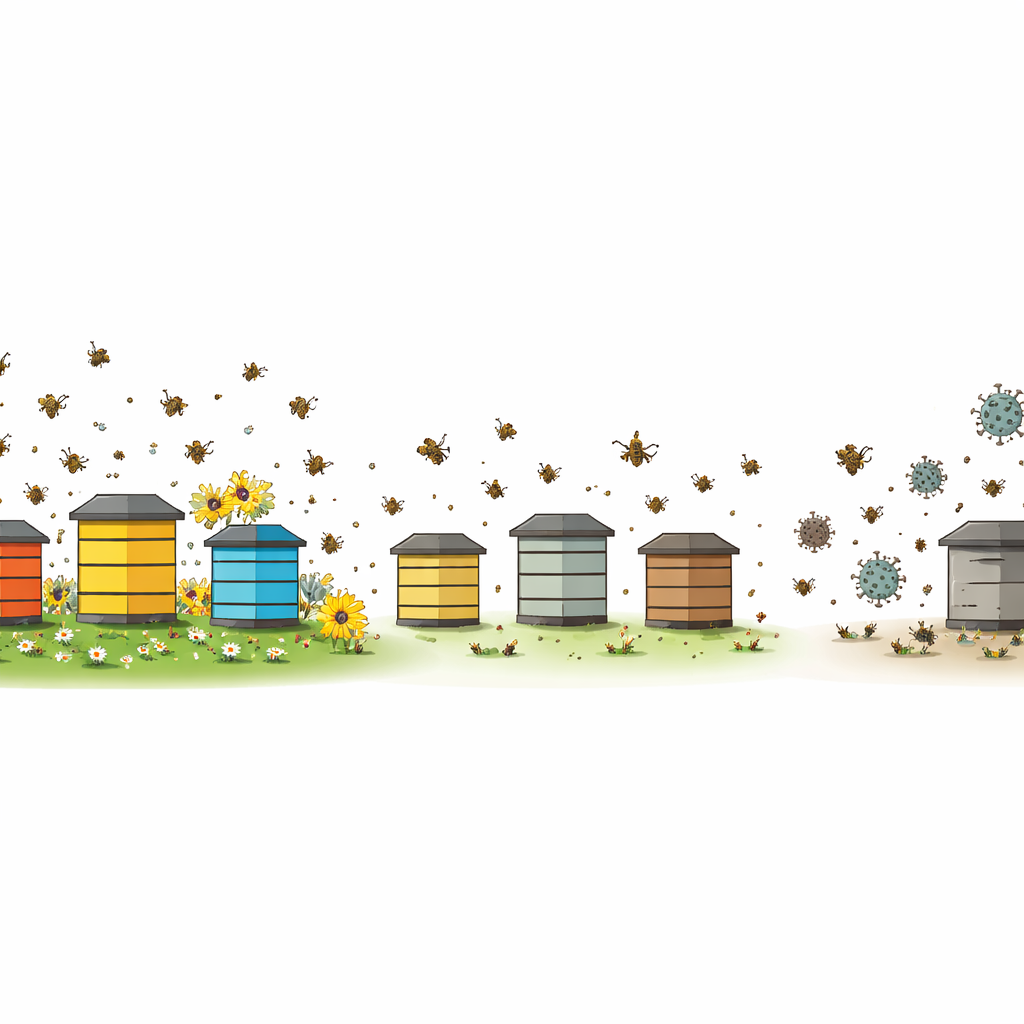
The team visited commercial beekeeping operations in California during a period of unusually high losses. They inspected colonies and grouped them by strength—Strong, Medium, or Weak—based on how many adult bees and brood (developing bees) they contained. From 15 colonies, they collected worker bees and extracted all of the RNA, the molecular messages that capture both which viruses are present and which bee genes are turned on or off. Using high-throughput sequencing and powerful bioinformatic tools, they separated bee RNA from that of parasites and other microbes, then cataloged the viruses and measured the activity of thousands of bee genes in each colony.
More Viruses in Struggling Colonies
The picture that emerged was stark: Weak colonies carried far more viral baggage. They harbored over twice as many different virus species as Medium colonies and more than three times as many as Strong colonies, even though the overall sequencing effort per sample was similar. Viral genetic material made up a larger share of the RNA in Weak colonies, and those viruses showed more genetic variation, a sign of intense viral replication over time. Pathogens associated with the parasitic Varroa mite, such as different forms of Deformed Wing Virus and Israeli Acute Paralysis Virus, were especially abundant in Weak colonies. A gut parasite, Nosema ceranae, followed the same pattern, with more parasite-related RNA in weaker hives.
Bee Defenses Under Strain
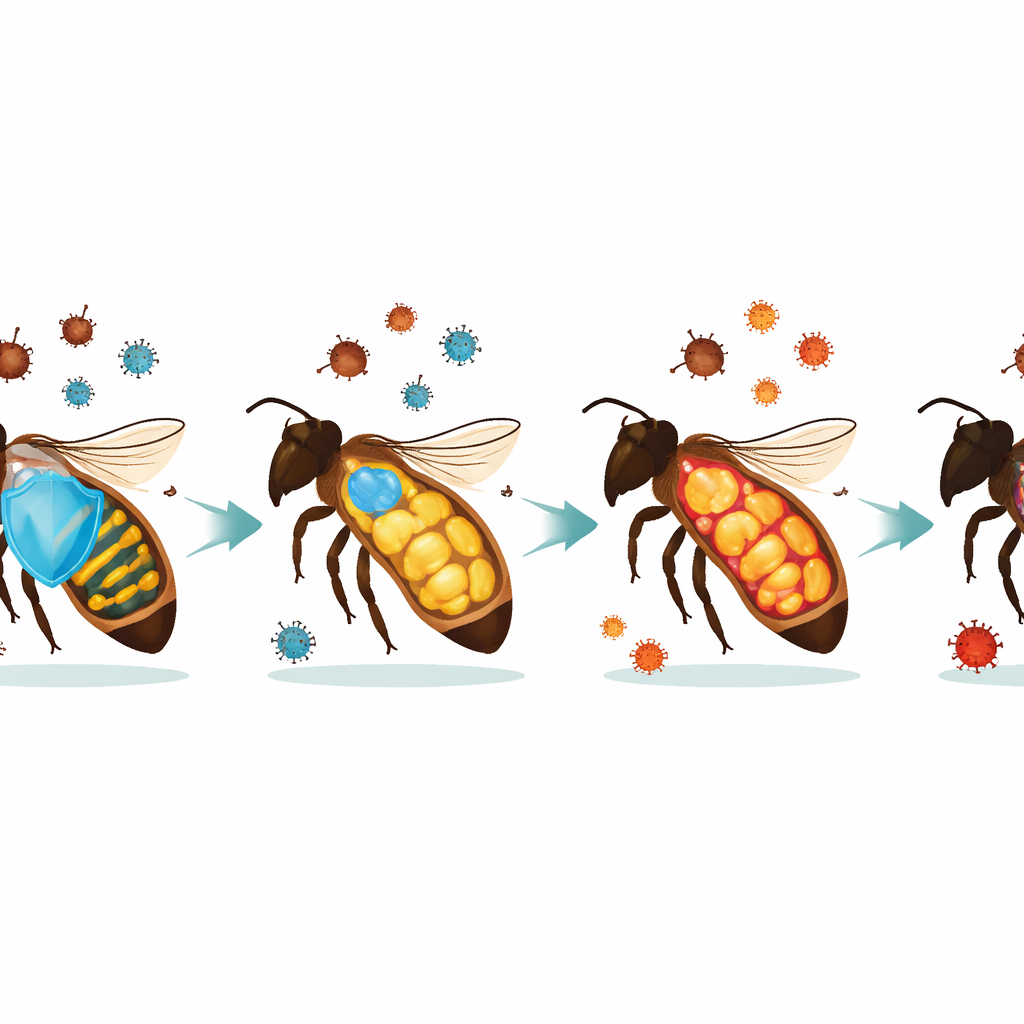
Beyond counting viruses, the researchers examined how bees’ own genes behaved in colonies of different strengths. Weak colonies showed a broad surge in genes tied to immune defense and stress responses: wound healing, engulfing and digesting invaders, coping with oxidative damage, controlled cell death, and antiviral RNA interference. They also had increased activity in genes linked to abnormal protein digestion, hinting at disrupted nutrition or gut function. In contrast, some frontline antimicrobial peptides and detoxification enzymes were more active in Strong colonies, along with a royal jelly peptide called apisimin. Strong colonies also showed higher levels of several ubiquinone-related transcripts, which are associated in other studies with improved energy metabolism and longer lifespan in bees.
Mites, Management, and Hidden Signals
The combination of viral and gene-expression patterns suggests that Weak colonies are under heavy and sustained attack, likely driven in part by high Varroa mite loads. These mites not only spread viruses directly but can weaken bee immunity, opening the door to additional infections. Medium colonies showed intermediate patterns, often dominated by Lake Sinai viruses and sometimes carrying multiple strains at once. Strong colonies, by contrast, appeared to keep viral replication and diversity in check, which may reflect more effective mite control by beekeepers. Interestingly, their gene profiles did not simply show “less” immune activity; instead, they featured a different mix of immune and detoxification responses that may signal a more successful, balanced defense.
What This Means for Protecting Bees
For beekeepers and researchers, these findings highlight that counting viruses alone is not enough to predict which colonies will fail. Weak and Medium colonies had richer and more rapidly evolving viral communities and showed emergency-like immune activation, while Strong colonies combined lower virus levels with a distinct pattern of protective gene activity. The authors argue that future diagnostic tools should pair standard virus tests with a small set of bee gene markers that reflect both immune status and exposure to chemicals such as mite treatments. Such combined “health signatures” could give earlier, more accurate warnings of colonies in trouble, helping beekeepers intervene before hives cross the line into irreversible decline.
Citation: Nearman, A., Lamas, Z.S., Niño, E.L. et al. Metagenomic and gene expression patterns in declining commercial honey bee colonies. Sci Rep 16, 11642 (2026). https://doi.org/10.1038/s41598-026-42605-w
Keywords: honey bee health, bee viruses, Varroa mites, colony collapse, metagenomics