Clear Sky Science · en
GC–IMS-based analysis of serum volatile organic compounds for diagnosis of gastric cancer
Why this matters for everyday health
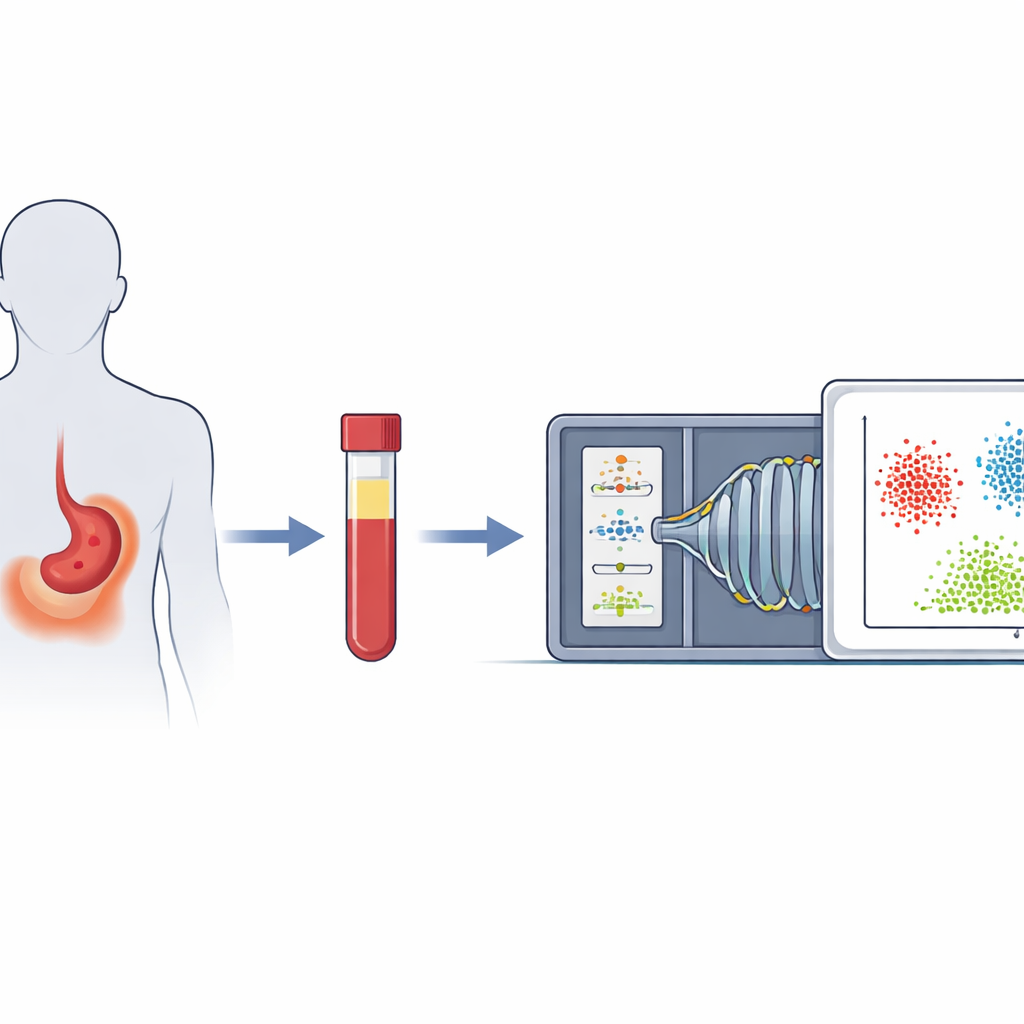
Stomach, or gastric, cancer is often discovered only after it has silently advanced, when treatment is harder and survival chances are lower. Today’s reliable diagnostic test—an endoscopic biopsy—requires a hospital visit, a tube down the throat, and tissue sampling, which makes it poorly suited for routine screening. This study explores a very different idea: could a simple blood sample, analyzed for tiny vapors released by the body, reveal gastric cancer early and without invasive procedures?
Finding cancer clues in everyday chemistry
Our bodies constantly produce volatile organic compounds, or VOCs—small, carbon-based chemicals that easily evaporate. These arise from normal metabolism but also from the altered chemistry of disease, including cancer. The researchers reasoned that gastric tumors might leave a distinct “scent signature” in the bloodstream long before symptoms become obvious. They focused on serum, the clear liquid part of blood, because it is already widely used in clinics and is less affected by short-term factors like recent meals or environmental exposures than exhaled breath.
A new way to read the blood’s hidden signals
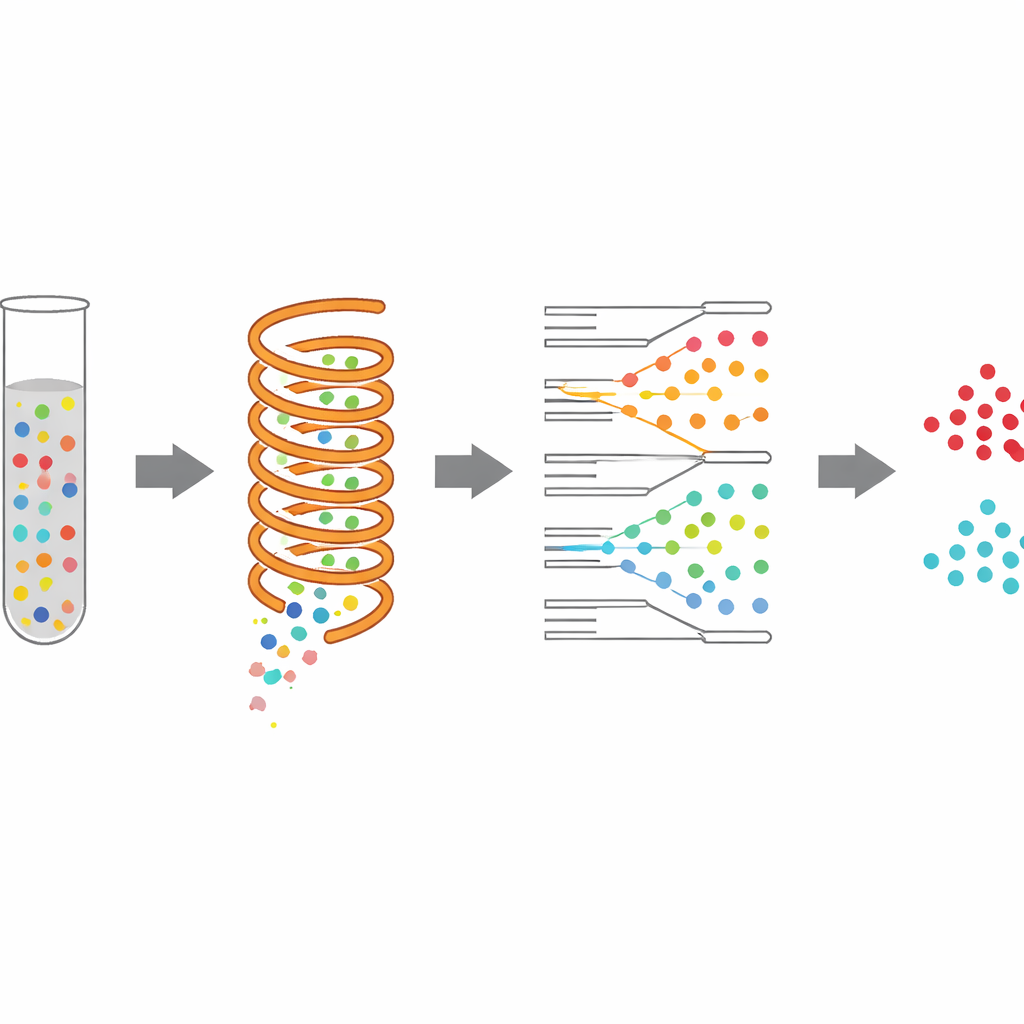
To decode these chemical traces, the team used gas chromatography–ion mobility spectrometry, a technology that separates and detects vapors with high sensitivity and speed. In 277 volunteers—people with confirmed gastric cancer, individuals with precancerous stomach conditions, and healthy controls—the instrument produced a two-dimensional “fingerprint” of 52 identifiable VOCs in each serum sample. Nineteen of these compounds differed significantly among the three groups, suggesting that stomach disease reshapes the body’s chemical emissions in a consistent, measurable way.
Letting algorithms sort sick from healthy
Turning complex chemical patterns into a practical test required machine learning. The researchers trained six different computer models to distinguish gastric cancer, precancerous disease, and healthy status using the VOC data. All models performed reasonably well, but one approach—called a support vector machine—stood out. By ranking the importance of each VOC and then adding them stepwise, the team found that a combination of just 11 specific compounds captured nearly all of the useful information. This streamlined “11-VOC” model correctly classified about 96% of people in the internal validation set and roughly 93% in a completely independent test group.
Seeing cancer earlier and beating current blood tests
A critical question is whether such a test can catch cancer early, when it is most curable. In both the validation and test groups, the 11-VOC model identified every patient with early-stage gastric cancer, while rarely misclassifying healthy individuals, achieving sensitivities of 100% and specificities above 90%. The new approach also far outperformed carcinoembryonic antigen, a long-used blood marker that detects only a minority of gastric cancers, especially in their earliest stages. The VOC patterns appear to reflect broader cancer-driven shifts in metabolism, including oxidative stress and altered processing of fats and alcohol-like molecules, some of which have been linked to other tumor types as well.
What this could mean for future checkups
The study shows that a small panel of vapors dissolved in blood can serve as a powerful, noninvasive signal of gastric cancer, including forms that have not yet caused clear symptoms. While the work was done at a single center and still needs confirmation in larger and more diverse populations, it suggests a future in which people at risk could be screened using a simple blood draw analyzed by compact VOC instruments and smart algorithms. If validated, such a test could complement endoscopy, reserving invasive procedures for those flagged as high risk and opening the door to catching more stomach cancers when they are still readily treatable.
Citation: Zhao, Y., Xin, Y., Mao, M. et al. GC–IMS-based analysis of serum volatile organic compounds for diagnosis of gastric cancer. Sci Rep 16, 8875 (2026). https://doi.org/10.1038/s41598-026-42602-z
Keywords: gastric cancer, blood test, volatile organic compounds, early detection, machine learning