Clear Sky Science · en
Addressing lightning and market uncertainties in self-scheduling: A fuzzy-markov approach for smart grids
Why keeping the lights on is getting harder
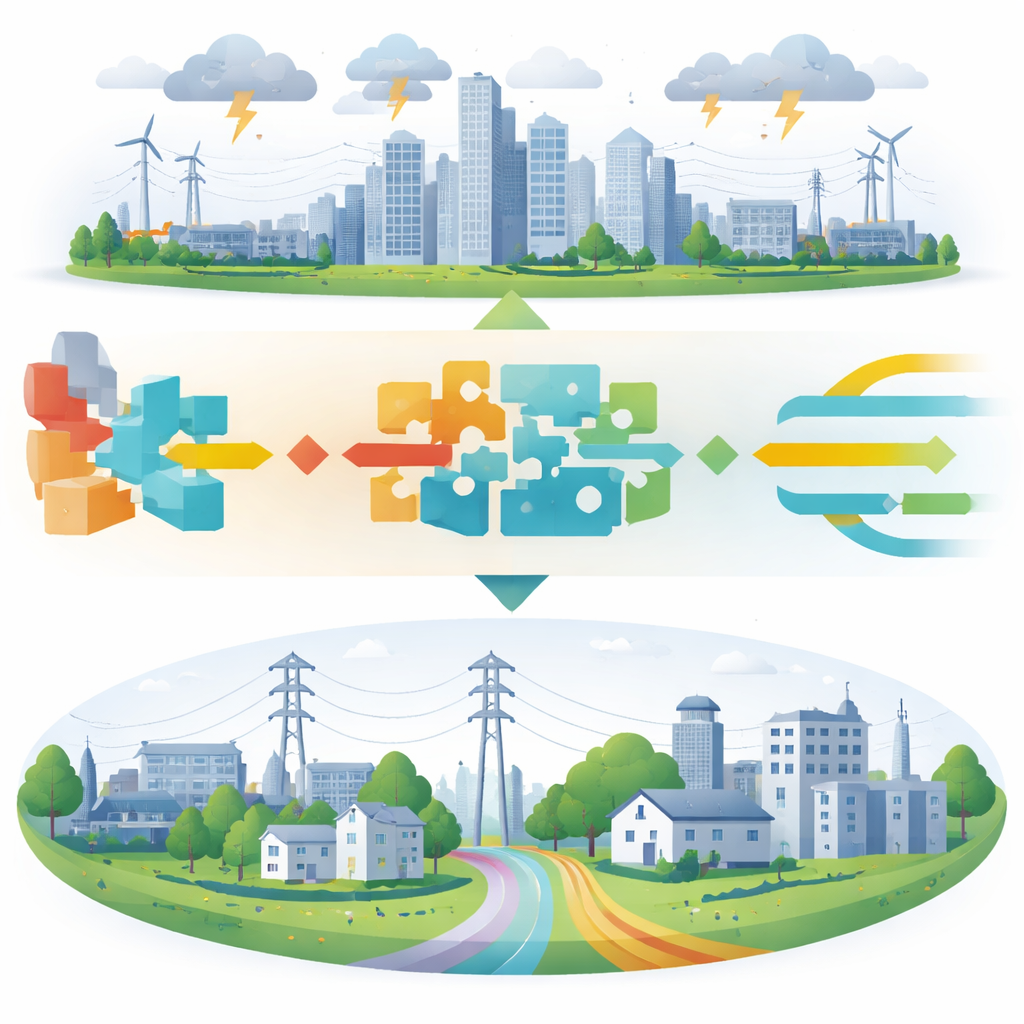
Electricity no longer flows in just one direction from big power plants to homes. Modern “smart grids” juggle rooftop solar panels, wind farms, batteries, and shifting customer needs, all while markets and the weather change from hour to hour. This paper explores a new way to help grid operators plan ahead when both energy prices and violent storms—especially lightning—make the future hazy, using a combined fuzzy and probabilistic view of what might happen next.
Power grids in a world of storms and wild prices
Smart grids promise cleaner power and greater efficiency, but they must make constant choices about when to buy, sell, or generate electricity. Market conditions—such as prices, demand, and revenue—can swing quickly with economic news, regulations, or consumer behavior. At the same time, lightning strikes and severe weather can damage lines, trigger shutdowns, or force customers to cut back. Traditional planning tools tend to handle either the number-driven side (like prices) or the vague, event-driven side (like lightning risk), but rarely both together. The authors argue that this split view leaves operators exposed when physical shocks and financial swings collide.
Blending human-like judgment with math
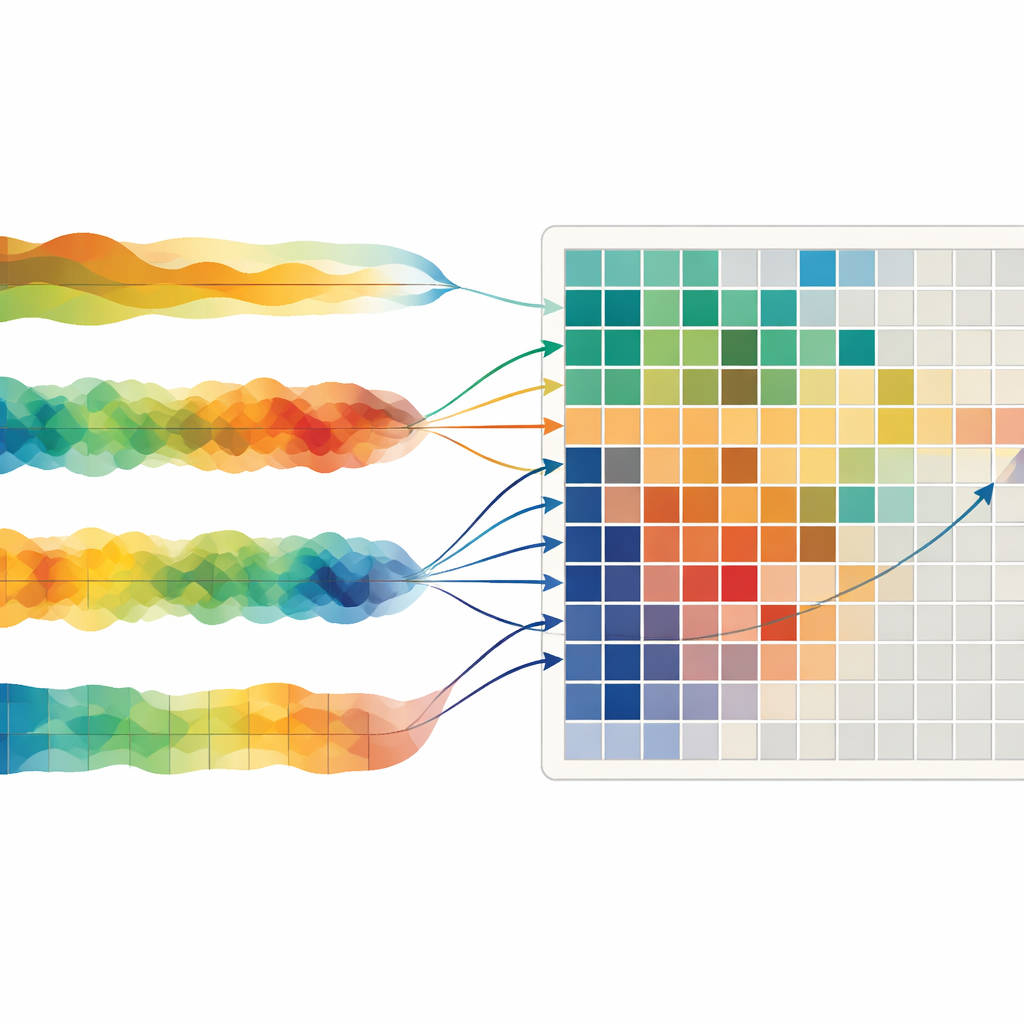
To close this gap, the study introduces a hybrid framework that combines fuzzy logic with Markov chains. Fuzzy logic mimics the way people talk about uncertain quantities—using terms like “low price,” “medium sales,” or “high revenue” instead of sharp cutoffs. The method takes three key financial measures—price, revenue, and sales—and converts each hourly value into such qualitative categories. A moment in time is then described by a simple triple like (high price, low revenue, low sales), capturing the overall mood of the market in plain-language style labels that computers can still process.
Following the grid’s mood swings over time
Once each hour is labeled this way, the approach treats the smart grid as moving through a finite set of fuzzy “states.” Here, Markov chains step in: they estimate how likely the system is to jump from one state to another in the next hour. By counting how often, for example, a calm state shifts into a stressed, high-price, low-sales state—especially on days with simulated lightning—the model builds a transition matrix, a kind of map of typical market journeys. The researchers also compute rolling statistics, such as sliding averages and volatility of price and revenue, to highlight periods when conditions are unusually calm or unusually turbulent.
Testing the idea in a safe sandbox
Because detailed real-world data that mix market records and lightning strikes are hard to obtain, the authors create a synthetic year-long dataset. They simulate hourly prices, revenues, and sales with realistic trends and noise, then sprinkle in artificial lightning events that spike prices and depress sales to mimic storm damage and precautionary shutdowns. The first nine months of data train the fuzzy categories and transition probabilities; the last three months test how well the model can guess the next fuzzy state from the current one. The framework correctly predicts the next state in about 56% of cases—well above random guessing for six possible states—while also revealing which patterns tend to persist and which quickly change.
From predictions to practical moves
The authors show how this forecasting tool can guide concrete decisions for a hypothetical 100 MW urban microgrid. If the model suggests that a normal state is likely to shift into a high-price, low-sales situation during a stormy afternoon, operators can buy reserve power early, preemptively move sensitive loads to backup supplies, or adjust bidding strategies in the electricity market. Rolling risk indicators help them gauge how much to trust a prediction and how aggressively to respond, turning abstract probabilities into targeted financial and technical actions.
What this means for future power systems
In simple terms, the paper’s message is that treating the grid’s future as partly blurry and partly rule-driven produces more useful guidance than relying on either approach alone. By blending human-like categories with math that tracks how states evolve, the Fuzzy-Markov framework gives grid operators a clearer, though not perfect, picture of what tomorrow’s mix of prices, demand, and storm impacts might look like. Even with moderate accuracy, this view helps them prepare for bad combinations—like high prices and low sales—before they strike. As smart grids grow more complex and weather extremes intensify, such hybrid tools may become essential for keeping electricity reliable, affordable, and resilient.
Citation: Benistan, I.S., Shahbazzadeh, M.J. & Eslami, M. Addressing lightning and market uncertainties in self-scheduling: A fuzzy-markov approach for smart grids. Sci Rep 16, 12904 (2026). https://doi.org/10.1038/s41598-026-42588-8
Keywords: smart grids, energy markets, risk management, renewable energy, power system reliability